Capitol Daybook Research · Deep Book
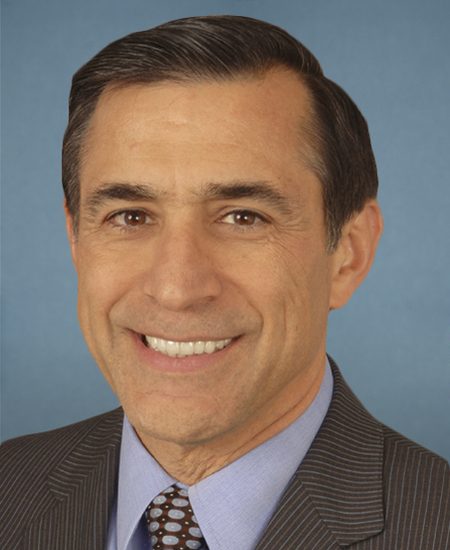
Deep Book: Darrell Issa (CA-48)
CA-48 · House
CandidateDarrell Issa
Executive summary
Darrell Issa, retiring Republican congressman for District 48, announced his retirement on filing deadline day, March 6, 2026; his term ends January 3, 2027, and Marni von Wilpert is the member-elect. The predecessor district voted Trump by 56 to 41 in 2024; the new 48th would have backed Harris by 50 to 47, on registration of 37.01 percent Democratic and 32.16 percent Republican.
Contents
Cover1. Cover and race snapshotExecutive BriefVulnerabilities2. Executive summary and top vulnerabilities3. Biographical file4. Record in office5. Money: campaign finance through September 30, 20266. Economic interests: disclosures, entities, property, patents7. Legal and court record8. Public records file and queued pulls9. Issues and statementsFlip-Flop Matrix10. Social and public presence audit11. Associates12. Timeline13. Appendix: sources, method, and verification notesUpdated November 14, 2026
The Vulnerability Matrix
The items below are the documented findings in this book that an opposing campaign, a confirmation opponent, or an independent expenditure committee would most likely cite against former Representative Issa. Each item is drawn entirely from this book's own findings and is presented with its documented basis and, where the record carries one, the innocent explanation and the record that resolves it. These are flags drawn from the record, not verdicts, and the book states at the outset what the file does not show: no criminal conviction beyond the single 1972 misdemeanor plea documented in Item 1, no House Ethics Committee finding, and no professional license discipline (Section 2).
1. The 1972 record: a Maserati theft indictment that was dropped, and a guilty plea on an unregistered firearm
| The Fact (documented basis) | On March 15, 1972, Issa and his brother William were arrested and charged with stealing a red Maserati from a Cleveland showroom; a grand jury indicted him for theft in an alleged scheme with William to sell the car and report it stolen; prosecutors dropped the charge and no conviction resulted (Sections 2 and 7.1) [7][8][67]. On December 1, 1972, police in Adrian, Michigan stopped Issa driving a yellow Volkswagen the wrong way on a one way street; a search found a .25 calibre Colt automatic in a box of ammunition, a military pouch with 44 rounds and a tear gas gun with two rounds; he was arrested for carrying a concealed weapon and pleaded guilty to the lesser charge of possession of an unregistered gun (Sections 2 and 7.2) [67]. |
|---|---|
| Political Vulnerability | An opponent would say Issa's adult life began with a grand jury indictment for stealing a Maserati with his brother and a guilty plea after a wrong way stop found an unregistered pistol in his car. |
| Subject Defense (explanation and resolving record) | Issa's explanation for the Maserati case, given since 1998, is mistaken identity: he told the Los Angeles Times in 1998 that he had been wrongly implicated because his brother William had an arrest record, and he has said the police mistook his identity (Sections 2 and 7.1) [9][47]. For the firearm stop, his later account is that the car and the gun were his brother's and that he had been unaware the gun was in the car (Section 7.2). The resolving record is the Cuyahoga County and Lenawee County court archive pull queued at ISS-1 (Section 8). |
2. The pattern around 1972: the Bergey allegation, the 1980 San Jose case, and the 1982 factory fire
| The Fact (documented basis) | A fellow soldier, Jay Bergey, told reporter Lance Williams that Issa stole his yellow Dodge Charger in December 1971 and that the car reappeared abandoned the day after Bergey confronted him; Issa denied it in 2011 (Sections 2 and 7.3) [7][68]. In February 1980 Issa and William were arrested in San Jose in an alleged scheme to sell Issa's Mercedes to a dealer for $16,000 while reporting it stolen; a judge ordered them to stand trial, and in August 1980 a prosecutor dismissed the case for lack of evidence; in 2011 Issa acknowledged that he had tried to cover his brother's crime, avoiding incriminating him (Sections 2 and 7.4) [47][68]. On September 7, 1982 the Quantum and Steal Stopper factory in Maple Heights, Ohio burned; the fire analysis report commissioned by the St. Paul insurance company and dated October 19, 1982 concluded the fire was "incendiary," and former owner Joey Adkins told an insurance investigator, "I feel the man set the fire"; Adkins also told the investigator that, less than three weeks before the fire, Issa had increased the company's insurance coverage from $100,000 to $462,000 (Sections 2 and 7.6) [66]. |
|---|---|
| Political Vulnerability | An opponent would say the 1972 matters do not stand alone, and that four separate episodes across one decade, each individually unproven or dismissed or resolved by a misdemeanor plea, together form the first page of every opposition file on him. |
| Subject Defense (explanation and resolving record) | Issa told the New Yorker he did not set the fire, and the Ohio state fire marshal never determined a cause; no arson charge was ever filed (Sections 2 and 7.6) [7][66][68]. On the 1980 case, both brothers say William planned and executed the scheme, and the disposition was dismissal with no conviction (Section 7.4). On the Bergey allegation, Issa denied it and no charge, military or civilian, appears in any source reviewed (Section 7.3). |
3. The Oversight chairmanship: two contempt votes and 98 unilateral subpoenas
| The Fact (documented basis) | Issa chaired the House Oversight and Government Reform Committee from January 3, 2011 to January 3, 2015 (Sections 2 and 4.2) [7][18]. On June 28, 2012 the House voted 255 to 67, with seventeen Democrats joining, to hold Attorney General Eric Holder in criminal contempt, the first such vote against a sitting attorney general (Sections 2 and 4.2) [13][14][15]. On May 7, 2014 the House voted 231 to 187 to find Lois Lerner in contempt on a resolution Issa introduced (Sections 2 and 4.2) [7][16]. Ranking Member Elijah Cummings documented in July 2014 that Issa had issued 98 unilateral subpoenas as chairman, more than all three previous chairmen combined, a figure the book carries as the minority's own count (Sections 2 and 4.2) [17]. On February 16, 2012 Issa chaired the hearing on the administration's contraception coverage mandate at which he declined to permit Sandra Fluke to testify (Section 4.2) [7]. |
|---|---|
| Political Vulnerability | An opponent would say Issa's chairmanship was the template of partisan investigation, built on unilateral subpoenas and contempt votes that produced no prosecutions. |
| Subject Defense (explanation and resolving record) | The counterweight in the book is that his legislative legacy from the same tenure is bipartisan in character: the DATA Act, signed May 9, 2014, and the FITARA information technology reform, enacted in December 2014 as part of the defense authorization (Sections 2 and 4.2) [7]. The Project on Government Oversight gave Issa its Good Government Award in 2010 (Section 4.2) [7]. The book records no separate resolving record for the subpoena count. |
4. The USTDA nomination that died over his FBI background file
| The Fact (documented basis) | President Trump nominated Issa on September 19, 2018 to direct the U.S. Trade and Development Agency; the nomination stalled for a year and died without confirmation (Sections 2 and 4.6) [7]. At the September 19, 2019 Foreign Relations Committee hearing, Ranking Member Bob Menendez stated: "There is information in his FBI background investigation that concerns me greatly, and that I believe members may find problematic and potentially disqualifying for Senate confirmation," and "Our joint request to the White House concerning Mr. Issa's file has gone unanswered" (Sections 2 and 4.6) [11]. The committee deadlocked 11 to 11 on a motion to discuss the file in closed session and the nomination was pulled from that hearing (Sections 2 and 4.6) [11][12]. Fox News reported that the issue concerned Issa's use of a fake identification while serving in the Army in 1970; the book carries that as attributed reporting, not a committee finding (Sections 2 and 4.6) [12]. |
|---|---|
| Political Vulnerability | An opponent in a future confirmation fight would say a Senate committee refused to move Issa's nomination without seeing his full FBI file, and that the episode is the standing proof his early record retains operational consequences. |
| Subject Defense (explanation and resolving record) | Issa told the Washington Post that the only issue Menendez had raised concerned "allegations of activity of mine when I was 17," that Menendez was "not making allegations during my 18 years as a member of the House or anything else that was done as an adult," and that "it's clear that his goal is to stop me from serving the president" (Sections 2 and 4.6) [12]. The book identifies no resolving record available to this product: the nomination file and the FBI background investigation are a closed route (Section 8). |
5. Wealth, leverage, and trading scale in his own disclosure
| The Fact (documented basis) | The annual report for filing year 2025, Filing ID 10075815, filed August 14, 2026, reports real estate limited partnerships in five locations, two investment accounts dominated by structured market linked products in the $5,000,001 to $25,000,000 and $25,000,001 to $50,000,000 bands, a leveraged position in ProShares UltraPro QQQ listed at over $50,000,000, and a single liability, a UBS Bank premier credit line incurred April 2022, backed by his investment accounts, at over $50,000,000 (Sections 2 and 6.2) [27]. Schedule B of the same filing reports that a LIBOR interest rate investment purchased in 2023 and 2024 was sold in its entirety on April 10, 2025 for $25,000,001 to $50,000,000 (Section 6.2) [27]. A disclosure derived tracker computes his 2025 position at $135,565,034 to $520,300,000, midpoint $327,932,517 (Sections 2 and 6.3) [29][30]. He partly self funded his career at every entry point: about $10 million of his own money in the 1998 Senate primary, about $2 million in the 2000 House race per the Dossier's compiled record, and more than $1.6 million to finance the 2003 recall of Governor Gray Davis (Sections 2 and 5.3) [7][48][49]. |
|---|---|
| Political Vulnerability | An opponent would say Issa's closing disclosure shows a fortune financed in part by a securities backed credit line of over $50,000,000, against accounts holding leveraged structured products and a leveraged index position listed at over $50,000,000. |
| Subject Defense (explanation and resolving record) | The book's own assessment is that the vulnerability is not the wealth itself, which voters in his districts accepted for twenty five years, but the combination of scale, leverage and trading volume in a leveraged index product, which any future confirmation or candidacy file will quote from his own filings (Section 2). The resolving record is the certified complete set queued at ISS-6 (Section 8). |
6. Military service and education claims the 1998 reporting could not verify as told
| The Fact (documented basis) | Lance Williams of the San Francisco Examiner reported on May 29, 1998 that President Richard Nixon had not attended any games of the 1971 World Series, which made Issa's repeated account, that his unit provided security for President Nixon by sweeping stadiums before World Series games in 1971, impossible as stated; the unit did perform security sweeps during the series, and First Lady Pat Nixon was present at Game 2 (Section 3) [9][47]. Williams also reported that Issa had not always received the highest possible ratings, but had received unsatisfactory conduct and efficiency ratings and was transferred to a supply depot, and the reporting also carried a demotion (Section 3) [9][49]. Earlier in the same campaign, Issa's public claim to have worked for then Vice President Nixon in 1968 was withdrawn by his own campaign after he conceded, "I don't remember doing it" (Section 3) [9]. The education record carries a narrower variance: the sources agree on a 1976 business degree at Siena Heights, and differ on whether a Kent State credential also attaches and on where the degree was completed (Section 3). |
|---|---|
| Political Vulnerability | An opponent would say Issa's service narrative, a core biographical claim, was investigated in 1998 and could not be verified as he told it. |
| Subject Defense (explanation and resolving record) | Issa's response at the time was that the Examiner reporter misunderstood an anecdote he had related (Section 3) [9]. The resolving record is a limited public figure release from the National Personnel Records Center, together with registrar confirmation of the 1976 degree, queued at ISS-11; until it lands, the book states only what the reporting and the one reproduced evaluation document establish (Section 3). |
7. The exit: a retirement announced on filing deadline day after months of insisting he would run
| The Fact (documented basis) | On the night Proposition 50 passed, Issa vowed he was "not quitting on California," then explored a run in Texas's 32nd District on Dallas area radio, ruled the move out after a meeting with President Trump, and insisted to Punchbowl News days before the filing deadline that he would run again (Sections 1, 2, and 4.6) [3][4][5][6]. He announced his retirement on deadline day, March 6, 2026, and endorsed San Diego County Supervisor Jim Desmond the same day; his term ends January 3, 2027 (Sections 1 and 2) [2][3]. The book identifies the earlier parallel: the first such step away was January 10, 2018 (Section 2) [3][69]. Through September 30, 2026 his committee raised $2,181,705.10, spent $3,532,479.03 and held $293,842.39 in cash on hand, a spend down the book describes as consistent with a member who prepared to run under the new lines and then retired (Sections 1 and 5.1) [1]. |
|---|---|
| Political Vulnerability | An opponent would say Issa stepped away rather than face a newly competitive district for the second time, after first exploring a run in Texas. |
| Subject Defense (explanation and resolving record) | Issa said he believed he could have won the redrawn district, and his own stated reason is carried verbatim in Section 9: "After a quarter-century in Congress, and before that, a quarter-century in business, it's the right time for a new chapter and new challenges" (Sections 2 and 9) [2]. UC San Diego professor Thad Kousser told the Times of San Diego that Issa was "unwilling to run when he doesn't think he has a shot at winning," an analyst reading the book carries attributed to its maker (Section 4.6) [2]. The book records no resolving record. |
8. His campaign biography's enlistment line, "during his senior year in high school," against the dropout account
| The Fact (documented basis) | The About page of darrellissa.com states, in the January 16, 2014 capture and verbatim in the March 5, 2021 and June 19, 2025 captures, "He enlisted in the Army during his senior year in high school and attended college on an ROTC scholarship"; his July 2, 2002 campaign issues page, in his own voice, gives no schooling claim at all: "I enlisted in the Army when I was 17, completed college on an ROTC scholarship, and worked my way to the rank of Captain" (Section 10, Wayback campaign-site archaeology subsection). Section 3 records the standard account: he dropped out of high school and enlisted on his seventeenth birthday, then earned his GED. |
|---|---|
| Political Vulnerability | An opponent would say Issa's own campaign biography has polished the exit from high school out of his enlistment story for a decade, the same service narrative the 1998 reporting challenged in Item 6. |
| Subject Defense (explanation and resolving record) | The two tellings could be reconciled if he left school during his senior year to enlist; the biography's phrasing nonetheless omits the dropout the standard record carries. The resolving record is the National Personnel Records Center limited release queued at ISS-11, together with the registrar confirmation of the 1976 degree. |