Capitol Daybook Research · Deep Book
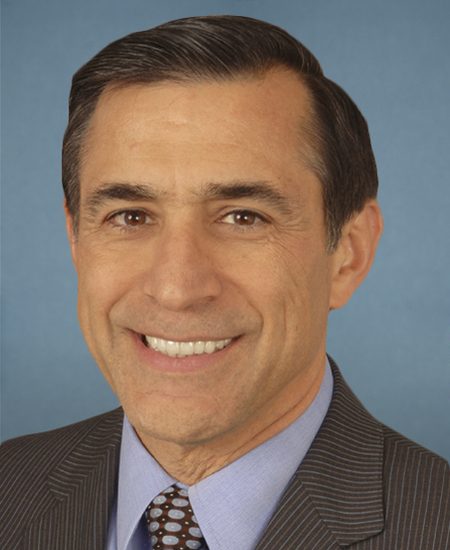
Deep Book: Darrell Issa (CA-48)
CA-48 · House
CandidateDarrell Issa
Executive summary
Darrell Issa, retiring Republican congressman for District 48, announced his retirement on filing deadline day, March 6, 2026; his term ends January 3, 2027, and Marni von Wilpert is the member-elect. The predecessor district voted Trump by 56 to 41 in 2024; the new 48th would have backed Harris by 50 to 47, on registration of 37.01 percent Democratic and 32.16 percent Republican.
Contents
Cover1. Cover and race snapshotExecutive BriefVulnerabilities2. Executive summary and top vulnerabilities3. Biographical file4. Record in office5. Money: campaign finance through September 30, 20266. Economic interests: disclosures, entities, property, patents7. Legal and court record8. Public records file and queued pulls9. Issues and statementsFlip-Flop Matrix10. Social and public presence audit11. Associates12. Timeline13. Appendix: sources, method, and verification notesUpdated November 14, 2026
2. Executive summary and top vulnerabilities
1. The 1972 record, in full, with its variance intact. The Maserati indictment: arrested with his older brother William on March 15, 1972 and charged with stealing a red Maserati from a Cleveland showroom; the New Yorker account describes a grand jury indictment for theft in a scheme with William to sell the car and report it stolen; prosecutors dropped the charge and no conviction resulted [7][8][67]. Issa's own explanation, given since 1998, is mistaken identity: he told the Los Angeles Times in 1998 that he had been wrongly implicated because his brother William had an arrest record, and he has said the police mistook his identity [9][47]. The firearm plea: stopped just before 11 p.m. on December 1, 1972 in Adrian, Michigan, driving a yellow Volkswagen the wrong way on a one way street; a search found a .25 calibre Colt automatic in a box of ammunition, a military pouch with 44 rounds and a tear gas gun with two rounds; he was arrested for carrying a concealed weapon and pleaded guilty to the lesser charge of possession of an unregistered gun [67]. The standard account, from the New Yorker and the Williams reporting, gives six months' probation and a small fine, and Issa has said he believes the record was expunged [7][8]. A records based account of the Lenawee County file gives a different disposition: an initial not guilty plea, a guilty plea on January 16, 1973, three months' probation, a $100 fine and $107 in court costs, and the charge dismissed altogether in 1974 on the prosecutor's motion [10]. This book prints both, flags the variance as a variance, and queues the court archive pull that resolves it (ISS-1). A research product that picks one disposition without flagging the other would be wrong on the current evidence.
2. The pattern around the two 1972 matters. The 1972 items do not stand alone in the sourced record, and opponents have never presented them alone. A fellow soldier, Jay Bergey, told reporter Lance Williams that Issa stole his yellow Dodge Charger in December 1971 and that the car reappeared abandoned the day after Bergey confronted him; Issa denied it in 2011 [7][68]. In February 1980 Issa and William were arrested in San Jose in an alleged scheme to sell Issa's Mercedes to a dealer for $16,000 while reporting it stolen; a judge ordered them to stand trial, and in August 1980 a prosecutor dismissed the case for lack of evidence [47]. In 2011 Issa acknowledged that he had tried to cover his brother's crime, avoiding incriminating him, and both brothers say William planned and executed the scheme [68]. On September 7, 1982 the Quantum and Steal Stopper factory in Maple Heights, Ohio burned; the fire analysis report commissioned by the St. Paul insurance company and dated October 19, 1982 concluded the fire was "incendiary," and former owner Joey Adkins told an insurance investigator, "I feel the man set the fire" [66]. Issa told the New Yorker he did not set the fire, and the Ohio state fire marshal never determined a cause; no arson charge was ever filed [7][66][68]. Each item is carried in Section 7 at full depth, attributed, with Issa's explanations verbatim where sourced, and with dispositions stated exactly. The political fact is the accumulation: four separate episodes across one decade, each individually unproven or dismissed or resolved by a misdemeanor plea, which together have supplied the first page of every opposition file on him for twenty eight years.
3. The Oversight record. His chairmanship, January 2011 to January 2015, made him the institutional antagonist of the Obama administration [7][18]. The documented core: the Fast and Furious investigation, in which the committee subpoenaed Justice Department documents in October 2011, the President asserted executive privilege, and on June 28, 2012 the House voted 255 to 67, with seventeen Democrats joining, to hold Attorney General Eric Holder in criminal contempt, the first such vote against a sitting attorney general, and voted separately to authorize the committee to sue [13][14][15]. The IRS investigation, in which Lois Lerner acknowledged on May 10, 2013 that the agency had targeted conservative leaning organizations, and the House voted 231 to 187 on May 7, 2014 to find Lerner in contempt on a resolution Issa introduced [7][16]. The Benghazi investigation, including the May 28, 2013 subpoena to the State Department for talking points documents [16]. And the management criticism that came with the record: Ranking Member Elijah Cummings documented in July 2014 that Issa had issued 98 unilateral subpoenas as chairman, more than all three previous chairmen combined, a figure from the minority's own count, carried here as their count [17]. His legislative legacy from the same tenure is real and bipartisan in character: the DATA Act, signed May 9, 2014, and the FITARA information technology reform, enacted in December 2014 as part of the defense authorization [7]. Section 4.2 treats the tenure in full.
4. The USTDA nomination and the FBI file. President Trump nominated Issa on September 19, 2018 to direct the U.S. Trade and Development Agency [7]. The nomination stalled for a year and died without confirmation. At the September 19, 2019 Foreign Relations Committee hearing, Ranking Member Bob Menendez stated, in the committee Democrats' own release: "There is information in his FBI background investigation that concerns me greatly, and that I believe members may find problematic and potentially disqualifying for Senate confirmation," and "Our joint request to the White House concerning Mr. Issa's file has gone unanswered" [11]. The committee deadlocked 11 to 11 on a motion to discuss the file in closed session and the nomination was pulled from that hearing [11][12]. Issa told the Washington Post that the only issue Menendez had raised concerned "allegations of activity of mine when I was 17," that Menendez was "not making allegations during my 18 years as a member of the House or anything else that was done as an adult," and that "it's clear that his goal is to stop me from serving the president" [12]. Fox News reported that the issue concerned Issa's use of a fake identification while serving in the Army in 1970; that is attributed reporting, not a committee finding, and this book carries it as such [12]. A week later, on September 26, 2019, Issa announced his run for the 50th District [7]. The episode is the standing proof that his early file, however old, retains operational consequences at the appointment level, and it is the single most likely obstacle to any future executive branch nomination.
5. Wealth, self funding and the disclosure scale. Issa partly self funded his career at every entry point: about $10 million of his own money in the 1998 Senate primary, which he lost to Matt Fong by 45 to 40 percent; about $2 million in the 2000 House race per the Dossier's compiled record; and more than $1.6 million to finance the 2003 recall of Governor Gray Davis, a governorship bid he then abandoned two days after Arnold Schwarzenegger entered [7][48][49]. Published wealth estimates are outside estimates only and vary widely: $283 million to $768 million in the Money Digest range the Dossier carried, $300 million at Celebrity Net Worth, about $460 million in the figure the biographical record carried as of 2023, and a median net worth of $282.4 million in the NOTUS analysis of the 2024 filings reported in March 2026 [7][31][32][33]. The authoritative record is his own disclosure, extracted in Section 6: the annual report for filing year 2025 reports real estate limited partnerships in five locations, two investment accounts dominated by structured market linked products in the $5,000,001 to $25,000,000 and $25,000,001 to $50,000,000 bands, a leveraged position in ProShares UltraPro QQQ listed at over $50,000,000, and a single liability, a UBS Bank premier credit line incurred April 2022, backed by his investment accounts, at over $50,000,000 [27]. A disclosure derived tracker computes his 2025 position at $135,565,034 to $520,300,000, midpoint $327,932,517, and flags that open ended values are counted at their lower bounds, which understates both sides [29][30]. The vulnerability is not the wealth itself, which voters in his districts accepted for twenty five years; it is the combination of scale, leverage and trading volume in a leveraged index product, which any future confirmation or candidacy file will quote from his own filings.
6. The exit itself. He announced his retirement on filing deadline day after months of insisting he would run, having first explored and abandoned a Texas run, the second time he has stepped away rather than face a newly competitive district, the first being January 10, 2018 [3][69]. The sequence, not any single statement, is the closing political fact of his career and the frame for coverage of the succession race his endorsed candidate lost [1][3]. His own stated reason is carried verbatim in Section 9: "After a quarter-century in Congress, and before that, a quarter-century in business, it's the right time for a new chapter and new challenges" [2].
What the file does not show. The Deep tier negative checks in this book located no criminal conviction beyond the single 1972 misdemeanor plea documented in Section 7.2, no House Ethics Committee finding, no professional license discipline (he holds no license of any category the checklist sweeps; Section 7.10), no personal bankruptcy, and no federal tax lien or Tax Court matter in the sources reviewed. The two FEC enforcement matters in his file were both closed in his favor: MUR 5367, closed in 2005 after the Commission found reason to believe and then, after an eighteen month investigation, took no further action, with Commissioner Weintraub's statement recording that counsel "found no evidence that Representative Issa did anything wrong"; and MUR 7815, dismissed 5 to 1 on August 30, 2021 [36][38][40]. Null results are reported as nulls, with method and limits stated, in Section 7.10. The Megan's Law registry check and the breach presence check could not be completed through public web tools; both are logged as queued in Section 8 and no null is claimed for either.