Capitol Daybook Research · Deep Book
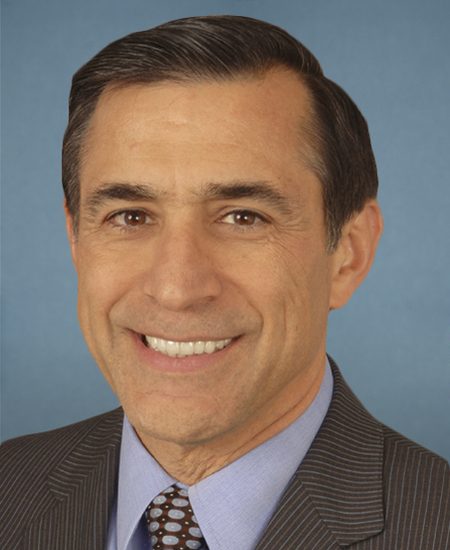
Deep Book: Darrell Issa (CA-48)
CA-48 · House
CandidateDarrell Issa
Executive summary
Darrell Issa, retiring Republican congressman for District 48, announced his retirement on filing deadline day, March 6, 2026; his term ends January 3, 2027, and Marni von Wilpert is the member-elect. The predecessor district voted Trump by 56 to 41 in 2024; the new 48th would have backed Harris by 50 to 47, on registration of 37.01 percent Democratic and 32.16 percent Republican.
Contents
Cover1. Cover and race snapshotExecutive BriefVulnerabilities2. Executive summary and top vulnerabilities3. Biographical file4. Record in office5. Money: campaign finance through September 30, 20266. Economic interests: disclosures, entities, property, patents7. Legal and court record8. Public records file and queued pulls9. Issues and statementsFlip-Flop Matrix10. Social and public presence audit11. Associates12. Timeline13. Appendix: sources, method, and verification notesUpdated November 14, 2026
1. Cover and race snapshot
Darrell Issa, 73, is a Republican businessman and legislator from Vista, San Diego County, California [1][7]. Born November 1, 1953, in Cleveland, Ohio, he built Directed Electronics, maker of the Viper car alarm, into the dominant firm in its United States market, sold his controlling interest at the end of the 1990s, and entered Congress on January 3, 2001 [7][21]. He chaired the House Oversight and Government Reform Committee from January 3, 2011 to January 3, 2015, leading the Fast and Furious investigation that produced the House contempt vote of June 28, 2012 against Attorney General Eric Holder, the first such vote against a sitting attorney general [7][14][15]. He retired from the House in January 2019, returned by winning the open 50th District seat in November 2020, and has represented the 48th District since January 3, 2023 [7]. Counting both tenures, he will have served twelve terms when his service ends on January 3, 2027 [69].
Under Proposition 50, District 48 covers parts of Riverside County and San Diego County, with principal cities and communities including San Marcos, Vista, part of Escondido, Temecula, Hemet, Palm Springs and part of Oceanside [1]. Registration is 463,047 voters, 37.01 percent Democratic and 32.16 percent Republican (Secretary of State report of registration, September 4, 2026) [1]. The redraw is the structural fact of the retirement. The Downballot calculated that the predecessor district voted for Donald Trump by 56 to 41 in 2024, while the new 48th would have backed Kamala Harris by 50 to 47 [3]. Contemporary reporting put the new district's Democratic registration advantage at about four points [4]. Issa's own sequence across the fall of 2025 and the winter of 2026 is documented in Section 4.6: he vowed on Proposition 50 election night that he was "not quitting on California," explored a run in Texas's 32nd District on Dallas area radio, ruled the move out after a meeting with President Trump, insisted to Punchbowl News days before the filing deadline that he would run again, and then announced his retirement on deadline day, March 6, 2026 [3][4][5][6].
The succession race he left behind was expensive, and none of that money is his. In the Capitol Daybook packet, through September 30, 2026, Marni von Wilpert raised $4,966,576, Jim Desmond raised $3,177,972, Brandon Riker raised $2,265,170 and Ammar Campa-Najjar raised $4,772 in this partial accounting of a prior candidacy account, while race independent expenditures included $2,735,998 from HMP opposing Desmond and $2,000,000 from DMFI PAC opposing Campa-Najjar [1]. Those figures belong to the successors' files and are used in this book only to scale the contest, per the production instruction. Desmond and von Wilpert advanced from the June 2, 2026 top two primary, and von Wilpert is the member-elect [1][70][71]. Issa's own final cycle money position is the opposite of a war chest built for a defense: through September 30, 2026 his committee raised $2,181,705.10, spent $3,532,479.03 and held $293,842.39 in cash on hand, a spend down consistent with a member who prepared to run under the new lines and then retired [1]. Section 5 treats his money in full.
Two features of the man define everything else in this file. The first is the early record. In a single year, 1972, the nineteen year old Issa was indicted by a grand jury for theft of a Maserati in an alleged scheme with his brother William, a charge prosecutors dropped with no conviction, and pleaded guilty to possession of an unregistered firearm after a wrong way traffic stop in Michigan, receiving probation and a small fine [7][8][9]. Those two matters, plus a 1980 San Jose case that was dismissed, a 1982 factory fire that an insurer's investigators called incendiary and that Issa has always denied setting, and a service narrative that a 1998 newspaper investigation could not verify as he told it, have been litigated in every campaign he has run since 1998 [7][47][66][67]. They are fifty years old and priced into his career, and they are also the reason a Senate committee in 2019 refused to move his nomination to direct the U.S. Trade and Development Agency without seeing his full FBI file [11]. The second feature is the Oversight tenure itself. No California Republican of his generation held a comparable investigative platform: the Holder contempt vote, the IRS targeting investigation and the May 7, 2014 contempt vote against Lois Lerner, and the Benghazi era subpoena fights made Issa the face of congressional investigation of the Obama administration, a record his supporters count as accountability and his opponents count as the template of partisan investigation [13][14][16][17]. Both features are treated at full depth in this book, in Sections 7 and 4 respectively, because together they are the file.