Capitol Daybook Research · Deep Book
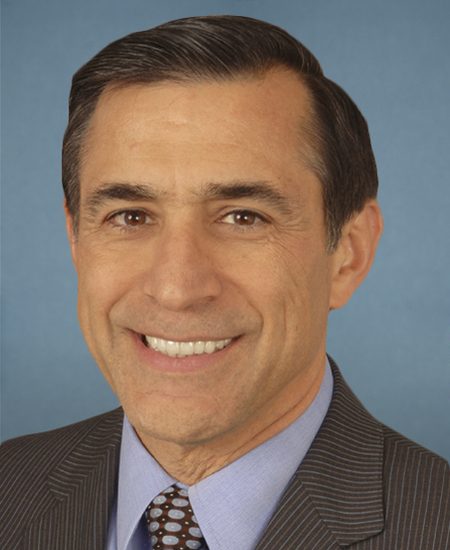
Deep Book: Darrell Issa (CA-48)
CA-48 · House
CandidateDarrell Issa
Executive summary
Darrell Issa, retiring Republican congressman for District 48, announced his retirement on filing deadline day, March 6, 2026; his term ends January 3, 2027, and Marni von Wilpert is the member-elect. The predecessor district voted Trump by 56 to 41 in 2024; the new 48th would have backed Harris by 50 to 47, on registration of 37.01 percent Democratic and 32.16 percent Republican.
Contents
Cover1. Cover and race snapshotExecutive BriefVulnerabilities2. Executive summary and top vulnerabilities3. Biographical file4. Record in office5. Money: campaign finance through September 30, 20266. Economic interests: disclosures, entities, property, patents7. Legal and court record8. Public records file and queued pulls9. Issues and statementsFlip-Flop Matrix10. Social and public presence audit11. Associates12. Timeline13. Appendix: sources, method, and verification notesUpdated November 14, 2026
Capitol Daybook Research Deep Book: Darrell Issa
| Member: | Darrell Issa (Darrell Edward Issa) |
|---|---|
| District: | California Congressional District 48 (CD-48), Proposition 50 lines |
| Party: | Republican |
| Chamber: | U.S. House of Representatives |
| Tier: | Deep Book |
| Date built: | November 5, 2026 |
| Supersedes: | Dossier ca-48, November 5, 2026 |
Coverage note: This book uses the ca-48 slug throughout. The Capitol Daybook finance packet for ca-48 carries Federal Election Commission data through September 30, 2026 [1]. Issa announced on March 6, 2026, the candidate filing deadline, that he will not seek re-election, after months of insisting he was "not quitting" under the Proposition 50 lines and after exploring a run in Texas; he endorsed San Diego County Supervisor Jim Desmond the same day, and his term ends January 3, 2027 [2][3]. The member-elect is Marni von Wilpert, a Democrat, whose term begins January 3, 2027 [1]. This is therefore the closing file on a retiring incumbent of an open seat: the vulnerabilities documented here are the record that follows Issa into any future appointment, candidacy or business role, and the record that framed the succession race. Deep tier pulls completed for this book: the 1972 plea record in full from the deepest sourced reporting, with the disposition variance in the secondary record flagged rather than resolved (Section 7); the Oversight chairmanship record from the committee's own releases and the Clerk's vote record (Section 4); the business and patent record, including the patent litigation history of Directed Electronics (Sections 3 and 6); House financial disclosures, with the line item detail extracted for the annual report for filing year 2025, Filing ID 10075815, filed August 14, 2026, closing the gap the Dossier stated in its Section 6 (Section 6 of this book); the committee inventory across the FEC record, including the 1998 Senate candidacy and both FEC enforcement matters (Sections 5 and 7); Secretary of State entity checks at the public search level (Section 6); education and military service claims checks against sourced reporting, including the 1998 reporting that questioned the service narrative (Section 3); property reporting at city and county level only (Section 6); and the full social media audit (Section 10). Pulls that require a paid, offline, interactive or restricted source are not invented anywhere in this book; each one is logged as a queued records pull in Section 8 and appended to the request queue with ISS identifiers. The Ohio and California court archive pull for the 1972 matters is queue item ISS-1 and ISS-2. No home street address appears anywhere in this book; property is reported at city and county level only, including where the underlying disclosure itself prints an address.
What Matters Most
- The 1972 record and its pattern (Items 1 and 2).. March 1972: indicted for Maserati theft in an alleged scheme with his brother William; dropped, no conviction. December 1972: guilty plea to possession of an unregistered gun. Around them: the Bergey allegation (December 1971), the 1980 San Jose case dismissed for lack of evidence, and the September 7, 1982 factory fire an insurer's analyst called "incendiary." Limit: each added episode is unproven, dismissed, or never charged; the firearm disposition is in genuine variance; resolving pulls ISS-1 and ISS-2.
- The Oversight chairmanship. The House voted 255 to 67 (June 28, 2012) to hold Attorney General Holder in criminal contempt and 231 to 187 (May 7, 2014) to find Lois Lerner in contempt on his resolution; Elijah Cummings counted 98 unilateral subpoenas, more than all three previous chairmen combined (the minority's count). Limit: neither contempt produced a prosecution; the same tenure produced the DATA Act, signed May 9, 2014.
- The FBI file nomination. Nominated September 19, 2018 to direct the U.S. Trade and Development Agency, he stalled a year and died unconfirmed after an 11 to 11 committee deadlock on discussing the file in closed session. Limit: the contents are not public and are not characterized beyond attributed statements; no resolving record is identified.