Capitol Daybook Research · Deep Book
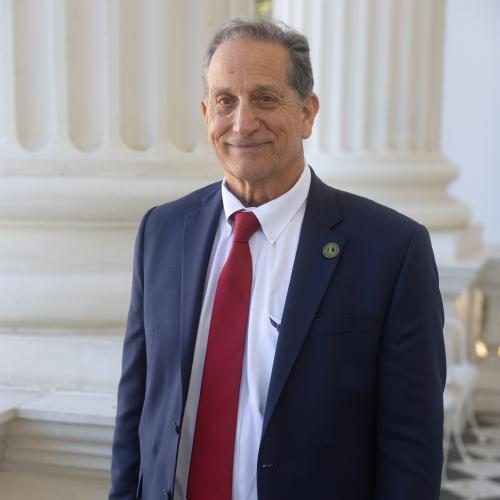
Deep Book: Stan Ellis (AD-32)
AD-32 · Assembly
CandidateStan Ellis
Executive summary
Stan Ellis, a Republican businessman from Bakersfield, represents Assembly District 32 in parts of Kern and Tulare counties, registered 47.4 percent Republican and 25.3 percent Democratic (Section 1).
Contents
Cover1. Cover and race snapshotExecutive BriefVulnerabilities2. Executive summary and top vulnerabilities3. Biographical file4. Record in office5. The money6. Economic interests and business record7. Legal and court record8. Public records file9. Issues and statements fileFlip-Flop Matrix10. Social media audit11. Associates12. Timeline13. Appendix: source indexUpdated November 13, 2026
8. Public records file
Records pulled for this dossier and book: his amended 2025 annual Form 700 from the FPPC portal (Section 6), transparency compilations of his committee accounts (Transparency USA; Section 5), and the behested dataset search (Section 5). No CPRA request specific to Ellis is in the current request queue, and none was filed for this book.
Identified targets, in priority order. (1) The Form 700 completeness pull: his original (pre-amendment) 2025 annual statement, his 2024 candidate statement, and his assuming-office statement, which together resolve Section 2, Finding 1. These are portal retrievals, the fastest items in this book's queue. (2) Cal-Access filings for Stan Ellis for Assembly 2025, Stan Ellis for Assembly 2026, and the officeholder account, closing the Section 5 gap. (3) Kern County records of his businesses' local permitting history (air district, environmental health, and planning records for Sierra Process Systems and the chemical processing operations), the standard local-file pull for an industrialist-officeholder. (4) IonQ's acquisition disclosures for the Qubitekk transaction, a public-company document retrieval. (5) The full LegInfo authored-bill and vote extract for his partial term. Each is formulated as a proposed NEEDS-DRAFT entry in the closing report; the queue itself was not edited by this writer.
Why the Kern permitting layer matters for this member specifically. For most members, the local-permitting pull is boilerplate. For Ellis it is the local form of the book's central question. Sierra Process Systems and the chemical processing and environmental reclamation operations he founded sit inside Kern County's permitting web: conditional use permits and planning commission actions for industrial sites, San Joaquin Valley Air Pollution Control District permits and any notices of violation, Kern County Environmental Health hazardous materials records, and CalGEM (formerly DOGGR) well and facility records for the energy production side. Those files span five decades and two directions of inquiry: whether his companies accumulated violations that a future opponent would surface (no such item was located in the indexed pass at Section 7's stated limits), and whether his brief tenure produced any contact between his office and the agencies that permit his industry (no such contact appears in any source reviewed). The pull is a county and air-district records exercise, slow and unglamorous, and it is the correct next step after the Form 700 series because the two together close the business-record file: disclosure on one side, regulatory history on the other.
What the existing record shows. Twenty-one months of tenure generates a thin Assembly file: no scandal, no records fight, no litigation over his office's records appears in any source reviewed. The richest contemporaneous documentation of the man is in the Bakersfield-area press (the Californian's retirement interview; the Taft College Foundation coverage), quoted and cited at the level the sources support.