Capitol Daybook Research · Deep Book
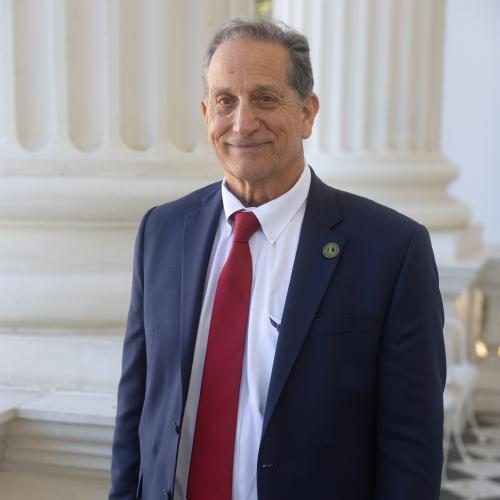
Deep Book: Stan Ellis (AD-32)
AD-32 · Assembly
CandidateStan Ellis
Executive summary
Stan Ellis, a Republican businessman from Bakersfield, represents Assembly District 32 in parts of Kern and Tulare counties, registered 47.4 percent Republican and 25.3 percent Democratic (Section 1).
Contents
Cover1. Cover and race snapshotExecutive BriefVulnerabilities2. Executive summary and top vulnerabilities3. Biographical file4. Record in office5. The money6. Economic interests and business record7. Legal and court record8. Public records file9. Issues and statements fileFlip-Flop Matrix10. Social media audit11. Associates12. Timeline13. Appendix: source indexUpdated November 13, 2026
6. Economic interests and business record
Ellis's amended 2025 annual Form 700, filed March 2, 2026 and covering January 1 through December 31, 2025 as the District 32 Assembly Member, was retrieved from the FPPC portal. The retrieved statement attaches a Schedule D reporting one gift: a tour valued at $100.36 from The California Problem Solvers Foundation, dated August 26, 2025. No investment schedules (A-1 or A-2), real property schedule (B), or income schedule (C) pages appear in the retrieved amended statement. Section 2, Finding 1 analyzes the observation with its innocent explanations; this section records the business record against which it will eventually be resolved.
The business record, entity by entity, as documented in biographical sources. (1) Sierra Process Systems Inc.: founder and former chief executive; an oil and gas process systems company headquartered in the Bakersfield area, and the foundation of his fortune. (2) Qubitekk, Inc.: co-founder; a quantum networking and technology company; acquired by IonQ, a publicly traded quantum computing company, in January 2025. The acquisition's timing, weeks before his March 3, 2025 swearing-in, is the pivot fact for the Form 700 question: the disposition of a co-founder's interest in an acquisition (cash, acquirer stock, earnout, or some combination) determines what a 2025 statement should show, and no source reviewed states the consideration he received. IonQ's public filings as acquirer are the public-record route to the transaction's structure, and a pull of them is included in the proposed queue entries as a document retrieval. (3) Other founded businesses in energy production, chemical processing, environmental reclamation, advanced technology, and cybersecurity, unnamed in the sources reviewed. (4) Bakersfield Jam: former owner of the professional basketball franchise, an interest long predating his office and not asserted to be current.
Entity verification status. Secretary of State business filings (bizfile) for each entity, officer and agent listings, FTB suspension status, UCC filings, and fictitious business names in Kern County were not completed from public web sources in this pass. They are proposed as a queue entry and are not reported as nulls. The one entity fact asserted beyond the biographies is negative and narrow: no source reviewed reports any entity of his as suspended, dissolved in controversy, or in litigation, and Section 7's sweeps located no litigation naming his companies in the indexed pass, at that pass's stated limits.
What a complete statement would be expected to show, and why the pull matters. Form 700 law (Government Code sections 87200 and following) requires a legislator to disclose investments and business positions in entities doing business in California, income from California sources, and real property in the jurisdiction, across the standard schedules: A-1 (investments under 10 percent), A-2 (business entities at 10 percent or more, with the entity's own income sources), B (real property), C (income and business positions), D (gifts), and E (travel payments). A founder who retains any interest in a California-headquartered process systems company, or who received acquirer stock in a January 2025 closing, or who holds Bakersfield real property, would ordinarily generate A-1, A-2, B, or C entries for the 2025 period. Equally, a founder who fully exited every California interest before March 3, 2025, holds assets in blind or exempt forms, or whose holdings sit in a spouse's separate or in retirement vehicles outside the reportable categories, could lawfully file exactly the statement retrieved. Both constructions fit the retrieved document, which is why this book's finding is a question with a named resolving record rather than a conclusion: the original statement, the candidate statement, and the assuming-office statement between them will show whether the amended thin statement is the whole story (a complete exit, documented across three filings) or an artifact of amendment (schedules present in the original and dropped in the amendment). Either answer is publishable; guessing between them is not. This analysis is included at length because the Form 700 question is the only genuinely open research question in Ellis's file, and the next researcher should not have to rebuild the reasoning.
Conflicts screen. The standing question for a member with energy and technology interests is overlap with committee work. His one documented committee role, vice chair of Aging and Long-Term Care, has no overlap with energy, chemical processing, environmental reclamation, or quantum technology. No vote or official act benefiting an Ellis entity was located in any source reviewed. Null result at the stated scope, and the structural point cuts his way: the assignment mismatch he complained about is also the reason no conflict exhibit exists.
Property and mortgage web sweep. The recorder sweep (Kern and Tulare county grantor/grantee indexes: deeds, deeds of trust with lender and original amount, refinances, liens, notices of default, tax delinquency) was not completed from public web sources in this pass and is proposed as a queue entry. His Form 700 as retrieved contains no Schedule B, which is a disclosure statement, not a recorder result. No deed, loan, lien, or delinquency fact is asserted or denied. City and county only would be printed in any event, and balances and payment history are not public records.