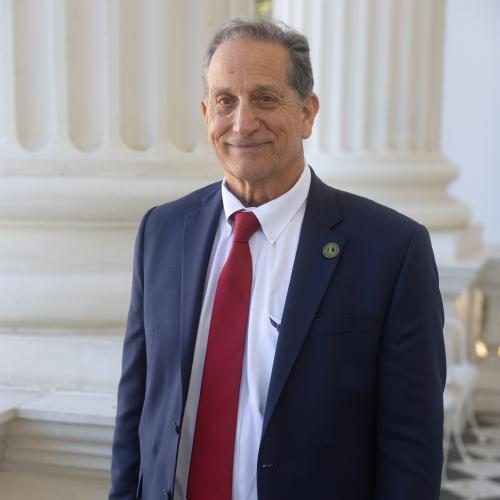
Capitol Daybook Research · Deep Book
Deep Book: Stan Ellis (AD-32)
AD-32 · Assembly
CandidateStan Ellis
Executive summary
Stan Ellis, a Republican businessman from Bakersfield, represents Assembly District 32 in parts of Kern and Tulare counties, registered 47.4 percent Republican and 25.3 percent Democratic (Section 1).
Contents
Executive BriefVulnerability Matrix1. Cover and race snapshot2. Executive summary and top vulnerabilities3. Biographical file4. Record in office5. The money6. Economic interests and business record7. Legal and court record8. Public records file9. Issues and statements fileFlip-Flop Matrix10. Social media audit11. Associates12. Timeline13. Appendix: source indexUpdated November 13, 2026
Capitol Daybook Research Deep Book: Stan Ellis
| Member: | Stan Ellis (Stanley William Ellis) |
|---|---|
| District: | Assembly District 32, parts of Kern and Tulare counties |
| Party: | Republican |
| Chamber: | California State Assembly |
| Tier: | Deep Book |
| Research date / accessed date: | November 5, 2026 |
Method note: Built from the member's dossier and data packet, verified against sources opened for this book: biographical compilations and the CICLT legislative directory (committee assignments, residence), the FPPC Form 700 portal filing (amended 2025 annual), Transparency USA's committee inventory, the Capitol Daybook district dataset (which carries no finance record for Ellis himself and whose AD-32 money data covers the 2026 successor race, labeled as such wherever used), and the library's FPPC Form 803 behested dataset, in which Ellis's record is a stated null. This is the library's shortest-tenured member, and the book's length discipline follows the template: length follows record, not ambition. Where a checklist pull could not be completed from public web sources, the book says so and the item is proposed as a queue entry in the closing report rather than reported as a null. Flags are flags, never verdicts.
What Matters Most
- A thin amended Form 700 against a five decade business record. His amended 2025 annual statement, filed March 2, 2026, carries one Schedule D gift, a tour valued at $100.36, and no investment, real property or income schedules in the retrieved copy, against his record as founder of Sierra Process Systems Inc. and co-founder of Qubitekk, Inc., acquired by IonQ in January 2025. Limit: no compliance failure is asserted, the lawful explanations are stated in full, and the resolving statements are a proposed queue entry not yet completed.
- The placeholder candidacy. In 2024 he stood on the CA-20 ballot urging voters to choose Vince Fong, then succeeded Fong in the Assembly; he had lost the 2006 primary for this seat to Jean Fuller. Limit: the book states the pattern is not improper and his role was public at the time.
- A retirement announced six months in. His own words were: "Not being able to put my time where my knowledge is best suited, that's my real frustration." He was made vice chair of Aging and Long-Term Care, not given an energy or technology portfolio, and no major authored legislation was identified. Limit: the quote is two sided in the book, and a full bill inventory is an unperformed pull.
Executive Brief
Stan Ellis, a Republican businessman from Bakersfield, represents Assembly District 32 in parts of Kern and Tulare counties, registered 47.4 percent Republican and 25.3 percent Democratic (Section 1). He won the February 25, 2025 special election with 64.6 percent to succeed Vince Fong, was sworn in on March 3, 2025, and announced on September 26, 2025 that he would not seek re-election, endorsing David Couch, who leads the pending successor race (Section 1). The library's shortest-tenured member, he faces no competitive race, so this book's value is archival and institutional rather than electoral.
The weaknesses that matter, in the order a buyer should read them:
- A thin amended Form 700 against a five decade business record (Vulnerabilities Item 1). His amended 2025 annual statement, filed March 2, 2026, carries one Schedule D gift, a tour valued at $100.36, and no investment, real property or income schedules in the retrieved copy, against his record as founder of Sierra Process Systems Inc. and co-founder of Qubitekk, Inc., acquired by IonQ in January 2025. Limit: no compliance failure is asserted, the lawful explanations are stated in full, and the resolving statements are a proposed queue entry not yet completed.
- The placeholder candidacy (Item 2). In 2024 he stood on the CA-20 ballot urging voters to choose Vince Fong, then succeeded Fong in the Assembly; he had lost the 2006 primary for this seat to Jean Fuller. Limit: the book states the pattern is not improper and his role was public at the time.
- A retirement announced six months in (Item 3). His own words were: "Not being able to put my time where my knowledge is best suited, that's my real frustration." He was made vice chair of Aging and Long-Term Care, not given an energy or technology portfolio, and no major authored legislation was identified. Limit: the quote is two sided in the book, and a full bill inventory is an unperformed pull.
- A degree claim that lives only on his own campaign site (Item 4). The 2025 campaign homepage claims a mathematics degree from the South Dakota School of Mines and Technology; no other source reviewed claims one, and his 2006 homepage made none. Limit: the degree may be real and omitted from short biographies; the resolving record is a registrar or DegreeVerify pull, neither performed.
Narrative themes
Theme 1: A disclosure statement measured against a business record.
The documented pattern: a five decade career across oil, chemical processing, environmental reclamation and quantum networking set beside an amended Form 700 with a single $100.36 gift (Sections 2 and 6; Item 1). Limitation: the book records a filing observation only.
Theme 2: A route to office through another member's succession.
The documented pattern: a 2024 ballot presence urging voters to choose Fong, succession to Fong's seat with Fong and David Valadao backing (Sections 1 and 3; Item 2). Limitation: stand in candidacies are a known top two feature and were public at the time.
Theme 3: A short tenure ending in a stated frustration.
The documented pattern: a special election win, a retirement announcement within the year, and no signature legislation identified (Sections 2 and 4; Item 3). Limitation: the same mismatch is why no conflict exhibit exists.
Theme 4: A credential claimed in one place only.
The documented pattern: a mathematics degree claimed on the 2025 campaign homepage and in no earlier campaign material or published biography reviewed (Section 10, Wayback subsection; Item 4). Limitation: a degree finished before his 1975 oil industry start is chronologically possible.
Briefing Pitch
Stan Ellis, a Republican businessman from Bakersfield, represents Assembly District 32 in parts of Kern and Tulare counties, registered 47.4 percent Republican and 25.3 percent Democratic (Section 1). He won the February 25, 2025 special election with 64.6 percent to succeed Vince Fong, was sworn in on March 3, 2025, and announced on September 26, 2025 that he would not seek re-election, endorsing David Couch, who leads the pending successor race (Section 1). The library's shortest-tenured member, he faces no competitive race, so this book's value is archival and institutional rather than electoral.
The book's top-ranked vulnerability items: 1. A thin amended Form 700 against a five decade business record; 2. The placeholder candidacy, and a route to office that never ran through a contested win for a job he kept; 3. A retirement announced six months in, in his own words a frustration with the job.
From the book's Vulnerabilities section
The Vulnerability Matrix
The items below are the documented findings in this book that an opposing campaign or independent expenditure committee would most likely cite against Assemblymember Ellis. Each item is drawn entirely from this book's own findings and is presented with its documented basis and, where the record carries one, the innocent explanation and the record that resolves it. These are flags drawn from the record, not verdicts, and only the FPPC or the FEC can find a campaign finance violation.
1. A thin amended Form 700 against a five decade business record
| The Fact (documented basis) | Ellis's amended 2025 annual Form 700, filed March 2, 2026 and covering calendar 2025, attaches a Schedule D reporting one gift, a tour valued at $100.36 from The California Problem Solvers Foundation, dated August 26, 2025 (Section 2, Finding 1; Section 6) [5]. No investment schedules (A-1 or A-2), no real property schedule (B), and no income schedule (C) pages appear in the retrieved amended statement (Section 2, Finding 1; Section 6). The record against which the book measures that statement is a member who founded and ran Sierra Process Systems Inc., co-founded Qubitekk, Inc., which was acquired by IonQ in January 2025, weeks before his swearing in, founded businesses across energy production, chemical processing, environmental reclamation, advanced technology, and cybersecurity, and previously owned a professional basketball franchise (Section 2, Finding 1; Section 3). The book states that a founder who retains any interest in a California headquartered process systems company, or who received acquirer stock in a January 2025 closing, or who holds Bakersfield real property, would ordinarily generate A-1, A-2, B, or C entries for the 2025 period (Section 6). |
|---|---|
| Political Vulnerability | An opponent would say a founder who ran companies across oil, chemical processing, environmental reclamation, and quantum networking filed a disclosure statement with almost nothing on it, and would ask what the amendment left out. |
| Subject Defense (explanation and resolving record) | The innocent explanations are stated in full in the book: Form 700 obligations attach to interests in the filer's jurisdiction and to reportable categories, and business interests held outside California, interests disposed of before the reporting period, and holdings below thresholds or in exempt categories may lawfully produce a thin statement; the retrieved document is the amended statement, and an amendment that replaces schedules can render a portal copy unrepresentative of the original filing; and a January 2025 acquisition, if it converted his interest to cash or to acquirer stock before or during the period, changes what should appear and where (Section 2, Finding 1; Section 6). A founder who fully exited every California interest before March 3, 2025 could also lawfully file exactly the statement retrieved (Section 6). The resolving records are his original (pre-amendment) 2025 annual statement, his 2024 candidate Form 700, and his assuming office statement, all on the FPPC portal, formulated as a proposed queue entry in the closing report (Sections 2, 6, and 8). |
2. The placeholder candidacy, and a route to office that never ran through a contested win for a job he kept
| The Fact (documented basis) | In 2024 Ellis appeared on the ballot for the full term congressional race in California's 20th district while urging voters to choose Vince Fong instead, a ballot presence candidacy in the Fong organization's interest during the cycle in which Fong was navigating the Secretary of State's dual candidacy litigation posture (Section 2, Finding 3; Section 3). Months later he succeeded Fong in the Assembly, with Fong's backing and Congressman David Valadao's (Section 2, Finding 3; Section 3). His one outright win, the February 2025 special election at 64.6 percent, was for a term he served half of before announcing his departure, and he had earlier lost the 2006 Republican primary for this Assembly seat to Jean Fuller (Section 2, Finding 3; Section 3). |
|---|---|
| Political Vulnerability | An opponent would say Ellis stood on a congressional ballot urging voters to choose someone else, then succeeded that same person in the Assembly, and never won a contested election for a job he campaigned to keep. |
| Subject Defense (explanation and resolving record) | The book states that the pattern is not improper, that stand in and placeholder candidacies are a known feature of California's top two system, and that everything about Ellis's role was public at the time (Section 2, Finding 3). The Fong dual candidacy litigation of 2024 concerned Fong and the Secretary of State, not Ellis, and is recorded only as the context of the placeholder candidacy, not as an Ellis controversy (Section 11). The book records no separate resolving record for this item. |
3. A retirement announced six months in, in his own words a frustration with the job
| The Fact (documented basis) | Ellis won the February 25, 2025 special election and was sworn in on March 3, 2025, and on September 26, 2025 he announced he would not seek re-election in 2026, endorsed Kern County Supervisor David Couch as his successor, and said he would return his focus to business (Section 1; Section 3). Announcing his retirement, he told The Bakersfield Californian that he was frustrated in the Democratic supermajority legislature: "Not being able to put my time where my knowledge is best suited, that's my real frustration" (Section 2, Finding 2; Section 9). He was made vice chair of Aging and Long-Term Care, not given an energy or technology portfolio commensurate with his background, and no major authored legislation by Ellis was identified in the sources reviewed, and no bill of his is recorded as chaptered in any source opened for this book (Section 2, Finding 2; Section 4). |
|---|---|
| Political Vulnerability | An opponent would say Ellis asked voters for the seat, then announced within the year that the institution did not use him, and left a partial term with no signature legislation behind him. |
| Subject Defense (explanation and resolving record) | The book presents the quote as two sided: it is the honest statement of a businessman who found committee assignments that did not use him, and it is equally available to a critic as an admission that he disengaged from a job he had just asked voters for, and both readings are the reader's (Section 2, Finding 2). The same assignment mismatch is also the reason no conflict exhibit exists, because the vice chairmanship of Aging and Long-Term Care has no overlap with energy, chemical processing, environmental reclamation, or quantum technology, and no vote or official act benefiting an Ellis entity was located in any source reviewed (Section 6). A full authored bill inventory from the Legislative Counsel and LegInfo record was not completed and is recorded as an unperformed pull, not as a certified null, included in the proposed queue entries (Section 4). |
4. A degree claim that lives only on his own campaign site
| The Fact (documented basis) | His 2025 special election campaign homepage states that he put himself through college at the South Dakota School of Mines and Technology and, after graduating with a degree in mathematics, settled in Kern County (Section 10, Wayback campaign-site archaeology subsection). His 2006 campaign homepage made no education claim, and Section 3 records that no degree claim was located in any other source reviewed for this book, including his official and directory biographies. |
|---|---|
| Political Vulnerability | An opponent would say the one college degree in Stan Ellis's public record is claimed by his own campaign and by no one else, in a book whose education check found no degree claim to verify. |
| Subject Defense (explanation and resolving record) | The innocent explanation is that the degree is real and simply omitted from short biographies; a degree completed before his 1975 start in the Kern County oil industry is chronologically possible. The resolving record is a registrar confirmation from the South Dakota School of Mines and Technology or a National Student Clearinghouse DegreeVerify pull. |
1. Cover and race snapshot
Stan Ellis, a Republican businessman from Bakersfield, represents Assembly District 32 in parts of Kern and Tulare counties; principal cities include Bakersfield, Visalia, Tulare, Ridgecrest, Exeter, Tehachapi, and Taft. Registration in the district is 47.4 percent Republican and 25.3 percent Democratic, per the district profile and packet. Ellis won the February 25, 2025 special election to succeed Vince Fong, who had resigned the seat after his election to Congress, and was sworn in on March 3, 2025. He announced on September 26, 2025 that he would not seek re-election in 2026, endorsed Kern County Supervisor David Couch as his successor, and returns to business when his partial term ends in December 2026.
In the successor race, Couch, whom Ellis endorsed, is the leading candidate in the district results data, where the race remains marked pending as of this book's research date. The packet's finance data for AD-32 covers that successor race only (Couch raised $326,405.69) and is presented in Section 5 as successor-race context, expressly not as Ellis's record.
Competitiveness rating: Safe Republican district; no competitive race involving Ellis himself exists or is expected, since he is retiring. The opposition-research value of this book is therefore archival and institutional rather than electoral: (a) Ellis is a case study in the placeholder candidacy, a man who appeared on a congressional ballot in 2024 urging voters to choose someone else, then succeeded that same person in the Assembly; (b) his business record, five decades across oil, chemical processing, environmental reclamation, and a quantum networking company acquired by a public company weeks before he took office, is the deepest private-sector file of any member in this assignment batch, and his Form 700, as retrieved, is strikingly thinner than that record would predict, which is the book's central documented question; and (c) his September 2025 retirement statement, a sitting member's on-the-record frustration with the institution, is a quotable artifact about the supermajority Legislature from inside the minority.
A note on sources for this district: AD-32 spans two counties with different records infrastructures, Kern (Bakersfield) and Tulare (Visalia), and Ellis's life and business footprint sit overwhelmingly in Kern. The Tulare County portion of the district matters to the successor race (Couch's base spans both) more than to Ellis's own file. Researchers extending this book should weight Kern County pulls first, which is how the proposed queue entries in the closing report are ordered.
2. Executive summary and top vulnerabilities
Ellis is the library's shortest-tenured member: a self-made energy and technology businessman who won a special election in early 2025, served roughly a year and a half, announced his retirement that September, and returned to business. His biography is the story: five decades in Kern County industry, from oil fields to a quantum computing company acquired by IonQ weeks before he took office.
Finding 1 — The thin Form 700 against a thick business record (the book's central open question). Ellis's amended 2025 annual Form 700, filed March 2, 2026 and covering calendar 2025 as the District 32 Assembly Member, was retrieved from the FPPC portal. The retrieved statement attaches a Schedule D reporting one gift: a tour valued at $100.36 from The California Problem Solvers Foundation, dated August 26, 2025. No investment schedules (A-1 or A-2), no real property schedule (B), and no income schedule (C) pages appear in the retrieved amended statement. For most members that would be an unremarkable nil return. For a member who founded and ran Sierra Process Systems Inc., co-founded Qubitekk, Inc. (acquired by IonQ in January 2025, weeks before his swearing-in), founded businesses across energy production, chemical processing, environmental reclamation, advanced technology, and cybersecurity, and previously owned a professional basketball franchise, a statement with no investment, property, or income schedules is the single most research-worthy fact in his file. It is recorded strictly as a filing observation, with the innocent explanations stated in full: (a) Form 700 obligations attach to interests in the filer's jurisdiction and to reportable categories; business interests held outside California, interests disposed of before the reporting period, and holdings below thresholds or in exempt categories may lawfully produce a thin statement; (b) the retrieved document is the amended statement, and an amendment that replaces schedules can render a portal copy unrepresentative of the original filing; and (c) a January 2025 acquisition of his best-known company, if it converted his interest to cash or to acquirer stock before or during the period, changes what should appear and where. The resolving records are specific and pullable: his original (pre-amendment) 2025 annual statement, his 2024 candidate Form 700, and his assuming-office statement, all on the FPPC portal. That pull is formulated as a proposed queue entry in the closing report. No compliance failure is asserted anywhere in this book; what is asserted is that the question exists, is documented, and has a named resolving record.
Finding 2 — His own stated frustration with the institution. Announcing his retirement, he told The Bakersfield Californian that he was frustrated in the Democratic supermajority legislature: "Not being able to put my time where my knowledge is best suited, that's my real frustration." The quote is documented and is the principal quotable item in his file. Its research life is two-sided: it is the honest statement of a businessman who found committee assignments that did not use him (he was made vice chair of Aging and Long-Term Care, not given an energy or technology portfolio commensurate with his background), and it is equally available to a critic as an admission that he disengaged from a job he had just asked voters for. Both readings are the reader's; the quote and its context are the exhibit.
Finding 3 — The placeholder candidacy pattern. In 2024 Ellis appeared on the ballot for the full-term congressional race in California's 20th district while urging voters to choose Vince Fong instead, a ballot-presence candidacy in the Fong organization's interest during the cycle in which Fong was simultaneously navigating the Secretary of State's dual-candidacy litigation posture (Ellis's role, as documented, was to stand on the ballot and point to Fong). Months later he succeeded Fong in the Assembly, with Fong's backing and Congressman David Valadao's. The pattern is not improper; stand-in and placeholder candidacies are a known feature of California's top-two system, and everything about Ellis's role was public at the time. It is recorded because it defines his route to office: he never won a contested election for a job he campaigned to keep; his one outright win, the February 2025 special election at 64.6 percent, was for a term he served half of before announcing his departure. A researcher evaluating his future candidacy for any office starts here.
Finding 4 — A one-cycle record. He leaves office with a partial term, no full election behind him, no signature legislation identified in the sources reviewed, and a hand-picked successor. There is little legislative record to defend or attack, and the book says so rather than inflating the committee work of a 21-month tenure into a record it is not.
Finding 5 — The money file that does not exist yet. The data packet carries no campaign finance record for Ellis himself: no fundraising totals, donor list, or vendor data for Stan Ellis for Assembly 2025, Stan Ellis for Assembly 2026, or his officeholder account, all of which exist as committees in transparency compilations. For a self-funding-capable businessman who ran a special election, the absence is a dataset gap, not a member fact, and this book treats it that way: Section 5 reports the null, refuses to fill it with successor-race numbers, and formulates the Cal-Access pull as a proposed queue entry. Any book that printed Couch's donors under Ellis's name would be defaming both men by spreadsheet; the labeling discipline in Section 5 is the product working as designed.
Null findings. No candidate loans, no family payroll flags, no self-dealing flags in the race data the packet carries (successor race; the labeling caveat of Finding 5 applies to each of those nulls, which describe Couch's race data and the absence of Ellis from the deep dive, not a screened Ellis file). No FPPC enforcement matter, court matter, or discipline item naming Ellis was located in the sweeps described in Section 7. His behested record is a stated null with the dataset's full scope language, in Section 5.
3. Biographical file
| Field | Record |
|---|---|
| Full name | Stanley William Ellis |
| Born | July 4, 1952 |
| Residence | Bakersfield, Kern County (city/county level only) |
| Party | Republican |
| Education | No degree claim located in the sources reviewed; see verification note |
| Occupation | Businessman: founder and former CEO, Sierra Process Systems Inc.; co-founder, Qubitekk, Inc. (acquired by IonQ, January 2025); founder of businesses in energy production, chemical processing, environmental reclamation, advanced technology, cybersecurity |
| Other roles | Former owner, Bakersfield Jam professional basketball franchise; Engineering Advisory Board, California State University, Bakersfield; member roster, California Armenian Legislative Caucus Foundation (March 2026) |
| Prior campaigns | Lost 2006 Republican primary for this Assembly seat to Jean Fuller; on the 2024 CA-20 congressional ballot while urging voters to choose Vince Fong; won February 25, 2025 AD-32 special election, 64.6 percent; sworn in March 3, 2025 |
| Military service | None claimed; null result |
| Family in public life | None identified in the sources reviewed |
Early life and career. Stanley William Ellis was born July 4, 1952. He began working in Kern County's oil industry in 1975, at 23, and built from the fields upward: he went on to found multiple businesses spanning energy production, chemical processing, environmental reclamation, advanced technology, and cybersecurity. He was the founder and former chief executive of Sierra Process Systems Inc., the oil and gas process equipment and services company that anchors the first half of his career, and a co-founder of Qubitekk, Inc., a quantum networking technology company that was acquired by IonQ in January 2025, weeks before he took office. He previously owned the Bakersfield Jam, the NBA D-League professional basketball franchise, and served on the California State University, Bakersfield Engineering Advisory Board. In May 2025, two months into his term, he named the Taft College Foundation his district's nonprofit of the year, and the foundation honored him at a July 29, 2025 luncheon at the Stockdale Country Club in Bakersfield, the kind of district-texture item the local press file preserves.
Education verification note. Unlike the other members in this batch, Ellis's published biographies make no specific degree claim to verify: the sources reviewed describe an industry career from 1975 without naming a college degree, and CICLT's directory lists his residence, committees, and career without an education line. The verification result is therefore recorded precisely: no education claim is made by the member in the sources reviewed, so there is no claim to confirm or contradict; an opponent who asserts a missing credential would first have to show the member claimed one, and none is documented here. A registrar or Clearinghouse check is not applicable to a claim that does not exist.
The Kern County context. Ellis's career spans the modern history of Kern County industry, and a researcher who does not understand that economy will misread both his wealth and his politics. Kern is California's top oil-producing county and one of its top agricultural counties; Bakersfield's business class is built on oilfield services, farming, and the logistics between them. A man who started in the oil fields in 1975, founded a process systems company serving that industry, expanded into chemical processing and environmental reclamation (the business of cleaning up what the first businesses leave behind), and then co-founded a quantum networking company is not three different businessmen; he is one Kern County career following the region's own arc from extraction to remediation to technology. The Qubitekk chapter deserves a sentence of its own: quantum networking is a defense-adjacent, federally funded research field, and IonQ, its acquirer, is a public company whose business runs substantially on government and enterprise quantum contracts. A co-founder's stake in such an acquisition is typically a meaningful financial event. That is the documented backdrop against which Section 2's Form 700 observation is made, and it is also the backdrop for his stated legislative interests (water security, energy independence, economic growth) and for his frustration: the expertise he brought to Sacramento was in exactly the fields the supermajority's committee structure had no minority-party use for.
Path to the Assembly. His route ran through two earlier campaigns. He lost the 2006 Republican primary for this Assembly seat to Jean Fuller, who went on to hold the region's seats for years. In 2024 he appeared on the ballot for the full-term congressional race in California's 20th district but urged voters to choose Vince Fong instead, the placeholder posture analyzed in Section 2. When Fong's resignation to take his House seat created the vacancy, Ellis won the February 25, 2025 special election outright with 64.6 percent of the vote over Democrat Chris Cruz-Boone, who received 28.6 percent, and others, avoiding a runoff, and was sworn in on March 3, 2025. His campaign was backed by Congressman David Valadao and by Fong. On September 26, 2025, he announced he would not seek re-election in 2026, endorsed Supervisor David Couch, and said he would return his focus to business.
Residence and district fit. Ellis resides in Bakersfield per the CICLT directory, inside the district he represented; no residency question of any kind appears in the special election coverage reviewed, and his fifty years in Kern County industry make him one of the most locally rooted members of the 2025 class. The contrast a researcher notes is between rootedness and tenure: he was simultaneously one of the district's most established business figures and, on arrival in Sacramento, a complete legislative novice at 72, older than nearly all of his freshman class and with no staff career, council seat, or prior office of any kind behind him. His biography contains no prior public office at all, which is why the property, court, and records sections of this book lean on the business file: for Ellis, the companies are the prior office.
Identity and namesakes. The subject is Stanley William Ellis, born July 4, 1952, of Bakersfield, California. The surname Ellis is common and the sweeps for this book returned several prominent namesakes who are expressly excluded in Section 7: Wisconsin Senate President Mike Ellis (a different person, whose 2014 retirement followed a secretly recorded fundraising discussion in Wisconsin politics; no connection to the subject), Stanley M. Ellis of Stockton University and Calkins Media in New Jersey, and various athletic Ellises. Every item in this book was identity-checked against the Bakersfield/Kern County and July 4, 1952 markers before inclusion.
Queued pulls. His voter registration history and per-election turnout record were not pulled; they are registrar/statewide-file records obtained through Political Data Inc. under Elections Code sections 2188 and 2194 and are proposed as a queue entry. Queued, not null. How anyone voted is never sought.
4. Record in office
Ellis's Assembly record covers a single partial term, from March 3, 2025 through the end of the 2025-26 session in December 2026. The defining event of the term is its brevity: six months after taking office he announced his retirement, citing frustration that the supermajority legislature did not use his business and technical background, in the remark quoted in Section 2.
Committees. The CICLT legislative directory lists Ellis as Vice Chair of the Assembly Committee on Aging and Long-Term Care. That assignment is the concrete form of his stated frustration: a founder of energy, chemical, and quantum technology companies, given a vice chairmanship in aging policy. The full committee roster from the Assembly's own listing was not separately pulled in this pass and the directory listing is the source relied on; no additional committee assignments are asserted.
Legislation. No major authored legislation by Ellis was identified in the sources reviewed at this tier, and no bill of his is recorded as chaptered in any source opened for this book. A full authored-bill inventory from the Legislative Counsel / LegInfo record is a standard pull that was not completed for a member whose tenure and announced retirement make the yield predictably thin; it is recorded as an unperformed pull, not as a certified null, and it is included in the proposed queue entries. The honest summary of the record in office is: a special-election member who served, announced his frustration and his departure within the year, named a district nonprofit of the year, participated in the Armenian Legislative Caucus Foundation's roster (published March 2026), and spent his remaining months as a caretaker for a seat he had already handed, by endorsement, to his successor.
The AB 2691 vote record as an Ellis exhibit. The one floor vote of Ellis's captured in this batch's primary sources is an absence: in the Assembly's 67-0 passage of AB 2691 (Addis) on April 27, 2026, the caucus analysis lists Ellis among the absentees (with Dixon and Macedo). A single absence is not an attendance record and no inference is drawn; it is logged because it is the only roll call naming him in the documents opened for this assignment.
Attendance. No attendance controversy appears in any source reviewed. A LegInfo missed-vote analysis was not performed. Noted as a standard pull, not a null.
The special-election mechanics, for the file. The February 25, 2025 special election that seated Ellis was called on an expedited calendar after Fong's resignation, in a district whose registration (47.4 percent Republican) made the Republican primary electorate the whole contest. Ellis's 64.6 percent in a multi-candidate field cleared the majority threshold and avoided a runoff, the strongest electoral performance available to him and the only one of his three candidacies (2006, 2024, 2025) that he won. Turnout in February special elections is structurally low, and the winner's coalition is correspondingly narrow and organization-driven, which is the documented shape here: the Fong and Valadao organizations, Kern County's Republican establishment, and the business community he had been part of for fifty years. The research point is not that the win was illegitimate, special elections are how California fills vacancies and his margin was decisive among those who voted; it is that his mandate was always an establishment mandate, and his September retirement announcement, endorsing a sitting county supervisor as his replacement, returned the seat to the same establishment channel that produced him. Read whole, the Ellis chapter is a study in how California's vacancy machinery and a county's political establishment interact, with the member himself as the most candid commentator on the result (Section 9).
5. The money
No finance record for Ellis in the packet. The data packet carries no campaign finance record for Ellis himself: no fundraising totals, donor list, or vendor data for his committees. His committees on file in transparency compilations are Stan Ellis for Assembly 2025 and Stan Ellis for Assembly 2026, plus an officeholder account. A Cal-Access pull of his special election and officeholder filings is formulated as a proposed queue entry in the closing report; nothing about his own money is stated here beyond the null, the committee names, and the behested record below. The research questions that pull would answer are the standard ones for a wealthy self-funding-capable candidate: whether he loaned or contributed to his own special election (candidate loans are a screened field in every packet; his packet's loan field is empty because the packet has no record, which is a different thing from a screened zero, and the distinction is preserved here deliberately), who else funded a low-salience special election, and what the officeholder account spent on.
Behested payments (Form 803): stated null
The library's behested dataset was searched for this official, and the result is a null, stated with the scope the dataset requires: the FPPC Form 803 raw data (BehestedPayments.xls, FPPC Form 803 database download, downloaded November 5, 2026; file last saved October 30, 2026; payment years 2011-2026; 15,524 payment lines) was searched for the official name "Stan Ellis" and its spelling variants on November 5, 2026, and no payment lines were found. Total behested: no filings; payment-line count: 0; top payers: none; top recipients: none; largest single payment: none. This is a null result for this source and period only, not a finding that the official made no behested payments. The dataset covers filings he made as a California state official; state law requires reporting only when payments from a single source total $5,000 or more in a calendar year; and any filings from any local office are absent. For a member with a 21-month tenure who arrived in March 2025, a null behested record is unremarkable: behesting scales with seniority and asks, and he made few. Consistent with the null, no FPPC behested enforcement matter naming Ellis was located; the Section 7 cross-reference records that null at its own scope.
Successor-race context (not Ellis's record). The packet's finance data for AD-32 covers the 2026 race to succeed him. David Couch, the candidate Ellis endorsed, raised $326,405.69. Couch's top donors include CREPAC ($23,600), the CCPOA PAC ($11,800), Southern California Edison ($11,800), Pete Pankey ($10,900), the Kern County Fire Fighters Union Local 1301 PAC ($9,300), the California New Car Dealers PAC ($6,000), the Personal Insurance Federation PAC ($5,900), the Picayune Rancheria ($5,900), the WMA PAC ($5,900), Stewart A. Resnick and affiliated entities ($5,900), Philip Morris USA ($5,900), and the carpenters' POWER PAC ($5,900). Independent expenditure support for Couch included $40,000 from the CCPOA Local PAC. Couch's vendors included Pacific Campaign Solutions ($24,782), Wendy Warfield and Associates ($15,061.07), Discover ($13,323.51, meetings), the Kern County Young Republicans Voting Guide ($10,000), the Reform California Voter Guide ($9,000), KAL Group ($6,845.58), and Sierra Hills Consulting ($5,310.79). The context matters to Ellis's file in exactly one way: his endorsement transferred to a conventionally funded Kern County Republican successor, and the succession was orderly. Nothing in Couch's file is attributed to Ellis beyond the endorsement.
Null results. In the race data the packet does carry, there are no candidate loans, no family payroll flags, and no self-dealing flags, and Ellis does not appear in the finance red flags deep dive. Those flags describe the successor-race data; for Ellis's own committees the corresponding fields are unpopulated for the reason stated above, and conflating the two would be an error this book refuses to make.
The AD-32 finance packet records Ellis's controlled committees, Stan Ellis for Assembly 2025, Stan Ellis for Assembly 2026 and Assemblyman Stan Ellis 2025 Assembly Officeholder Acount, in Cal-Access at $432,345.82 raised, $507,845.40 spent, and $28,197.42 cash on hand through June 30, 2026.
6. Economic interests and business record
Ellis's amended 2025 annual Form 700, filed March 2, 2026 and covering January 1 through December 31, 2025 as the District 32 Assembly Member, was retrieved from the FPPC portal. The retrieved statement attaches a Schedule D reporting one gift: a tour valued at $100.36 from The California Problem Solvers Foundation, dated August 26, 2025. No investment schedules (A-1 or A-2), real property schedule (B), or income schedule (C) pages appear in the retrieved amended statement. Section 2, Finding 1 analyzes the observation with its innocent explanations; this section records the business record against which it will eventually be resolved.
The business record, entity by entity, as documented in biographical sources. (1) Sierra Process Systems Inc.: founder and former chief executive; an oil and gas process systems company headquartered in the Bakersfield area, and the foundation of his fortune. (2) Qubitekk, Inc.: co-founder; a quantum networking and technology company; acquired by IonQ, a publicly traded quantum computing company, in January 2025. The acquisition's timing, weeks before his March 3, 2025 swearing-in, is the pivot fact for the Form 700 question: the disposition of a co-founder's interest in an acquisition (cash, acquirer stock, earnout, or some combination) determines what a 2025 statement should show, and no source reviewed states the consideration he received. IonQ's public filings as acquirer are the public-record route to the transaction's structure, and a pull of them is included in the proposed queue entries as a document retrieval. (3) Other founded businesses in energy production, chemical processing, environmental reclamation, advanced technology, and cybersecurity, unnamed in the sources reviewed. (4) Bakersfield Jam: former owner of the professional basketball franchise, an interest long predating his office and not asserted to be current.
Entity verification status. Secretary of State business filings (bizfile) for each entity, officer and agent listings, FTB suspension status, UCC filings, and fictitious business names in Kern County were not completed from public web sources in this pass. They are proposed as a queue entry and are not reported as nulls. The one entity fact asserted beyond the biographies is negative and narrow: no source reviewed reports any entity of his as suspended, dissolved in controversy, or in litigation, and Section 7's sweeps located no litigation naming his companies in the indexed pass, at that pass's stated limits.
What a complete statement would be expected to show, and why the pull matters. Form 700 law (Government Code sections 87200 and following) requires a legislator to disclose investments and business positions in entities doing business in California, income from California sources, and real property in the jurisdiction, across the standard schedules: A-1 (investments under 10 percent), A-2 (business entities at 10 percent or more, with the entity's own income sources), B (real property), C (income and business positions), D (gifts), and E (travel payments). A founder who retains any interest in a California-headquartered process systems company, or who received acquirer stock in a January 2025 closing, or who holds Bakersfield real property, would ordinarily generate A-1, A-2, B, or C entries for the 2025 period. Equally, a founder who fully exited every California interest before March 3, 2025, holds assets in blind or exempt forms, or whose holdings sit in a spouse's separate or in retirement vehicles outside the reportable categories, could lawfully file exactly the statement retrieved. Both constructions fit the retrieved document, which is why this book's finding is a question with a named resolving record rather than a conclusion: the original statement, the candidate statement, and the assuming-office statement between them will show whether the amended thin statement is the whole story (a complete exit, documented across three filings) or an artifact of amendment (schedules present in the original and dropped in the amendment). Either answer is publishable; guessing between them is not. This analysis is included at length because the Form 700 question is the only genuinely open research question in Ellis's file, and the next researcher should not have to rebuild the reasoning.
Conflicts screen. The standing question for a member with energy and technology interests is overlap with committee work. His one documented committee role, vice chair of Aging and Long-Term Care, has no overlap with energy, chemical processing, environmental reclamation, or quantum technology. No vote or official act benefiting an Ellis entity was located in any source reviewed. Null result at the stated scope, and the structural point cuts his way: the assignment mismatch he complained about is also the reason no conflict exhibit exists.
Property and mortgage web sweep. The recorder sweep (Kern and Tulare county grantor/grantee indexes: deeds, deeds of trust with lender and original amount, refinances, liens, notices of default, tax delinquency) was not completed from public web sources in this pass and is proposed as a queue entry. His Form 700 as retrieved contains no Schedule B, which is a disclosure statement, not a recorder result. No deed, loan, lien, or delinquency fact is asserted or denied. City and county only would be printed in any event, and balances and payment history are not public records.
7. Legal and court record
Method and limits. The sweep for this book was a bounded, news-indexed and publicly indexed pass conducted November 5, 2026, for the member's full name and common short name with litigation, arrest, charge, judgment, bankruptcy, lien, and discipline terms, centered on Kern and Tulare counties. It is not a certified superior court index search and not a PACER pull; both are proposed as queue entries. Because "Stan Ellis" and "Stanley Ellis" are common name forms, identity verification was applied to every candidate hit, and the exclusions below are part of the product.
- Criminal: No arrest, charge, or criminal case naming Stanley William Ellis of Bakersfield was located. Null result within the stated method.
- Civil: No civil judgment or lawsuit naming the subject was located. Null result within the stated method. Litigation involving his companies, a realistic category for oilfield and chemical-processing businesses operating for five decades (contract, employment, environmental, and personal-injury suits are endemic to the sector), was not located in the indexed pass; the absence at this method's limits is reported as such, and the PACER and superior court pulls proposed in the closing report are the instruments that would convert it to a certified result either way. No finding is made in either direction beyond the stated pass.
- Bankruptcy: No bankruptcy filing naming the subject or, in the indexed pass, his named companies was located. Null result within the stated method.
- Tax liens and judgments: None located in the indexed pass. Recorder-level confirmation rides with the queued property sweep.
- Professional discipline and licenses: Ellis holds no license of the checklist's enumerated kinds in any source reviewed (not an attorney, physician, credentialed teacher, real estate licensee, or accountant). His businesses operate in licensed and permitted sectors (oil and gas operations under CalGEM, chemical processing under air district and DTSC regimes), but no enforcement action or license discipline naming him personally or his named companies was located in the sources reviewed. Null result at the stated scope; agency enforcement databases are part of the queued entity pull.
- FPPC enforcement, including the behested cross-reference: No FPPC enforcement action, warning letter, or stipulation naming Stan Ellis was located, including no behested matter, consistent with the Section 5 dataset null.
- Family court (relevance gate): No family-court matter involving the subject was located in the sources reviewed, and none is reported. No pull was made; the gate was not triggered by anything in this file.
- Driving and licensing-adjacent records: DMV and driving records are closed sources under the library's rules (DPPA) and were not sought; no news-indexed item (a DUI arrest would be a public criminal matter and would have surfaced in the criminal sweep) was located. The distinction is recorded because researchers occasionally conflate the two: the closed source is the driving record itself, while a driving-related arrest or conviction would be a court record inside the sweep's scope, and none was found.
- Queued negative checks, not nulls: The Megan's Law registry search, the Have I Been Pwned presence check, and the voter registration/turnout pull were not performed in this pass and are proposed as queue entries. No result is claimed for any of them.
Namesake exclusions, stated expressly. (1) Mike Ellis of Wisconsin: a former Wisconsin State Senate President whose 2014 retirement followed release of a secretly recorded discussion of an illegal fundraising scheme. A different person in a different state with a different party history; every search result concerning him was excluded, and nothing from his record is attributed to the subject. (2) Stanley M. Ellis of New Jersey: vice president of Calkins Media and a Stockton University trustee, Penn State 1979 and Wharton MBA 1986. Different middle initial, biography, and state; excluded. (3) Sedrick Ellis (NFL) and Cody Ellis (basketball): excluded as obviously distinct. A future researcher who finds a fundraising-scandal headline attached to the surname "Ellis" and the word "retirement" is almost certainly looking at the Wisconsin namesake; the exclusion is logged prominently for exactly that reason.
8. Public records file
Records pulled for this dossier and book: his amended 2025 annual Form 700 from the FPPC portal (Section 6), transparency compilations of his committee accounts (Transparency USA; Section 5), and the behested dataset search (Section 5). No CPRA request specific to Ellis is in the current request queue, and none was filed for this book.
Identified targets, in priority order. (1) The Form 700 completeness pull: his original (pre-amendment) 2025 annual statement, his 2024 candidate statement, and his assuming-office statement, which together resolve Section 2, Finding 1. These are portal retrievals, the fastest items in this book's queue. (2) Cal-Access filings for Stan Ellis for Assembly 2025, Stan Ellis for Assembly 2026, and the officeholder account, closing the Section 5 gap. (3) Kern County records of his businesses' local permitting history (air district, environmental health, and planning records for Sierra Process Systems and the chemical processing operations), the standard local-file pull for an industrialist-officeholder. (4) IonQ's acquisition disclosures for the Qubitekk transaction, a public-company document retrieval. (5) The full LegInfo authored-bill and vote extract for his partial term. Each is formulated as a proposed NEEDS-DRAFT entry in the closing report; the queue itself was not edited by this writer.
Why the Kern permitting layer matters for this member specifically. For most members, the local-permitting pull is boilerplate. For Ellis it is the local form of the book's central question. Sierra Process Systems and the chemical processing and environmental reclamation operations he founded sit inside Kern County's permitting web: conditional use permits and planning commission actions for industrial sites, San Joaquin Valley Air Pollution Control District permits and any notices of violation, Kern County Environmental Health hazardous materials records, and CalGEM (formerly DOGGR) well and facility records for the energy production side. Those files span five decades and two directions of inquiry: whether his companies accumulated violations that a future opponent would surface (no such item was located in the indexed pass at Section 7's stated limits), and whether his brief tenure produced any contact between his office and the agencies that permit his industry (no such contact appears in any source reviewed). The pull is a county and air-district records exercise, slow and unglamorous, and it is the correct next step after the Form 700 series because the two together close the business-record file: disclosure on one side, regulatory history on the other.
What the existing record shows. Twenty-one months of tenure generates a thin Assembly file: no scandal, no records fight, no litigation over his office's records appears in any source reviewed. The richest contemporaneous documentation of the man is in the Bakersfield-area press (the Californian's retirement interview; the Taft College Foundation coverage), quoted and cited at the level the sources support.
9. Issues and statements file
Ellis ran as a businessman rather than an ideologue, and his public statements center on competence and fit. The verified quote file is short, and the book presents it at its true size.
- On leaving: "Not being able to put my time where my knowledge is best suited, that's my real frustration." (The Bakersfield Californian, September 2025, announcing his decision not to seek re-election.) This is the fullest statement of his view of the institution and the anchor quote of his file.
- On taking office and the special election: The directory biography records that he entered politics with a focus on water security, energy independence, and economic growth after the unsuccessful 2024 congressional appearance, won the 2025 special election succeeding Fong, and campaigned with the backing of Valadao and Fong. The through-line in his own framing, as preserved in the retirement interview, is that he came to Sacramento to be used as a technical resource and measures his tenure by whether that happened; by his own account it did not, which is why the frustration quote, rather than any policy statement, is the statement his file will be remembered by.
- On his priorities: Biographical and directory sources summarize his stated focus on taking office as water security, energy independence, and economic growth in the Central Valley. These are platform summaries from secondary sources, presented as such and not placed in quotation marks as his verbatim words, per the verbatim-quotes rule.
- The 2024 placeholder posture: His ballot presence in the CA-20 full-term race while urging voters to choose Vince Fong is a statement made by conduct, documented in Section 3; contemporary coverage is the source, and no verbatim quote from it is asserted here because none was verified in the sources opened for this book.
- The succession: His endorsement of David Couch, made with the retirement announcement, is his most consequential political statement of the term; it is documented in Sections 1 and 5.
- District honors: His selection of the Taft College Foundation as the district's nonprofit of the year (May 2025) and the foundation's July 29, 2025 thank-you luncheon are his principal district-facing public acts in the local press file.
Questionnaires, pledges, scorecards. No questionnaire answer, signed pledge, or scorecard rating for Ellis was located in the sources opened for this book. For a special-election Republican in a safe seat who announced his retirement within the year, that thinness is expected; it is recorded as a bounded-pass observation, not a certified null, and no statement is attributed to him beyond the items above. Flip-flop screen: with one verified quote and no prior-office voting record (his 2006 and 2024 candidacies produced statements only in coverage not opened for this book), there is no documented statement-versus-vote pair to present. The screen is reported as yielding no exhibits at the stated scope, which for this member is the accurate result.
Flip-Flop Matrix
| Issue | Then | Now | Change type | Fairness note / resolving record |
|---|---|---|---|---|
| Campaign biography claims about Qubitekk and a COVID-19 device | Homepage capture 2025-03-02 describes Qubitekk in the present tense as his company and states a radiation device for COVID-19 "is expected to enter the market early next year" with "a 99.9% destruction efficiency" (Section 10, Wayback subsection) | The homepage capture of 2026-06-14 is identical, word for word, fifteen months that included the acquisition of Qubitekk by IonQ in January 2025 and the passage of the early next year market window (Section 10, Wayback subsection) | Stale copy | The book logs this as staleness, not a reversal: a retiring member campaign site is low maintenance by definition. No resolving record is recorded; the two captures are the exhibit |
Rows considered and excluded: the mathematics degree first claimed in the 2025 campaign homepage and absent from the 2006 homepage is an addition of a claim, not a removal, reversal or changed figure, and it has no type in the closed vocabulary; it is carried as Item 4. Section 9 records a flip-flop screen yielding no statement-versus-vote pair at its stated scope, and no other position change was located in Sections 2, 9 or 10.
10. Social media audit
Platform-by-platform result. X: no verified account confirmed. Facebook: no verified page confirmed. Instagram: no verified account confirmed. TikTok: no public account located. YouTube: no member channel confirmed; his public video presence, if any, would be carried on caucus or news channels not identified in this pass. Threads: no verified account confirmed. Each entry is a null at this pass's verification level, stated per platform so a later audit can close them individually against live profiles.
Inventory. No verified personal or campaign handles for Ellis on X, Facebook, Instagram, TikTok, YouTube, or Threads were confirmed in the sources opened for this book, and no follower counts are reported. Given his 21-month tenure, late start (sworn in March 2025), and retirement announcement six months in, his public communications footprint in the sources reviewed is dominated by news coverage (the Californian, the Taft-area press, trade coverage of the IonQ acquisition) rather than social posting. His district office's public acts reach print through the local press file described in Section 9.
Method and limits, stated honestly. This is an inventory-level audit with a null result, not a full-history sweep: there is no verified account whose history could be swept. A username sweep for undisclosed accounts (business-era handles under Sierra Process Systems or Qubitekk, which would be corporate accounts rather than personal ones) was not performed; a Wayback capture inventory of his special-election campaign site was not performed. Both are included in the proposed queue entries. No post requiring flagging was located because no attributable posting history was located; the sentence is scoped to that fact and claims nothing more. Public sources only were reviewed, and no contact with any account was made.
A note on what a thin social file means for monitoring. Three of the four members in this assignment batch maintain multi-platform official presences that generate a continuous record; Ellis generates almost none, which changes the monitoring prescription rather than eliminating it. His post-Assembly record will accumulate in corporate and local-government sources (board appointments, company announcements, Kern County proceedings) rather than in posts, and the Section 8 pulls are weighted accordingly. Researchers should also note the inverse risk in a thin file: the namesake density documented in Section 7 means automated alerts on "Stan Ellis" will return substantially more noise (Wisconsin politics archives, New Jersey higher education, sports) than signal, and any monitoring setup for this name requires the Bakersfield and date-of-birth filters applied at intake.
Web archaeology note. The durable web record of Stan Ellis is corporate: Qubitekk's acquisition by IonQ in January 2025 generated trade-press coverage that preserves his co-founder role, and Sierra Process Systems' long operating history is the substrate of the Section 6 entity pulls. A retiring member's campaign web presence typically lapses with the domain; capturing it is time-sensitive, which is why the Wayback item is proposed rather than deferred silently.
Wayback campaign-site archaeology
Sweep completed 2026-11-05. Domains verified as the member's: stanellisforassembly.com, his 2025 special election campaign site, 16 root captures, 2024 to 2026, of which the genuine campaign captures run from March 2025; and ellisforassembly.com, his 2006 Assembly campaign site, 4 root captures, 2006 to 2024, of which only the 2006 captures carry his campaign content. Domains checked and excluded: ellisforcalifornia.com, which belongs to a different candidate (its own footer reads "Paid For by Darren Ellis for State Assembly 2024"), excluded on capture content; voteellis.com, which is Johnny Ellis, a candidate for Metro Council in Nashville, Tennessee, excluded on capture content; stanellis.com, registrar parking pages and lander redirects in every sampled capture; and electstanellis.com, a single lander capture with no campaign content verified. Pages compared: the 2006 homepage; the 2025 site homepage in March 2025 and June 2026; the issues page in October 2025 and April 2026; and the endorsements page in September 2025.
A mathematics degree claimed on the 2025 campaign site, and nowhere else in his record. The 2006 campaign homepage (capture 2006-05-25) rests his candidacy entirely on business experience ("use my 30 years of business experience and common sense") and makes no education claim of any kind. The 2025 campaign homepage (capture 2025-03-02) states: "Growing up on a hog farm in South Dakota, he worked to put himself through college at the South Dakota School of Mines and Technology." and "After graduating with a degree in mathematics, Stan settled down in Kern County, where he began an extensive entrepreneurial career." The same wording is carried unchanged in the June 2026 capture. What changed: a specific degree claim appears in his 2025 campaign biography that appears in no earlier campaign material and in none of the published biographies reviewed for this book; Section 3 records that no degree claim was located in any source reviewed. Fairness context: the claim may be accurate, a degree completed before he started in the Kern County oil industry in 1975 is chronologically possible, and short official biographies often omit education; the documented point is the asymmetry, that the only place the credential is claimed is his own campaign site. The resolving record is a registrar confirmation from the South Dakota School of Mines and Technology or a National Student Clearinghouse DegreeVerify pull, neither of which has been performed.
Staleness: the March 2025 biography was still being served, word for word, in June 2026. The homepage biography captures of 2025-03-02 and 2026-06-14 are identical, including: "Along with his work in quantum physics, Stan developed a radiation device for COVID-19 which is expected to enter the market early next year. The device irradiates and mutates RNA, killing any virus with a 99.9% destruction efficiency." The same text describes Qubitekk in the present tense as his company. What changed: nothing on the page changed across fifteen months that included the acquisition of Qubitekk by IonQ in January 2025 (Section 3) and the passage of the "early next year" market window for the COVID-19 device. Fairness context: this is staleness, not a reversal; a retiring member's campaign site is low-maintenance by definition. It is logged because the frozen page still makes a quantified product claim (99.9% destruction efficiency) with a future-tense market promise that its own calendar has overtaken. Full exhibits E-WB-1 and E-WB-2 are in the work files.
11. Associates
- Vince Fong, now U.S. Representative: his predecessor in both the 2024 congressional race (in which Ellis stood on the ballot urging voters to choose Fong) and this Assembly seat (which Fong vacated for Congress and Ellis filled). Fong backed Ellis's special election. The relationship is the spine of Ellis's route to office.
- David Valadao, U.S. Representative: backed Ellis's 2025 special election campaign, per the directory biography.
- David Couch, Kern County Supervisor: the successor Ellis endorsed on announcing his retirement; leading candidate in the pending successor race. His finance file is summarized in Section 5 as context only.
- Jean Fuller, former legislator: defeated Ellis in the 2006 Republican primary for this seat and later held the region's seats; the first data point of his two-decade route to a 21-month term.
- Chris Cruz-Boone: his Democratic opponent in the February 2025 special election (28.6 percent).
- Business associates: his partners and successors at Sierra Process Systems Inc. and his co-founders at Qubitekk, Inc., the latter acquired by IonQ in January 2025. Individual names beyond the member's are not asserted in this book because the sources opened did not name them with the certainty the citation standard requires; the entity pulls proposed in the closing report are the route to them.
- California Armenian Legislative Caucus Foundation: he appears on its member roster as published in March 2026 (The California Courier).
- Staff: No chief of staff or senior staff names were verified at this tier. Null result. The packet's family payroll screen is empty for the race data it carries (successor race), and no family member in his campaign's employ was identified in any source reviewed.
The establishment network, read as a map. Ellis's associate list is short because his career was private, but its structure is informative. Every political relationship in it runs through Kern County's Republican establishment or the Fong organization: Fuller, his 2006 conqueror, became the region's senior Republican; Fong, his patron and predecessor twice over; Valadao, the region's congressman; Couch, his chosen successor, a county supervisor from the same establishment tier. There is no Sacramento consultant class in his file, no leadership PAC network, no statewide donor identity, because he never built one; his committees (Section 5) are the standard candidate and officeholder vehicles and nothing more exotic was located. For a researcher, the map's implication is that Ellis's political capital was always local and borrowed rather than personal and portable. If he re-enters public life, it will be through the same Kern County channel (a county office, an appointment, a board) or not at all, and monitoring should be set accordingly: the Bakersfield press and the Kern County board agenda will carry the news before Sacramento does.
Controversy screen. No associate controversy touching Ellis was located: the Fong dual-candidacy litigation of 2024 concerned Fong and the Secretary of State, not Ellis, and is recorded in his file only as the context of the placeholder candidacy, not as an Ellis controversy. No staffer, consultant, donor, or business-partner scandal attaching to him appears in the sources reviewed. Null result at the stated scope.
Monitoring prescription. Ellis's file should not be closed at his December 2026 departure; it should be set to a light watch. The triggers that would reopen it are enumerable: any Form 700 leaving-office filing (which will either confirm the thin-statement pattern or complicate it), any new candidacy filing in Kern County, any IonQ-related disclosure naming him, and the resolution of the Section 6 entity pulls. Absent one of those triggers, the file is complete at the level the record supports, and its most likely future use is as background in the Couch file and in any account of the Fong succession.
Live records: this person's connected organizations, donors and committees are maintained live on their research hub.
12. Timeline
- July 4, 1952: Born.
- 1975: Begins working in Kern County's oil industry.
- 2006: Loses the Republican primary for the Assembly seat to Jean Fuller.
- January 2025: Qubitekk, Inc., which he co-founded, is acquired by IonQ.
- February 25, 2025: Wins the AD-32 special election with 64.6 percent over Chris Cruz-Boone (28.6 percent).
- March 3, 2025: Sworn in to the Assembly.
- May 2025: Names the Taft College Foundation the district's nonprofit of the year.
- July 29, 2025: Taft College Foundation thank-you luncheon in his honor, Bakersfield.
- August 26, 2025: Date of the single gift (a tour, $100.36, California Problem Solvers Foundation) on his Form 700 Schedule D.
- September 26, 2025: Announces he will not seek re-election in 2026 and endorses David Couch; the Californian publishes his frustration quote.
- March 2, 2026: His amended 2025 annual Form 700 is filed.
- March 2026: Appears on the California Armenian Legislative Caucus Foundation member roster.
- April 27, 2026: Recorded absent on the Assembly's 67-0 AB 2691 floor vote.
- November 3, 2026: Couch leads the successor race in results data; race pending.
- December 2026: Ellis's partial term ends; he returns to business.
13. Appendix: source index
Verification date for all entries: November 5, 2026. Internal datasets are cited without a public link by design.
- Cited, not linked Capitol Daybook Research data packet, AD-32 (no finance record for the member; successor-race finance data, district registration, and flag screens). Internal dataset; no public link exists.
- Secondary source · linked Capitol Daybook district profile, AD-32. https://capitoldaybook.com/districts/ad-32/
- Secondary source · linked Wikipedia, "Stan Ellis" (birth, career, Qubitekk/IonQ, Bakersfield Jam, 2006 primary, 2024 ballot posture, special election results, retirement). https://en.wikipedia.org/wiki/Stan_Ellis
- Secondary source · linked Transparency USA, candidate profile, Stan Ellis (California) (committee inventory: Stan Ellis for Assembly 2025, Stan Ellis for Assembly 2026, officeholder account). https://www.transparencyusa.org/ca/candidate/stan-ellis
- Secondary source · linked Fair Political Practices Commission, Form 700, amended 2025 annual statement of Stan Ellis, filed March 2, 2026, retrieved via the FPPC Form 700 search portal (Schedule D gift only in the retrieved copy). https://wcfweenxfcmsichcbyki.supabase.in/storage/v1/object/public/pdfs/8f604d4c-cfac-4857-9646-a89b4fa58263.pdf
- Secondary source · linked The California Courier, "California Armenian Legislative Caucus Foundation announces new member," March 19, 2026 (member roster including Stan Ellis). https://www.thecaliforniacourier.com/california-armenian-legislative-caucus-foundation-announces-new-member-senate-president-pro-tempore-monique-limon/
- Secondary source · linked CICLT legislative directory, Stan Ellis detail page (residence Bakersfield, Vice Chair of Aging and Long-Term Care, career summary, Valadao and Fong backing, water/energy/economic-growth focus). http://www.ciclt.net/sn/leg_app/po_detail.aspx?ClientCode=accg&P_IDEO=cash32
- Secondary source · linked Muck Rack index of Bakersfield Californian coverage (Taft College Foundation nonprofit of the year, May 2025; July 29, 2025 luncheon). https://muckrack.com/doug-keeler/articles
- Primary record · linked Senate Republican Caucus, AB 2691 staff analysis (Assembly floor vote 67-0, April 27, 2026, listing Ellis absent). https://src.senate.ca.gov/sites/src.senate.ca.gov/files/AB%202691%20SREP%20Analysis.pdf
- Cited, not linked Capitol Daybook Research behested dataset, FPPC Form 803 aggregation, member record for ad-32 (stated null; source basis quoted in Section 5). Internal dataset.
- Primary record · linked FPPC Form 803 raw data (BehestedPayments.xls), FPPC database download, file last saved October 30, 2026. https://www.fppc.ca.gov/content/dam/fppc/documents/BehestedPayments.xls
- Secondary source · linked Namesake exclusion sources, consulted and excluded: Wisconsin reporting on Senate President Mike Ellis's 2014 retirement (Republican Eagle). https://www.republicaneagle.com/news/wisconsin-news-round-up-sen-ellis-announces-retirement-after-illegal-fundraising-scandal-breaks/article_0355b25a-41d3-589b-a9bb-29a51ad4aef1.html ; Stockton University, "Mr. Stanley M. Ellis, Board of Trustees" (the New Jersey namesake). https://www.stockton.edu/board-of-trustees/stanley-ellis.html
Connected books
Other book subjects whose filings share donors or committees with this subject, from the organization graph. The shared organizations are named; no amounts are shown.
Alexandra Macedo (Deep Book · Dossier) shares 6 organizations: AMERICAN BAIL COALITION, CEMEX INC., HUMBOLDT REDWOOD COMPANY and 3 more.
Jeff Gonzalez (Deep Book · Dossier) shares 6 organizations: BURRTEC WASTE & RECYCLING SERVICES, CALIFORNIA RICE INDUSTRY ASSOCIATION, HUMBOLDT REDWOOD COMPANY and 3 more.
Blanca Rubio (Deep Book) shares 5 organizations: AGRICULTURAL COUNCIL OF CALIFORNIA, CEMEX INC., MILK PRODUCERS COUNCIL and 2 more.
Christopher Cabaldon (Deep Book · Dossier) shares 5 organizations: CALIFORNIA BUSINESS PROPERTIES ASSOCIATION, CALIFORNIA RICE INDUSTRY ASSOCIATION, CEMEX INC. and 2 more.
Greg Wallis (Deep Book · Dossier) shares 5 organizations: BURRTEC WASTE & RECYCLING SERVICES, CALIFORNIA RICE INDUSTRY ASSOCIATION, CEMEX INC. and 2 more.
Kelly Seyarto (Deep Book · Dossier) shares 5 organizations: CEMEX INC., MARATHON PETROLEUM CORPORATION AND ITS SUBSIDIARIES, MILK PRODUCERS COUNCIL and 2 more.
Suzette Martinez Valladares (Deep Book · Dossier) shares 5 organizations: AGRICULTURAL COUNCIL OF CALIFORNIA, CALIFORNIA LANDSCAPE CONTRACTORS ASSOCIATION, CEMEX INC. and 2 more.
Angelique Ashby (Deep Book · Dossier) shares 4 organizations: CALIFORNIA LANDSCAPE CONTRACTORS ASSOCIATION, CEMEX INC., TABLE MOUNTAIN RANCHERIA and 1 more.