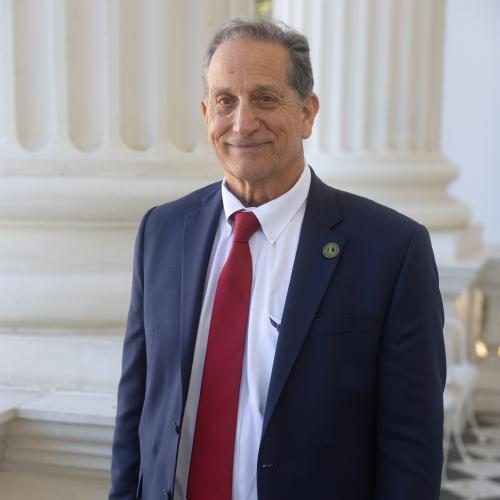
Capitol Daybook Research · Deep Book
Deep Book: Stan Ellis (AD-32)
AD-32 · Assembly
CandidateStan Ellis
Executive summary
Stan Ellis, a Republican businessman from Bakersfield, represents Assembly District 32 in parts of Kern and Tulare counties, registered 47.4 percent Republican and 25.3 percent Democratic (Section 1).
Contents
Cover1. Cover and race snapshotExecutive BriefVulnerabilities2. Executive summary and top vulnerabilities3. Biographical file4. Record in office5. The money6. Economic interests and business record7. Legal and court record8. Public records file9. Issues and statements fileFlip-Flop Matrix10. Social media audit11. Associates12. Timeline13. Appendix: source indexUpdated November 13, 2026
2. Executive summary and top vulnerabilities
Ellis is the library's shortest-tenured member: a self-made energy and technology businessman who won a special election in early 2025, served roughly a year and a half, announced his retirement that September, and returned to business. His biography is the story: five decades in Kern County industry, from oil fields to a quantum computing company acquired by IonQ weeks before he took office.
Finding 1 — The thin Form 700 against a thick business record (the book's central open question). Ellis's amended 2025 annual Form 700, filed March 2, 2026 and covering calendar 2025 as the District 32 Assembly Member, was retrieved from the FPPC portal. The retrieved statement attaches a Schedule D reporting one gift: a tour valued at $100.36 from The California Problem Solvers Foundation, dated August 26, 2025. No investment schedules (A-1 or A-2), no real property schedule (B), and no income schedule (C) pages appear in the retrieved amended statement. For most members that would be an unremarkable nil return. For a member who founded and ran Sierra Process Systems Inc., co-founded Qubitekk, Inc. (acquired by IonQ in January 2025, weeks before his swearing-in), founded businesses across energy production, chemical processing, environmental reclamation, advanced technology, and cybersecurity, and previously owned a professional basketball franchise, a statement with no investment, property, or income schedules is the single most research-worthy fact in his file. It is recorded strictly as a filing observation, with the innocent explanations stated in full: (a) Form 700 obligations attach to interests in the filer's jurisdiction and to reportable categories; business interests held outside California, interests disposed of before the reporting period, and holdings below thresholds or in exempt categories may lawfully produce a thin statement; (b) the retrieved document is the amended statement, and an amendment that replaces schedules can render a portal copy unrepresentative of the original filing; and (c) a January 2025 acquisition of his best-known company, if it converted his interest to cash or to acquirer stock before or during the period, changes what should appear and where. The resolving records are specific and pullable: his original (pre-amendment) 2025 annual statement, his 2024 candidate Form 700, and his assuming-office statement, all on the FPPC portal. That pull is formulated as a proposed queue entry in the closing report. No compliance failure is asserted anywhere in this book; what is asserted is that the question exists, is documented, and has a named resolving record.
Finding 2 — His own stated frustration with the institution. Announcing his retirement, he told The Bakersfield Californian that he was frustrated in the Democratic supermajority legislature: "Not being able to put my time where my knowledge is best suited, that's my real frustration." The quote is documented and is the principal quotable item in his file. Its research life is two-sided: it is the honest statement of a businessman who found committee assignments that did not use him (he was made vice chair of Aging and Long-Term Care, not given an energy or technology portfolio commensurate with his background), and it is equally available to a critic as an admission that he disengaged from a job he had just asked voters for. Both readings are the reader's; the quote and its context are the exhibit.
Finding 3 — The placeholder candidacy pattern. In 2024 Ellis appeared on the ballot for the full-term congressional race in California's 20th district while urging voters to choose Vince Fong instead, a ballot-presence candidacy in the Fong organization's interest during the cycle in which Fong was simultaneously navigating the Secretary of State's dual-candidacy litigation posture (Ellis's role, as documented, was to stand on the ballot and point to Fong). Months later he succeeded Fong in the Assembly, with Fong's backing and Congressman David Valadao's. The pattern is not improper; stand-in and placeholder candidacies are a known feature of California's top-two system, and everything about Ellis's role was public at the time. It is recorded because it defines his route to office: he never won a contested election for a job he campaigned to keep; his one outright win, the February 2025 special election at 64.6 percent, was for a term he served half of before announcing his departure. A researcher evaluating his future candidacy for any office starts here.
Finding 4 — A one-cycle record. He leaves office with a partial term, no full election behind him, no signature legislation identified in the sources reviewed, and a hand-picked successor. There is little legislative record to defend or attack, and the book says so rather than inflating the committee work of a 21-month tenure into a record it is not.
Finding 5 — The money file that does not exist yet. The data packet carries no campaign finance record for Ellis himself: no fundraising totals, donor list, or vendor data for Stan Ellis for Assembly 2025, Stan Ellis for Assembly 2026, or his officeholder account, all of which exist as committees in transparency compilations. For a self-funding-capable businessman who ran a special election, the absence is a dataset gap, not a member fact, and this book treats it that way: Section 5 reports the null, refuses to fill it with successor-race numbers, and formulates the Cal-Access pull as a proposed queue entry. Any book that printed Couch's donors under Ellis's name would be defaming both men by spreadsheet; the labeling discipline in Section 5 is the product working as designed.
Null findings. No candidate loans, no family payroll flags, no self-dealing flags in the race data the packet carries (successor race; the labeling caveat of Finding 5 applies to each of those nulls, which describe Couch's race data and the absence of Ellis from the deep dive, not a screened Ellis file). No FPPC enforcement matter, court matter, or discipline item naming Ellis was located in the sweeps described in Section 7. His behested record is a stated null with the dataset's full scope language, in Section 5.