Capitol Daybook Research · Deep Book
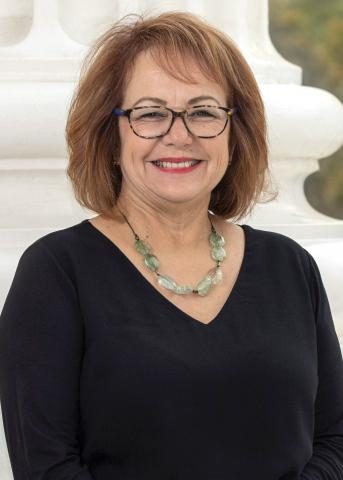
Deep Book: María Elena Durazo (SD-26)
SD-26 · Senate
CandidateMaría Elena Durazo
Executive summary
María Elena Durazo is a Democratic senator for District 26 completing her second term, which concludes in December 2026 (Section 1). She did not seek reelection; on June 2, 2026 she won the Los Angeles County Supervisor, District 1 race outright in the primary with 184,974 votes (60.58 percent) and assumes that office in December 2026, succeeding Hilda Solis (Section 1).
Contents
Cover1. Cover and race snapshotExecutive BriefVulnerabilities2. Executive summary and top vulnerabilities3. Biographical file4. Record in office5. The money6. Economic interests and business record7. Legal and court record8. Public records file9. Issues and statements fileFlip-Flop Matrix10. Social media audit11. Associates12. Timeline13. Appendix: source indexUpdated November 14, 2026
The Vulnerability Matrix
The items below are the documented findings in this book that an opposing campaign or independent expenditure committee would most likely cite against Senator Durazo. Each item is drawn entirely from this book's own findings and is presented with its documented basis and, where the record carries one, the innocent explanation and the record that resolves it. These are flags drawn from the record, not verdicts, and only the FPPC or the FEC can find a campaign finance violation.
1. The institution she built is both the credential and the attack line
| The Fact (documented basis) | Durazo led the Los Angeles County Federation of Labor, described in this book as an umbrella representing hundreds of thousands of workers through more than 300 locals, and contemporaneous reporting described the federation as having arguably reached a zenith of its influence under her, its first woman leader (Section 2; Section 3.3) [9]. She helped land allies on the Los Angeles City Council and the county Board of Supervisors, pushed a large hotel minimum wage, and was described in 2013 reporting quoted in the compiled record by Dan Schnur in these terms: "Maria Elena Durazo is probably the single most influential individual in Los Angeles politics" (Section 2) [4]. She served as Executive Secretary-Treasurer from May 2006 to December 2014 (Section 1; Section 3). |
|---|---|
| Political Vulnerability | An opponent would say Durazo exercised labor establishment power over Los Angeles government for decades, through the federation she led, and now joins the Board of Supervisors that institution helped shape. |
| Subject Defense (explanation and resolving record) | The book records the supporter reading of the identical facts, organizing power built from immigrant hotel workers who previously had no seat at the table, and takes no side in that framing (Section 2). The resolving records are the Department of Labor LM-2 filings for UNITE HERE Local 11 and for the county federation, queued at DUR-11 (Section 8). |
2. SB 525 and the cost fight that follows her to the county
| The Fact (documented basis) | Her 2023 law, SB 525, set a path to $25 per hour for more than 400,000 health care workers (Section 2) [4]. The California Hospital Association's opposition case, stated in its own words in Section 4.4, was that the bill would increase costs, reduce access, and lead to fewer jobs, and the No SB 525 coalition cited an $8 billion annual cost figure that a legislative analysis account described as contested (Section 2; Section 4.4) [23]. The law was later delayed in implementation as part of a budget agreement to help close a large state shortfall, per contemporaneous reporting (Section 2) [23]. |
|---|---|
| Political Vulnerability | An opponent would say Durazo's signature health care wage law raised costs on the very public health system she will now help govern as a county supervisor. |
| Subject Defense (explanation and resolving record) | The book labels the county cost point as inference from the documented record: Los Angeles County runs a large public health system, and the supervisor she becomes will govern inside the cost structure her signature law helped create (Section 2). The book records no separate resolving record for the cost estimate, which the legislative analysis account described as contested (Section 2). |
3. The Health4All reversal, and a restoration bill that stalled
| The Fact (documented basis) | Durazo was a driving force behind expanding full scope Medi-Cal regardless of immigration status, through SB 56 and SB 29 and the broader Health4All campaign (Section 2) [4]. The 2025-2026 state budget then froze new enrollment for undocumented Californians beginning January 1, 2026 (Section 2; Section 4.2). Her answer, SB 1422, would phase out the freeze subject to General Fund conditions, with fiscal analysis estimating unknown significant ongoing costs in the high hundreds of millions of dollars; the bill passed Senate Health and Appropriations in spring 2026, was ordered to the inactive file on June 8, 2026, and failed deadline on July 1, 2026 (Section 2) [30]. |
|---|---|
| Political Vulnerability | An opponent would say a signature promise on Medi-Cal coverage regardless of immigration status was reversed on Durazo's watch and her restoration bill failed to move. |
| Subject Defense (explanation and resolving record) | The book records the supporter reading of the same sequence, a budget decision made over her objection, with her restoration vehicle as the proof (Section 2). The book records no separate resolving record for the freeze itself. |
4. Housing votes against the Legislature's dominant supply position
| The Fact (documented basis) | In 2025, Durazo was reported as the only Democratic member of the Senate Local Government Committee to vote against allowing SB 79, the transit oriented housing bill, to pass through committee, joining two Republicans in that vote, and she also voted against SB 607, a bill to ease environmental review for urban multifamily housing (Section 2; Section 4.3) [4]. Her stated reason, quoted in Section 9, was that market rate development without sufficient community benefits and low income set asides is, in her words, "the wrong way to go" (Section 2). |
|---|---|
| Political Vulnerability | An opponent would say Durazo voted against allowing more housing near transit and against easing environmental review for urban multifamily housing, a record that will be cited in every contested project she faces as a supervisor. |
| Subject Defense (explanation and resolving record) | The book notes that both votes are consistent with her federation era development politics, in which project support was conditioned on labor and community benefits agreements, and labels that connection as inference (Section 4.3). The book records no separate resolving record for the votes themselves. |
5. A law degree from a closed, unaccredited school, and no State Bar admission record located
| The Fact (documented basis) | Durazo earned a law degree from People's College of Law in 1985 (Section 3) [2][5]. The book establishes that People's College of Law was a private, unaccredited, fixed facility law school, that the Committee of Bar Examiners terminated its registration and degree granting authority effective May 31, 2024, and that the school closed, and that from 2010 through 2018, 33 graduates took the California Bar Examination and 7 passed (Section 3.2) [24]. A search of the State Bar of California's public attorney search for her name in its full and unaccented forms returned no profile matching the subject, and no secondary source opened states a Bar number or admission date for her (Section 3.2) [31]. Her own official biography claims the degree only (Section 2) [2]. |
|---|---|
| Political Vulnerability | An opponent would say profiles routinely call Durazo a lawyer, but the record located shows a law degree only, from an unaccredited school that has since closed, and no admission to practice. |
| Subject Defense (explanation and resolving record) | The book states plainly that no source located accuses her of claiming a license she does not hold, and that the vulnerability is presentational and third party (Section 2). The resolving record is a direct Bar verification letter, queued at DUR-8 (Sections 3.2 and 8). |
6. A $2,360,744 behested file concentrated in one caucus foundation
| The Fact (documented basis) | The FPPC Form 803 data file matches 242 payment lines to Durazo totaling $2,360,744, in payment years 2019 to 2026 (Section 5.5) [34]. The largest recipients are the California Latino Legislative Caucus Foundation ($1,586,563), the Los Angeles Conservation Corps ($265,000), and the Creative Visions Foundation ($100,000), and the largest single payment is $75,000, from Altria to the California Latino Legislative Caucus Foundation, dated November 17, 2021 (Section 5.5) [34]. The largest payers are the California Latino Legislative Caucus Foundation ($224,495), Altria ($125,000), and Chevron Products Company ($85,000) (Section 5.5) [34]. The book also states that $148,114 of the total falls in payment years 2023 to 2026 (Section 5.5). |
|---|---|
| Political Vulnerability | An opponent would say a behested file of $2,360,744 moved at Durazo's behest, and most of it went to the foundation of the caucus she once chaired. |
| Subject Defense (explanation and resolving record) | Behested payments are disclosed on Form 803 precisely so this pattern can be seen, and this series was disclosed in that file (Section 5.5). The book records no source suggesting any payment benefited Durazo or her campaign. The resolving record is the Form 803 series itself, with the filing level committee pull queued at DUR-5 (Section 8). |
7. A $300,646.25 committee payee entry in her own name, unresolved on the aggregator record
| The Fact (documented basis) | A reproduction of Cal-Access data for Maria Elena Durazo Democrat for State Senate 2018, FPPC ID 1395749, lists a $300,646.25 entry payable to Maria Durazo as an entity payee, alongside $211,047.07 to Print Logistics Inc and $106,900.84 to the United States Postal Service (Section 5.3) [22]. The same reproduction states there is no loan data for the committee (Section 5.3) [22]. |
|---|---|
| Political Vulnerability | An opponent would say Durazo's 2018 committee reported a six figure payment to Maria Durazo herself, and the public record in this book does not say what it was for. |
| Subject Defense (explanation and resolving record) | The book states that aggregator payee coding for a payee sharing the candidate's name commonly reflects reimbursement, salary, or pass through coding that only the underlying Form 460 Schedule E and its subvendor detail can resolve, and it draws no conclusion from the entry beyond the need for the pull (Section 5.3). The resolving record is the Form 460 series in the filing level pull queued at DUR-5 (Section 8). |