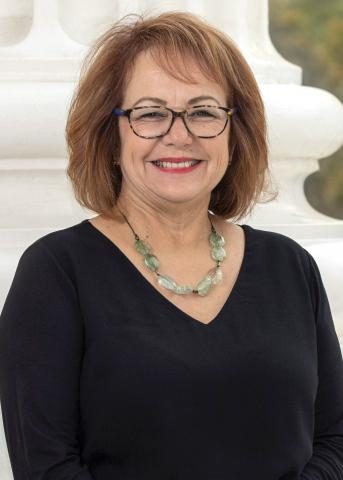
Capitol Daybook Research · Deep Book
Deep Book: María Elena Durazo (SD-26)
SD-26 · Senate
CandidateMaría Elena Durazo
Executive summary
María Elena Durazo is a Democratic senator for District 26 completing her second term, which concludes in December 2026 (Section 1). She did not seek reelection; on June 2, 2026 she won the Los Angeles County Supervisor, District 1 race outright in the primary with 184,974 votes (60.58 percent) and assumes that office in December 2026, succeeding Hilda Solis (Section 1).
Contents
Cover1. Cover and race snapshotExecutive BriefVulnerabilities2. Executive summary and top vulnerabilities3. Biographical file4. Record in office5. The money6. Economic interests and business record7. Legal and court record8. Public records file9. Issues and statements fileFlip-Flop Matrix10. Social media audit11. Associates12. Timeline13. Appendix: source indexUpdated November 14, 2026
3. Biographical file
| Field | Record | Source |
|---|---|---|
| Full name | María Elena Durazo | [2] |
| Date of birth | March 20, 1953 | [4] |
| Birthplace and upbringing | Born in Madera, California, per the compiled record; raised in Fresno per the Joint Handbook and Senate materials; seventh of eleven children of migrant worker parents; traveled with her family following crops through California and Oregon | [2][3][4] |
| Residence | Los Angeles, Los Angeles County, with El Sereno identified as her home community in 2026 supervisor coverage (city and county only, per standing rule) | [18] |
| Education | Saint Mary's College, Moraga, graduated 1975; law degree, People's College of Law, 1985; honorary Doctor of Humane Letters, California State University Board of Trustees, June 2014 | [2][5] |
| Bar status | No admission record located in the State Bar of California public search for her name; see Section 3.2 for the full verification record and its limits | [31] |
| Early organizing | Organizer, International Ladies' Garment Workers' Union (later UNITE); joined HERE Local 11 as an organizer in 1983 | [2] |
| Union leadership | President, HERE (later UNITE HERE) Local 11, May 1989 to 2006; Executive Board, HERE International, 1996, first Latina so elected; Executive Vice President, UNITE HERE International, 2004 | [2][6][7] |
| Federation leadership | Executive Secretary-Treasurer, Los Angeles County Federation of Labor, AFL-CIO, May 15, 2006 to December 2014 (service into late 2014; some accounts date the departure announcement to October 2014 and the successor election to November 2014); first woman to lead the federation | [2][9] |
| National roles | Executive Vice President, AFL-CIO Executive Council, elected 2010; Vice Chair, Democratic National Committee, 2013 to 2021 per the Dossier and compiled record, with her Senate biography also recording Vice Chair service and National Co-Chair of the Barack Obama presidential campaign in 2008; National Director, Immigrant Workers Freedom Ride, 2003; AFL-CIO Immigration Committee service, 2000 to 2004 | [2][4] |
| Civic service | Los Angeles Airports Commission (appointed by Mayor Tom Bradley); Los Angeles Parks and Recreation body (appointed by Mayor Richard Riordan, as described in her Senate biography); California Coastal Commission; founder, Los Angeles Alliance for a New Economy (LAANE) | [2][3] |
| Current office | California State Senate: SD-24, December 2018 to December 2022; SD-26, December 2022 to December 2026; Chair, Local Government; Assistant Majority Whip; Chair, Latino Legislative Caucus, 2021-22 session | [2][16][17] |
| Next office | Member-elect, Los Angeles County Board of Supervisors, District 1, assuming office December 2026, succeeding Hilda Solis | [18] |
| Spouse | Widow of Miguel Contreras (married 1988; died May 6, 2005), Executive Secretary-Treasurer of the Los Angeles County Federation of Labor from 1996 until his death. Family detail beyond the public political record is treated under the relevance gate in Section 3.4. Children are not identified by name in the analytical text of this book beyond what the official biography itself publishes, and no family court material is included. | [2] |
3.1 Origins and formation
Her official Senate biography states the origin story in her office's own words: "María Elena was born the seventh child in a family of eleven children to migrant worker parents. Growing up, María Elena traveled with her family, following the crops throughout California and Oregon, and experiencing the exploitative conditions and hardships that migrant laborers suffer." [2] The UCLA Labor Center oral history project adds the field detail that she spent summers in the Central Valley fields and was politicized as a student, and the National Park Service Latino Theme Study places her inside the longer arc of Latino labor organizing in Los Angeles. [6][7] Compiled accounts name Cesar Chavez and the United Farm Workers as an early inspiration. [4] That claim is carried here as a compiled biographical account, not as a primary statement, because no verbatim statement by Durazo to that effect was opened for this book.
At Saint Mary's College in Moraga she became involved in the Chicano Movement at the urging of her older brother, per her Senate biography, and graduated in 1975. [2] Saint Mary's own institutional page confirms the class year in its styling of her as Maria Elena Durazo '75, confirms the Saint Mary's degree, and confirms the People's College of Law degree in 1985. [5] She then entered the labor movement as an organizer for the International Ladies' Garment Workers' Union, later UNITE, while pursuing the law degree she completed in 1985. [2]
3.2 Education verification and the State Bar check (load-bearing)
Saint Mary's College, 1975. Verified to institutional standard on the public record. Saint Mary's College itself publishes her as a member of the class of 1975 and restates the degree, and her Senate biography, the Joint Handbook, and the Latino Caucus materials agree. [2][3][5] Registrar level confirmation through the college or the National Student Clearinghouse is a credentialed channel and is queued in Section 8 (DUR-8). No source located contradicts the degree, its institution, or its year.
People's College of Law, 1985. Verified as a degree, with the institution's status stated in full because it determines what the degree does and does not establish. Her Senate biography states: "While working as a union organizer, she pursued an education in law at the People's College of Law and earned her degree in 1985." [2] Saint Mary's institutional page independently restates the same degree and year. [5] People's College of Law was a private, unaccredited, fixed facility law school in Los Angeles, registered with the State Bar's Committee of Bar Examiners as an unaccredited school authorized to grant the Juris Doctor, whose students were required to pass the First-Year Law Students' Examination and whose graduates were eligible to sit for the California Bar Examination. It was not approved or accredited by the American Bar Association and was not accredited by the State Bar of California. The Committee of Bar Examiners terminated its registration and degree granting authority effective May 31, 2024, and the school closed. Its historical bar pass rates were low: from 2010 through 2018, 33 graduates took the California Bar Examination and 7 passed. [24] Those institutional facts postdate her 1985 graduation by decades in the case of the closure, and they are included not to diminish the degree but to define it precisely: a JD from a registered unaccredited school, conferring eligibility to sit for the bar, not admission itself.
State Bar admission: no record located. This finding is stated with its method so a reader can reproduce it. The tasking for this book directed direct verification: license number, admission, and discipline. The verification performed for this book was a search of the State Bar of California's public attorney search and web index for her name in its full and unaccented forms. No profile for María Elena Durazo, Maria Elena Durazo, or Maria Durazo matching the subject (Los Angeles, People's College of Law, 1985 era) was returned. The only Durazo surname profile surfaced in the Bar search results opened for this book belongs to a different person, Araceli LeonDurazo, license number 217152, admitted December 4, 2001, in San Diego, which is affirmatively not the subject. [31] No secondary source opened for this book states a Bar number or admission date for Durazo, and her own official biography, the document most likely to claim admission if it existed, claims only the degree. [2]
The conclusion stated in this book is therefore narrow and exact: on the public record opened for this book, Durazo is a law graduate who is not shown to have been admitted to the State Bar of California, and no discipline record exists to report because no license record was located. This book does not state that she never sat for the examination, does not state that she failed any examination, and does not state that she ever claimed to be licensed, because none of those propositions is established by any source opened. If a Bar record under a variant name or a historical paper record exists, the resolving record is a direct Bar verification letter, queued in Section 8 (DUR-8). Until that record is produced, any description of her in library copy should read law graduate and labor organizer, not licensed attorney or practicing lawyer. Section 7.4 carries the corresponding discipline null in this form: no license located, therefore no discipline history to report, rather than an active license with no discipline.
3.3 The labor career at primary depth: the institution she built
HERE Local 11, 1983 to 2006. Durazo joined HERE Local 11 as an organizer in 1983. [2] The local's membership was majority immigrant and majority Latino, while its leadership was not. The UCLA oral history project's account states that the local was dominated by mostly White bartenders and actively excluded the growing Latinx immigrant workforce of hotel employees, and that Durazo challenged the established leadership through energetic organizing and engagement with rank and file members. [6] Her Senate biography describes what the reform drive built once it succeeded: "The organizing drive successfully instituted a shop steward system that educated the rank and file on their rights, workers were now able to participate in negotiating their union contracts and all meetings and publications were from then on bilingual." [2]
The electoral sequence matters and is often compressed incorrectly, so it is stated in full. In 1987 Durazo led a reform slate against the entrenched leadership of Andrew (Scotty) Allen, whose administration had resisted efforts of immigrant workers to participate in local governance. She appeared to have the upper hand, but the election was set aside by the international union and the local was placed in trusteeship, led by Miguel Contreras. In May 1989 she was elected President of Local 11, and she served in that capacity from 1989 to 2006. [4] The Los Angeles Times contemporaneous report of that election, Marita Hernandez, "Organizer Wins Post of President," May 6, 1989, is the primary press source the compiled record cites for the 1989 win. [4] Saint Mary's institutional account summarizes the result without the trusteeship detail: before leading the county federation, Durazo "was elected president and built the hotel workers union UNITE-HERE, Local 11, into one of the most active unions in Los Angeles County." [5] The National Park Service study agrees in substance: she "built it into one of the most active union locals in Los Angeles County." [7]
No membership or LM-2 financial series for Local 11 under her presidency was pulled for this book. Union LM-2 filings with the United States Department of Labor are the primary financial record for that growth claim, officer salary, membership, and receipts by year, and a filing level LM-2 pull for Local 11 (1989 to 2006) and for the county federation (2006 to 2014) is the resolving record for any quantitative version of the growth story. It is queued in Section 8 (DUR-11, added to the queue list in that section). This book therefore reports the growth of Local 11 as the qualitative institutional record establishes it, transformation from an exclusionary local into a bilingual, steward based, politically active local that became a base for citywide campaigns, and does not invent membership numbers the filings have not yet supplied.
National union office. In 1996 she became the first Latina elected to the Executive Board of HERE International Union, a fact stated identically by Saint Mary's, the National Park Service study, and the Scripps College lecture biography. [5][7][8] In 2004, after UNITE and HERE merged, she became Executive Vice President of UNITE HERE International. [2][5] Scripps, hosting her in 2017 as a UNITE HERE vice president for immigration, civil rights, and diversity work, recorded that under her leadership in 2016 UNITE HERE and its Las Vegas local led a citizenship drive helping more than 2,000 residents apply for citizenship. [8] That 2016 role explains the otherwise puzzling gap between her federation departure in 2014 and her Senate announcement in 2017: she did not leave public life, she moved to a national immigration portfolio in her international union. Contemporaneous Los Angeles Times reporting on the departure, republished by Portside, states the destination in the same terms: she would become vice president for immigration, civil rights and diversity at UNITE HERE. [9]
The Los Angeles County Federation of Labor, and the Contreras succession as reported. The succession is a three step record, and this book states all three steps because compressed versions routinely erase the middle one. Miguel Contreras, her husband, served as Executive Secretary-Treasurer from 1996 until his death on May 6, 2005, at age 52 or 53 depending on the account's rounding. [2][9] He was not succeeded directly by Durazo. Martin Ludlow held the post next, and resigned in February 2006. Durazo was then appointed interim Executive Secretary-Treasurer and was voted the permanent replacement on May 15, 2006. [4] Her Senate biography dates the tenure "from 2006 through 2014" and identifies her as "the first woman Secretary-Treasurer of the Los Angeles County Federation of Labor, AFL-CIO, the second largest labor council in the country," with service on the National AFL-CIO Executive Council. [2] Federation materials from the election described the body as representing more than 800,000 workers through more than 300 separate unions; the Los Angeles Times departure account in 2014 described it as an umbrella entity representing 600,000 workers. [9] The two figures are both carried here, attributed to their moments, because federation representation claims varied by year and by whether the count is of affiliated membership or of workers represented, and this book does not reconcile them into a single number the sources do not jointly support.
What the federation did under her is documented in the departure reporting that is most useful precisely because it was written when the tenure ended. The Los Angeles Times account, via Portside, states that Durazo, "the powerful Los Angeles County labor leader who helped elect politicians, boost wages and push through major development projects," was leaving to take the national UNITE HERE job, and that the federation "has arguably reached a zenith of its influence under Durazo, its first woman leader." [9] The compiled record adds the large hotel wage ordinance, at least $15.37 an hour for large Los Angeles hotels, among the nation's highest base wages at the time, and her role in landing allies on the City Council and the Board of Supervisors. [4] Americas Voice's republication of Los Angeles Times profile material frames the couple jointly: Durazo and Contreras as a power couple who used organizing and electoral skills to give voice to the city's Latinos and immigrants, with Contreras described as a skilled electoral operative who, after Proposition 187 in 1994, helped connect organizing immigrant workers to organizing immigrant voters. [10] That 1994 connection, immigrant organizing as voter organizing, is the strategic through line of her whole career, and it reappears as legislation in Section 4: Health4All, the Immigrant Workers Freedom Ride she directed nationally in 2003, and the 2025 and 2026 immigration protection bills of her final Senate years are the same project at different levels of government.
Her own succession at the federation followed the pattern she had benefited from: an anointed political director. The 2014 departure reporting noted that she had made clear she would like Rusty Hicks, the federation's political director, to succeed her, that she declined to confirm it publicly citing the scheduled vote, and that Hicks was elected. [9] Hicks later became Chair of the California Democratic Party. The fact is included because it completes the institutional map: for three decades, the federation's leadership transitions were managed successions inside a single organizing tradition, Contreras to Ludlow to Durazo to Hicks, with Durazo as the longest serving and defining figure of the four.
Party and civic institutional roles. She served as Vice Chair of the Democratic National Committee and as National Co-Chair of the Barack Obama presidential campaign in 2008, per her Senate biography, and the Dossier and compiled record date DNC Vice Chair service from 2013 to 2021. [2][4] The two datings are not in conflict on the sources opened: the biography's 2008 reference is to convention and campaign roles in that cycle, and the 2013 to 2021 range is the DNC vice chair tenure carried in the compiled record. She was elected to the AFL-CIO Executive Council as an Executive Vice President in 2010, described in federation era materials as the only leader of a local labor movement on that council. [4][5] She founded the Los Angeles Alliance for a New Economy with attorney Madeline Janis, per the Los Angeles Times profile material, and served on the California Coastal Commission and the Los Angeles Airports Commission and a Los Angeles parks body, as detailed in the table above. [2][10] Each of those appointments generates the public records inventoried in Section 8.
3.4 Family and the relevance gate
Durazo was married to Miguel Contreras from 1988 until his death on May 6, 2005. [2][4] Their marriage and his death are public political facts, because he was her predecessor institution's leader and the succession that followed his death, after the Ludlow interregnum, made her its leader. That is the extent of the family record with a public connection on the sources opened for this book.
The Deep checklist's divorce and family court check is governed by a relevance gate: a file is pulled and included only when it connects to a public matter, such as a business dispute, a financial scandal, or a public fight over assets; a routine dissolution stays out, and sealed material is off limits. The gate analysis here is complete on its predicate facts. No public source located reports any dissolution proceeding involving Durazo. Her spouse is deceased, a fact her own office publishes. No business dispute, financial scandal, or public asset fight involving her family was located in any source opened, and her Form 700 record in Section 6 discloses no business position or investment around which such a dispute could publicly form. The gate therefore does not open. This book pulls nothing from any family court file, identifies no child beyond the names her own official biography publishes in its family sentence, and logs only an index level existence confirmation as part of the standard court sweep queued in Section 8 (DUR-2). If a future public matter creates the connection the gate requires, the analysis can be revisited. On the present record it cannot.