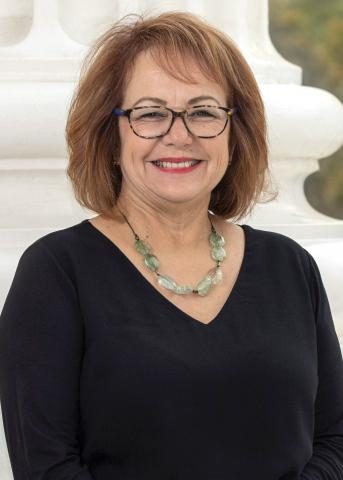
Capitol Daybook Research · Deep Book
Deep Book: María Elena Durazo (SD-26)
SD-26 · Senate
CandidateMaría Elena Durazo
Executive summary
María Elena Durazo is a Democratic senator for District 26 completing her second term, which concludes in December 2026 (Section 1). She did not seek reelection; on June 2, 2026 she won the Los Angeles County Supervisor, District 1 race outright in the primary with 184,974 votes (60.58 percent) and assumes that office in December 2026, succeeding Hilda Solis (Section 1).
Contents
Cover1. Cover and race snapshotExecutive BriefVulnerabilities2. Executive summary and top vulnerabilities3. Biographical file4. Record in office5. The money6. Economic interests and business record7. Legal and court record8. Public records file9. Issues and statements fileFlip-Flop Matrix10. Social media audit11. Associates12. Timeline13. Appendix: source indexUpdated November 14, 2026
2. Executive summary and top vulnerabilities
Durazo, 73, is the seventh of eleven children of Mexican immigrant migrant farmworker parents, a Saint Mary's College graduate of 1975 who became an organizer, led a reform slate that took over HERE Local 11, served as its president from 1989 to 2006, succeeded to the leadership of the Los Angeles County Federation of Labor after the death of her husband Miguel Contreras and a brief interim leadership, served as its Executive Secretary-Treasurer from May 2006 to December 2014 as its first woman leader, held national office in UNITE HERE, the AFL-CIO, and the Democratic National Committee, and then won two Senate terms and a county supervisor seat. [2][4][5] The vulnerabilities below are ranked by documented evidentiary strength and research value, not by political salience alone.
Vulnerability 1. The institution is both the credential and the attack line, and both readings use the same facts. Durazo led the federation that contemporaneous reporting described as having arguably reached a zenith of its influence under her, its first woman leader, an umbrella representing hundreds of thousands of workers through more than 300 locals. [9] She helped land allies on the Los Angeles City Council and the county Board of Supervisors, pushed a large hotel minimum wage, and was described in 2013 reporting quoted in the compiled record by Dan Schnur, then director of the Jesse M. Unruh Institute of Politics at USC, in these terms: "Maria Elena Durazo is probably the single most influential individual in Los Angeles politics." [4] An opponent frames that record as labor establishment power exercised over Los Angeles government for decades, including over the very Board of Supervisors she now joins. A supporter frames the identical record as organizing power built from immigrant hotel workers who previously had no seat at the table. This book takes no side in that framing. It documents the institution at primary depth in Section 3 and Section 4, because no other fact in the file explains as much of her legislation, her endorsements, or her succession politics.
Vulnerability 2. SB 525's cost fight follows her to the county. Her 2023 health care minimum wage law, SB 525, set a path to $25 per hour for more than 400,000 health care workers. [4] The California Hospital Association's opposition case, stated in its own words in Section 4, was that the bill would increase costs, reduce access, and lead to fewer jobs, and the No SB 525 coalition cited an $8 billion annual cost figure that a legislative analysis account described as contested. The law was later delayed in implementation as part of a budget agreement to help close a large state shortfall, per contemporaneous reporting. [23] None of that is an allegation of impropriety. It is durable policy exposure: Los Angeles County runs a large public health system, and the supervisor she becomes will govern inside the cost structure her signature law helped create. That is inference from the documented record, labeled as such.
Vulnerability 3. The Health4All reversal happened on her watch and her restoration bill stalled. Durazo was a driving force behind expanding full scope Medi-Cal regardless of immigration status, through SB 56 and SB 29 and the broader Health4All campaign. [4] The 2025-2026 state budget then froze new enrollment for undocumented Californians beginning January 1, 2026. Her answer, SB 1422, the Medi-Cal Access Restoration Act, co-introduced with Assemblymember Joaquin Arambula, would phase out the freeze subject to General Fund conditions, with fiscal analysis estimating unknown significant ongoing costs in the high hundreds of millions of dollars. The bill passed Senate Health and Appropriations in spring 2026, was ordered to the inactive file on June 8, 2026, and failed deadline on July 1, 2026, per the bill tracking record. [30] An opponent cites the sequence as a signature promise reversed and unrestored. A supporter cites the same sequence as a budget decision made over her objection, with her restoration vehicle as the proof. The facts are documented in Section 4. The characterization is the campaign's, not this book's.
Vulnerability 4. Housing votes place her against the Legislature's dominant supply position. In 2025, Durazo was reported as the only Democratic member of the Senate Local Government Committee to vote against allowing SB 79, the transit oriented housing bill, to pass through committee, joining two Republicans in that vote, and she also voted against SB 607, a bill to ease environmental review for urban multifamily housing. Her stated reason, quoted verbatim in Section 9, was that market rate development without sufficient community benefits and low income set asides is, in her words, "the wrong way to go." [4] As a county supervisor with land use and homelessness responsibilities, that record will be cited by housing supply advocates in every contested project. It is a sourced voting record, not a flag.
Vulnerability 5. The credential file is thinner than the shorthand suggests, and the shorthand is common. Profiles routinely call Durazo a lawyer. The primary record located establishes a Juris Doctor from an unaccredited law school that has since closed, Saint Mary's College verification of the degree, and no located Bar admission. Section 3.2 works through that record carefully, because the distinction between a law degree and a license is exactly the kind of distinction a research library exists to preserve. No source located accuses her of claiming a license she does not hold; her own official biography claims the degree only. [2] The vulnerability is therefore presentational and third party: other people's shorthand, not her own filing, creates the gap.
What is affirmatively clean in this book, stated as product: No family payroll flag, self-dealing flag, or candidate loan attaches to Durazo in the packet, and the packet contains zero deep dive mentions for her, confirmed in Section 5. [Packet] No FPPC enforcement matter naming her was located in the web searches described in Section 7. No civil or criminal case naming her personally, other than the documented civil disobedience arrests carried in Section 7 as public record protest history, was located in the sources searched, with the docket level limits stated plainly: the PACER, Los Angeles Superior Court, recorder, Megan's Law, and voter history pulls that would convert scoped nulls into clerk grade nulls could not be completed through text retrieval and are queued in Section 8. This book does not convert any of them into an observed null.