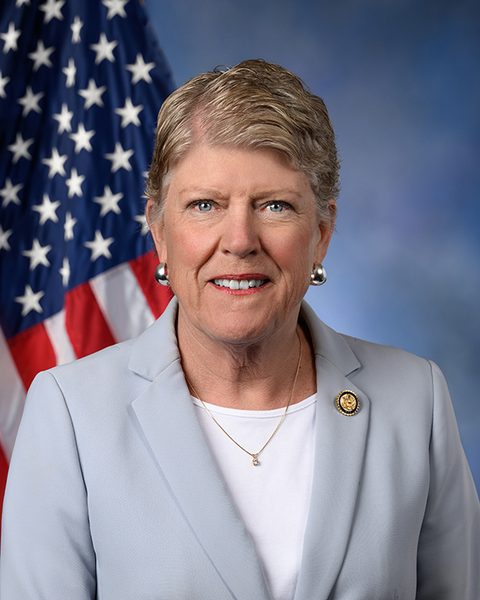
Capitol Daybook Research · Deep Book
Deep Book: Julia Brownley (CA-26)
CA-26 · House
CandidateJulia Brownley
Executive summary
Julia Brownley, Democrat, is completing her seventh and final term in California's 26th Congressional District; she announced on January 8, 2026 that she would not seek reelection, her service ends January 3, 2027, and the open seat race was called for Jacqui Irwin, the Democrat she endorsed (Section 1).
Contents
Executive BriefVulnerability Matrix1. Cover and race snapshot2. Executive summary and top vulnerabilities3. Biographical file4. Record in office5. The money6. Economic interests and business record7. Legal and court record8. Public records file9. Issues and statements fileFlip-Flop Matrix10. Social media audit11. Associates12. Timeline13. Appendix: source indexUpdated November 14, 2026
Capitol Daybook Research Deep Book: Julia Brownley
| Member: | Julia Brownley (Julia Andrews Brownley) |
|---|---|
| District: | California Congressional District 26 (CA-26), Proposition 50 lines |
| Party: | Democratic |
| Chamber: | U.S. House of Representatives |
| Tier: | Deep Book |
| Date built: | November 5, 2026 |
| Supersedes: | Dossier ca-26 (November 5, 2026) |
Coverage note: This is a closing file, not a live campaign book. Brownley is a retiring incumbent. She announced on January 8, 2026 that she would not seek reelection, and her service ends January 3, 2027 [4]. The seat was open in 2026 and the race was called for Jacqui Irwin, the Democrat she endorsed [1][24]. Brownley was not a 2026 candidate. Race level figures in the packet that belong to Irwin, Samuel Gallucci, and other candidates for the open seat are kept in a clearly labeled succession context in Section 5 and are never presented as Brownley's. Finance figures are FEC data through September 30, 2026 for Brownley's own committee [1]. Section 6 is now written from her House financial disclosures filed with the Clerk, closing the Dossier's stated gap; her termination disclosure cannot exist yet and is queued (BRO-1). Checks that cannot be completed from the public web are labeled not performed or provisional with the reason, in Sections 7 and 8, and are queued. No home street addresses appear anywhere in this book; property is reported at city and county level only.
What Matters Most
- The November 19, 2015 American SAFE Act vote. She voted for H.R. 4038 against her party's president and most of her caucus, in a record otherwise about 93 percent party unity and 99.1 percent in the January 2025 window (Sections 2 and 4.2). Limit: her November 20, 2015 statement, carried verbatim in Section 9, is the controlling context; it describes her as a longstanding advocate for welcoming refugees and the bill as a certification requirement only.
- The $790,731.95 residual in her closing committee. Through September 30, 2026 the committee raised $580,025.37, spent $731,650.55, and held $790,731.95, with its largest vendor at $100,073.24 for fundraising in the retirement cycle (Sections 2 and 5). Limit: the book states this is an open item, not a finding; spending above receipts is the normal arithmetic of a wind down, and the disposition is queued at BRO-2.
- A de minimis self payment screen flag, labeled as a flag (Section 2; Section 5.4).. The packet flags $811.78 to payee BROWNLEY, JULIA on the basis stated verbatim as "payee is the candidate as reported (reimbursement or payment to self)." Limit: the amount is de minimis against $731,650.55 in spending and consistent with reimbursement; the disbursement detail is queued at BRO-3, and no violation is stated or implied.
Executive Brief
Julia Brownley, Democrat, is completing her seventh and final term in California's 26th Congressional District; she announced on January 8, 2026 that she would not seek reelection, her service ends January 3, 2027, and the open seat race was called for Jacqui Irwin, the Democrat she endorsed (Section 1). This is a closing file, not a live campaign book: none of its items describes a live electoral exposure, and its value is for any future candidacy, appointment, or confirmation process (Section 2).
The weaknesses that matter, in the order a buyer should read them:
- The November 19, 2015 American SAFE Act vote (Vulnerabilities Item 1). She voted for H.R. 4038 against her party's president and most of her caucus, in a record otherwise about 93 percent party unity and 99.1 percent in the January 2025 window (Sections 2 and 4.2). Limit: her November 20, 2015 statement, carried verbatim in Section 9, is the controlling context; it describes her as a longstanding advocate for welcoming refugees and the bill as a certification requirement only.
- The $790,731.95 residual in her closing committee (Item 2). Through September 30, 2026 the committee raised $580,025.37, spent $731,650.55, and held $790,731.95, with its largest vendor at $100,073.24 for fundraising in the retirement cycle (Sections 2 and 5). Limit: the book states this is an open item, not a finding; spending above receipts is the normal arithmetic of a wind down, and the disposition is queued at BRO-2.
- A de minimis self payment screen flag, labeled as a flag (Section 2; Section 5.4). The packet flags $811.78 to payee BROWNLEY, JULIA on the basis stated verbatim as "payee is the candidate as reported (reimbursement or payment to self)." Limit: the amount is de minimis against $731,650.55 in spending and consistent with reimbursement; the disbursement detail is queued at BRO-3, and no violation is stated or implied.
- The announcement day succession endorsement, labeled as a flag (Section 2; Section 9). She endorsed Irwin the day she announced, after notifying her by text hours earlier, and Irwin won the called race. Limit: the criticism in the book is an attributed local editorial opinion about the appearance of pre-selecting a successor; endorsements are an incumbent's right, which the same editorial acknowledged.
Narrative themes
Theme 1: The 2015 refugee admissions vote and its contemporaneous statement.
The documented pattern: a single signature break in a fourteen year record, the November 19, 2015 vote for H.R. 4038, paired in the book with her own full statement of November 20, 2015 (Sections 2, 4.4 and 9; Item 1). Limitation: any summary omitting her stated rationale is incomplete, and any summary treating the rationale as settling the question is advocacy, in the book's own discipline.
Theme 2: The closing committee balance and its wind down.
The documented pattern: a $790,731.95 residual held after the retirement announcement, spending exceeding receipts by $151,625.18 in the final cycle, and disposition governed by the FEC wind down rules in Section 5.6 (Sections 2 and 5; Item 2). Limitation: the resolving filings postdate this book and are queued at BRO-2; personal use is barred at every stage.
Theme 3: The endorsement succession on announcement day.
The documented pattern: retirement announcement and endorsement of Jacqui Irwin on the same day, January 8, 2026, advance notice by text, and Irwin's win in the called race (Sections 1, 2 and 9). Limitation: the coordination criticism is an attributed editorial opinion recorded as its maker's claim, not as a fact about Brownley.
Briefing Pitch
Julia Brownley, Democrat, is completing her seventh and final term in California's 26th Congressional District; she announced on January 8, 2026 that she would not seek reelection, her service ends January 3, 2027, and the open seat race was called for Jacqui Irwin, the Democrat she endorsed (Section 1). This is a closing file, not a live campaign book: none of its items describes a live electoral exposure, and its value is for any future candidacy, appointment, or confirmation process (Section 2).
The book's top-ranked vulnerability items: 1. The November 19, 2015 American SAFE Act vote, her most cited break with her party; 2. The $790,731.95 residual in her closing committee, with its disposition not yet documented.
From the book's Vulnerabilities section
The Vulnerability Matrix
The items below are the documented items in this closing file that an opposing campaign, or a future candidacy, appointment, or confirmation process, would most likely cite against former Representative Brownley. She announced on January 8, 2026 that she would not seek reelection and her service ends January 3, 2027, so none of these items describes a live electoral exposure, as the book states in Section 2. Each item is drawn entirely from this book's own findings and is presented with its documented basis and, where the record carries one, the innocent explanation and the record that resolves it. These are flags drawn from the record, not verdicts, and only the FEC can find a campaign finance violation.
1. The November 19, 2015 American SAFE Act vote, her most cited break with her party
| The Fact (documented basis) | Brownley voted for H.R. 4038, the American SAFE Act of 2015, on November 19, 2015, Roll Call 643 (Section 2; Section 4.4) [5][26]. The secondary summary of the bill carried in the book is that it would effectively halt the resettlement of refugees from Syria and Iraq to the United States by adding a certification requirement (Section 4.4) [26]. The vote stands out against the background fact in the same sections: across her tenure she voted with her party about 93 percent of the time, and in the window from January 2025 she agreed with her party in 456 of 460 votes where the parties disagreed, or 99.1 percent (Section 2; Section 4.2) [15][17][26]. The book records no second signature break of comparable citation weight in a fourteen year record (Section 4.4). |
|---|---|
| Political Vulnerability | An opponent would say Brownley voted to effectively halt resettlement of refugees from Syria and Iraq, against the position of her party's president and most of her caucus, on an issue where her stated values ran the other way. |
| Subject Defense (explanation and resolving record) | Her contemporaneous statement is the controlling context the book carries: she described herself as a longstanding advocate for welcoming refugees, and argued the bill "does not add any new agencies to the review process. It simply requires the existing agencies who review applications to certify that our laws have been followed and that the refugees do not pose a national security risk to our country" (Section 2; Section 9) [5]. The book's discipline is that any summary omitting her stated rationale is incomplete, and any summary treating the rationale as settling the question is advocacy (Section 2). No resolving record beyond the vote and the statement is recorded. |
2. The $790,731.95 residual in her closing committee, with its disposition not yet documented
| The Fact (documented basis) | Through September 30, 2026, JULIA BROWNLEY FOR CONGRESS raised $580,025.37, spent $731,650.55, and held $790,731.95 in cash on hand, with spending exceeding receipts by $151,625.18 in the cycle to date (Section 2; Section 5.1) [1]. Her largest vendor in that final cycle was THE STRATHDEE GROUP, at $100,073.24 for fundraising, in the cycle in which she announced her retirement on January 8, 2026 (Section 5.3) [1][4]. The book records that the committee was still spending on fundraising and payroll months after the announcement (Section 5.1). |
|---|---|
| Political Vulnerability | An opponent would say Brownley's committee still held $790,731.95 after she announced her retirement, spent more than it raised in its final cycle, and that what happens to the balance is not yet in any filing this book could read. |
| Subject Defense (explanation and resolving record) | The book states that spending exceeding receipts in a retiring member's final cycle is the normal arithmetic of a committee drawing down a balance accumulated over seven terms, and that a committee with staff, leases, and compliance obligations spends them down or disposes of the balance under the FEC wind down rules summarized in Section 5.6, which bar personal use at every stage and permit uses including charitable donations, party transfers, contributions to other candidates, and refunds (Section 5.1; Section 5.6) [14]. The packet records no candidate loans and no family payroll flags for Brownley (Section 5.4) [1]. The resolving record is the committee's year end 2026 report, any 2027 reports, and its termination report if and when it terminates, queued at BRO-2 (Section 5.6). |
1. Cover and race snapshot
Julia Brownley, Democrat, is completing her seventh and final term representing California's 26th Congressional District in the U.S. House of Representatives. She has served since January 3, 2013, and her service ends January 3, 2027 [2][4]. There are no term limits for the House; she is leaving by choice, announced January 8, 2026 [4].
Under the Proposition 50 lines carried in the district profile, District 26 covers parts of Los Angeles and Ventura counties, with principal cities Oxnard, Thousand Oaks, Camarillo, Moorpark, Santa Paula, Calabasas, Port Hueneme, and part of Los Angeles [1]. Her official biography describes the district she has served as including most of Ventura County and a portion of Los Angeles County, encompassing Oxnard, Port Hueneme, Santa Paula, Fillmore, Camarillo, Moorpark, Simi Valley, Thousand Oaks, Westlake Village, Calabasas, and Agoura Hills; the difference between the two city lists is the Proposition 50 redraw, and the profile list controls for the seat as it will be contested and held from 2027 [1][3]. Registration on the profile is 474,875 voters, 42.95 percent Democratic and 27.98 percent Republican (Secretary of State, September 4, 2026) [1].
Race status, exactly as the record carries it: Brownley announced January 8, 2026 that she would not seek reelection; the seat was open; the 2026 race was called for Jacqui Irwin, the Democrat she endorsed [1][4][24]. Reporting on the succession records that Brownley notified Irwin by text a few hours before the public announcement, that Irwin decided to run the same day, and that Irwin advanced from the June 2, 2026 primary and won the called general election race [24][25]. Irwin is therefore the member-elect; Brownley is the outgoing member. Nothing in this book treats Brownley as a candidate in the 2026 cycle, because she was not one.
In the 119th Congress, Brownley is Ranking Member of the Veterans' Affairs Subcommittee on Health, and serves on the Veterans' Affairs, Transportation and Infrastructure, and Natural Resources committees [3][28]. Her closing committee footprint and her legislative record are the substance of Section 4. Her closing campaign finance position, a committee that spent more than it raised in its final cycle while still holding $790,731.95 in cash on hand through September 30, 2026, is the substance of Section 5 [1]. The open item that defines this book's end is administrative rather than political: what her committee does with its remaining funds, and what her termination disclosure shows, can only be known from filings that postdate this book. Both are queued, at BRO-1 and BRO-2.
2. Executive summary and top vulnerabilities
As a retiring member, Brownley's vulnerabilities file is a record file. None of its items describes a live electoral exposure, because she will never face these voters again as a candidate. The items matter for three narrower reasons: they are what any future candidacy, appointment, or confirmation process would be asked about; they are the points on which her historical record is most often summarized, sometimes inaccurately; and two of them remain open until post-service filings land.
1. The November 19, 2015 American SAFE Act vote is her most cited break with her party, and her own contemporaneous statement is the controlling context. Brownley voted for H.R. 4038, the American SAFE Act of 2015, legislation summarized in the secondary record as legislation that would effectively halt the resettlement of refugees from Syria and Iraq to the United States [5]. She explained the vote in a statement issued at the time, in which she described herself as a longstanding advocate for welcoming refugees and argued the bill only required existing reviewing agencies to certify that existing law had been followed [5]. The full statement is carried verbatim in Section 9. Any summary of this vote that omits her stated rationale is incomplete; any summary that treats the rationale as settling the question is advocacy. The book carries the vote, the date, and her words, and nothing more.
2. Party loyalty is the background fact that makes item 1 stand out. Across her tenure she voted with her party about 93 percent of the time, per the reference summary carried in the Dossier [26]. In the window from January 2025 tracked in the Dossier, she agreed with her party in 456 of 460 votes where the parties disagreed, or 99.1 percent, and cast 652 of 676 recorded votes [15][17]. Her final term votes against the majority priorities of the governing party, nay on H.R. 1 at passage on May 22, 2025 and at concurrence on July 3, 2025, and nay on the Rescissions Act of 2025 on June 12, 2025, are ordinary minority party votes, included in Section 4 because the Dossier flagged them for verification and this book verifies them [15][16][17]. They are not vulnerabilities in any conduct sense. They are listed here only because a closing file should show that the headline votes were checked rather than carried forward unchecked.
3. The final cycle money is a wind down, stated plainly. Through September 30, 2026, JULIA BROWNLEY FOR CONGRESS raised $580,025.37, spent $731,650.55, and held $790,731.95 in cash on hand [1]. Spending exceeding receipts in a retiring member's final cycle is the normal arithmetic of a committee drawing down a balance it accumulated over seven terms. The figure that matters is the balance itself: $790,731.95 is a substantial residual whose disposition is governed by the FEC wind down rules summarized in Section 5.6, and whose final disposition will only be documented in the committee's post-September 2026 filings and eventual termination report [14]. Until those filings land, the disposition is an open item, not a finding. It is queued at BRO-2.
4. One de minimis self-dealing screen flag, carried verbatim, with its innocent explanation on its face. The packet self-dealing screen flags one payment of $811.78 to payee BROWNLEY, JULIA, with the screen basis stated verbatim in the packet as "payee is the candidate as reported (reimbursement or payment to self)" [1]. The amount is de minimis against $731,650.55 in spending, and the pattern is consistent with a reimbursement for campaign expenses. The underlying disbursement detail in the committee's FEC reports is the resolving record; it is queued at BRO-3. No violation is stated or implied. Only the FEC can make that finding, and nothing in this book asks it to.
5. There is no legal or ethics file at web scope, and the book does not overclaim that null. The deepest web scope checks available for this pass, news archives, PACER party reporting visible through public reporting, and Ventura County reporting, found no litigation or ethics matter naming Brownley personally (Section 7). That null is stated with its scope. Certified docket sweeps in PACER and Ventura County Superior Court are queued at BRO-5 and are the step that would convert the reporting level null into a records level null. A closing file that claimed more than its method supports would mislead its reader; this one does not.
6. Her disclosed finances are diversified and unremarkable, with one item that requires care in description. Her most recent annual disclosure, for filing year 2025, filed August 6, 2026, shows a portfolio held overwhelmingly in diversified mutual funds and exchange traded funds across an IRA and a Merrill Lynch account, one small single stock position, a fixed annuity, and rental real estate in Santa Monica, California, valued in the $1,000,001 to $5,000,000 band with rent of $50,001 to $100,000 [12]. The rental property and its mortgage are disclosed on the face of the filing and are described in Section 6 at city level only. Secondary net worth estimates derived from the range based filings vary widely and are labeled as estimates wherever they appear (Section 6.5). No outside positions, agreements, or gifts are disclosed in the filing [12].
7. The succession she chose is part of her record, stated as endorsement, not as control. She endorsed Assemblymember Jacqui Irwin on the day she announced her retirement, and Irwin won the called race [24][25]. One local editorial response criticized the speed and coordination of the endorsement as the appearance of an incumbent pre-selecting a successor; that criticism is an attributed opinion in a local voter guide summary of an editorial, and it is recorded in Section 9 as a claim by its maker, not as a fact about Brownley [24]. Endorsements are an incumbent's right, which the same editorial acknowledged. The book records the endorsement, the result, and the attributed criticism, in that order.
3. Biographical file
3.1 Origins and education, verified against the Biographical Directory
The Biographical Directory of the United States Congress, as carried by the House History, Art and Archives office, records: "BROWNLEY, Julia, a Representative from California; born in Aiken, Aiken County, S.C., August 28, 1952; graduated from Fairfax Hall, Waynesboro, Va., 1970; B.A., Mount Vernon College (now the George Washington University), Washington, D.C., 1975; M.B.A., American University, Washington, D.C., 1979; marketing executive; member of the Santa Monica-Malibu school district board, 1994-2006; member of the California state assembly, 2006-2012; elected as a Democrat to the One Hundred Thirteenth and to the six succeeding Congresses (January 3, 2013-present)" [2]. Every element of the tasking biography verifies against that entry: birth in Aiken, South Carolina, on August 28, 1952; the Mount Vernon College B.A. in 1975; the American University M.B.A. in 1979; the school board and Assembly service; and continuous House service from January 3, 2013 through seven Congresses [2].
Two description variances in the modern official biography require a note, because a reader comparing sources will find them. First, her current House biography states that she "holds a B.A. in Political Science from George Washington University and an M.B.A. from American University" [3]. The Biographical Directory's form, Mount Vernon College with the parenthetical "(now the George Washington University)," is the historically precise one: she graduated from Mount Vernon College in 1975, and the institution was later folded into George Washington University, which is why the modern biography names the successor institution [2][3]. The field of study, political science, appears in the House biography and not in the Biographical Directory entry; the book carries the degree, year, and institution from the Directory and the field from the House biography, each attributed to its source [2][3]. Second, residence: the Congressional Directory entries during her tenure list her as "of Westlake Village, CA," while her current House biography states she "currently resides in Thousand Oaks" [3]. Both are city level descriptions from official sources at different points in a long tenure that began with a Santa Monica base and moved to Ventura County; the book reports both with their sources and draws no inference from the change. Degree verification through the institutions or the National Student Clearinghouse, the records level step, is queued at BRO-13.
3.2 Business career
Before public office, Brownley worked in marketing and sales as a business manager [2]. The Congressional Directory entries supply the employer level detail the Biographical Directory compresses into "marketing executive": sales manager at the Burroughs Corporation, 1976 to 1981; sales manager at Pitney Bowes, 1981 to 1984; and product manager at Steelcase, 1984 to 1992 [2]. The sequence matters to the shape of the career: she left the private sector in the early 1990s, and her first public office, the school board in 1994, followed two years later, which is consistent with the family driven entry into public service described in Section 3.3 [2][3]. No business entity, partnership, or corporate office held by Brownley appears in the record assembled for this book, and her House disclosures report no outside positions (Section 6) [12]. A certified Secretary of State entity, UCC, and fictitious business name sweep is queued at BRO-12 to close that point at records level.
3.3 Entry into public service and the school board, 1994 to 2006
Brownley's own account, repeated consistently across her official biography and her later education work, is that she entered public service to advocate for her daughter, who has dyslexia, and for other students with special needs [3]. Her House biography states: "Brownley's commitment to public service began in 1994 when she ran for her local school board to advocate for her daughter, who has dyslexia, and other students with special needs. She served on the school board for over a decade, working to improve public education for all students" [3]. In October 2026, introducing a National Learning Disabilities Awareness Month resolution, she said: "I began my career in public service to ensure that individuals like my daughter, who has dyslexia, have access to the resources and tools that empower them to learn and grow with confidence" [27]. The family fact is included here because she has made it the stated origin of her career in her own public statements over many years; it is her framing, quoted, not research into her family.
She served on the Santa Monica-Malibu Unified School District board from 1994 to 2006, including three terms as its president [1][2]. The board service is the foundation of the education identity that structured everything after it: Education Committee chair in the Assembly, and a House career in which dyslexia and learning disabilities remained a recurring legislative topic through her final autumn in office, as the October 2026 resolution with Representative Houchin shows [27]. The school district's own records, minutes, votes, and her district filed statements for 1994 to 2006, are public records reachable by request; they are inventoried in Section 8 and queued at BRO-9. No adverse item concerning her school board tenure was located in this pass.
3.4 California Assembly, 2006 to 2012
Brownley represented the 41st Assembly District from December 4, 2006 to November 30, 2012, succeeding Fran Pavley and succeeded by Chris Holden [26]. She won the seat in 2006 after a five way Democratic primary in which she took 35 percent, then won the general election with 62 percent; she was reelected with 66 percent in 2008 and 59 percent in 2010 [26]. In the Assembly she chaired the Education Committee, for four years per her extended official biography, and served on the Higher Education Committee, the Budget Subcommittee on Education Finance, the State Allocation Board, the Natural Resources Committee, and the Joint Legislative Budget Committee [3][26]. Her Assembly biography also credits her with a key role in implementing AB 32, the California Global Warming Solutions Act, and with the Environmental Champions Award from the Environmental Working Group and the Sierra Club Political Leadership Award [3].
Her most cited Assembly bill is the statewide single use bag ban. The bill number, verified from the legislative record, is Assembly Bill 1998 (2009-2010), "Solid waste: single-use carryout bags," introduced February 17, 2010 [6]. AB 1998 would have prohibited stores from providing plastic carryout bags and required reusable bags or compliant paper bags. It passed the Assembly on a party line vote, reported as 41 to 27 in one account and 42 to 27 in another, with the support of Governor Arnold Schwarzenegger and the California Grocers Association [6][7]. Its fate: on August 31, 2010, the Senate refused passage, 14 ayes to 21 noes, and the bill died [6][7]. Californians Against Waste, a supporting organization, reported the failure the next day and thanked Brownley for her efforts [7]. The Dossier's summary, "she authored a 2010 bill to ban all plastic shopping bags statewide, which did not pass," is therefore accurate and is now documented at bill number depth [6]. The episode is also the early template of her legislative method: an environmental measure built with an industry association's support, passed through her own house, and lost in the other house, a pattern her later veterans work avoided by building bipartisan Senate companions from the start (Section 4.3).
Her Assembly committees, Cal-Access filings, and Form 700 statements for 2006 to 2012 are the prior office records file inventoried in Section 8 and queued at BRO-10. Members of the Assembly are subject to the Legislative Open Records Act for legislative records and to FPPC filing requirements; the certified pull, not this summary, is the records level product.
3.5 Family, stated only as she states it
Her House biography names two children, Hannah, who works for an international aid organization, and Fred, a physician at the University of Colorado, and a granddaughter, Tibby [3]. Earlier official biographies describe Fred as a physician who graduated from UCLA Medical School [3]. Nothing further about her family is included. The divorce and family court check required by the Deep Book checklist was run through its gate in this pass: no public matter connection to any family proceeding was located in any source consulted, and under the relevance gate stated in the checklist, a routine dissolution, if one exists, stays out of the book. Family index existence confirmation only, with contents not sought, is queued at BRO-15 so the gate decision itself is documented rather than assumed.
3.6 Identity and credential checks
Education is verified at directory level in Section 3.1, with institutional verification queued (BRO-13). Brownley holds no professional license implicated by the checklist categories; she is not an attorney, physician, contractor, teacher credential holder, real estate licensee, or accountant on any record located, so the license discipline check returns a bounded null on that basis: no license, therefore no discipline record to pull. She has no military service claim in her record; her veterans advocacy is presented by her office as the work of "the daughter, sister, and niece of military servicemen," a family framing she stated herself in 2014 testimony era material, and no service verification is applicable [3]. Her voter registration history and turnout record were not pulled in this pass and are never invented; the registrar and Political Data Inc. pull, for political research use only under Elections Code sections 2188 and 2194, covering party history and per election participation and never how she voted, is queued at BRO-8.
4. Record in office
4.1 Committee tenure: the Veterans' Affairs anchor
Brownley's committee history, per the House History committee assignment record, is: Veterans' Affairs continuously from the 113th Congress (2013-2015) through the 119th (2025-2027); Transportation and Infrastructure from the 114th (2015-2017) through the 119th; and Natural Resources in the 117th (2021-2023) and again in the 119th [28]. She also served on the House Select Committee on the Climate Crisis, contributing to its 2020 report, per her official biography [3]. Her biography states that when she first came to Congress, her top committee choice was the House Committee on Veterans' Affairs, so that she could work with local veterans communities and Naval Base Ventura County [3]. Fourteen years on one committee, rising to lead its Health Subcommittee, is the structural fact of her House career.
In the 119th Congress she is Ranking Member of the Veterans' Affairs Subcommittee on Health, the Democratic lead on the subcommittee that oversees VA health care [3]. In the Democratic majority Congresses she chaired the same subcommittee. Her Transportation and Infrastructure subcommittees in the 119th are Aviation, Highways and Transit, and Water Resources and Environment; on Natural Resources she serves on Water, Wildlife and Fisheries [3][28]. Her official biography ties the Transportation work to Ventura County's ports, harbors, and airports, naming the Port of Hueneme, Channel Islands Harbor, and Ventura Harbor, and ties the Natural Resources work to wildfire prevention, disaster recovery funding, and protection of Ventura County's coastal and inland communities from climate impacts [3].
In the 116th Congress she founded and chaired the House Veterans' Affairs Committee's Women Veterans Task Force, the vehicle that produced the Deborah Sampson Act (Section 4.3); she later served as its co-chair in the 118th Congress [9]. Her own description of that role, in a February 2025 release, is: "As the founder and former chair of the Women Veterans Task Force, my goal has been to identify disparities in access to care and benefits for women veterans, and where necessary, introduce, advocate for, and pass legislation that rectifies past injustices" [9]. A closing item of the same character: in October 2026 she and Representative Houchin introduced the resolution recognizing October 2026 as National Learning Disabilities Awareness Month, returning in her final months to the issue that brought her into public life [27].
Her office's closing service claims, reported as her office's figures, are that her office opened 1,726 constituent cases in 2025 and secured more than $19.7 million for the district in the FY26 funding bill, H.R. 6398, per her office releases as carried in the Dossier [1]. Inference, labeled as inference: a member's final year casework and appropriations claims are the standard closing metrics of a House office, and they are carried here as office reported figures because no independent audit of either number exists in the record consulted.
4.2 Attendance and party unity
Two attendance measures are on the record, from different counters over different spans, and the book keeps them separate. GovTrack's long span count records that from January 2013 to January 2026, Brownley missed 110 of 7,342 roll call votes, or 1.5 percent [18]. The Dossier's tracker for the recent window records 652 of 676 recorded votes cast since January 2025 [17]. Both figures describe a member with a strong attendance record; neither suggests an attendance vulnerability. Party unity: about 93 percent with her party across her tenure, per the reference summary carried in the Dossier and the Wikipedia summary of the same data, and 99.1 percent in the January 2025 forward window (456 of 460 party division votes) per the Dossier's tracker [17][26]. She also voted in line with President Biden's stated position 100 percent of the time as of November 2022, per the FiveThirtyEight based summary carried in the secondary record [26]. The through line is a reliable party vote in a safe seat in her later terms, which is precisely why the single 2015 break in Section 4.4 has been cited for a decade.
4.3 The women veterans legislative record, verified bill by bill
Female Veterans Suicide Prevention Act (2016). Brownley's House bill was H.R. 2915 (114th Congress), introduced June 25, 2015, directing the Secretary of Veterans Affairs to identify mental health care and suicide prevention programs and metrics effective in treating women veterans as part of the VA's evaluation of such programs [8]. The House Report (H. Rept. 114-365) confirms her authorship and the bill's content [8]. The measure was enacted through its Senate companion, S. 2487, introduced by Senators Ernst, Boxer, Blumenthal, and Brown with Brownley in the House, and the President signed the Female Veterans Suicide Prevention Act on June 30, 2016 [8]. Her office's stated basis for the bill was VA research finding that suicides among women veterans increased by 40 percent from 2000 to 2010 and that women veterans were nearly six times as likely as non-veteran women to die by suicide [8]. The Dossier's description of this item verifies in full.
Deborah Sampson Act (signed January 5, 2021). Brownley authored the Deborah Sampson Act in the House (H.R. 3224 in the 116th Congress); it was enacted as part of the Johnny Isakson and David P. Roe, M.D. Veterans Health Care and Benefits Improvement Act of 2020, H.R. 7105, Public Law 116-315, signed January 5, 2021 [9]. Her office describes it, in the formulation repeated across her releases, as "the most comprehensive legislation for women veterans in over a decade," addressing inequities and barriers women veterans face in accessing VA care and benefits [3][9]. On the first anniversary, her office catalogued its first year effects, including codifying the Office of Women's Health within the Veterans Health Administration with a Chief Officer for Women's Health reporting to the Under Secretary for Health, improving medical facility capacity for women veterans, expanding the women veterans health care mini-residency program, and training community care providers on women veterans' needs [9]. The Dossier's January 2021 dating verifies; the precise signing date is January 5, 2021 [9].
Elizabeth Dole 21st Century Veterans Healthcare and Benefits Improvement Act (passed December 2024, signed January 2, 2025). Her official biography states the Act was "signed into law in December 2024" [3]. The primary record shows the Act, Public Law 118-210, was signed on January 2, 2025: the Federal Register implementation notice states, "On January 2, 2025, the President signed into law the Senator Elizabeth Dole 21st Century Veterans Healthcare and Benefits Improvement Act... Public Law 118-210" [10]. December 2024 is when Congress passed it; the Elizabeth Dole Foundation's passage release is dated December 17, 2024 [11]. The book therefore dates enactment January 2, 2025 and notes the biography's December shorthand as a minor inaccuracy in the member's own official biography, not a material misstatement: the bill was a December passage and a January signing, two weeks apart across a presidential transition. Within the Act, two Brownley bills were incorporated, as her biography states: the Elizabeth Dole Home Care Act and the Improving Whole Health for Veterans with Chronic Conditions Act [3]. Ranking Member Takano's passage statement confirms the first on the record: the package "includes many commonsense Democratic bills, like Representative Brownley's Elizabeth Dole Home Care Act" [11]. The Foundation's statement for the record in the 119th Congress confirms the Home Care Act's placement as Section 123 of the Dole Act, codifying Home and Community Based Services programs and requiring the Veteran Directed Care program at each VA medical center, and attributes the original bill to Representatives Brownley and Bergman [11]. Section 120's increase of the expenditure cap for non-institutional care was implemented in September 2025, per the VA's Federal Register notice [10].
Beyond the three signature enactments, GovTrack counts Brownley as the primary sponsor of eight enacted bills across her tenure, the most recent including a postal facility designation in Oxnard [18]. That count is a tracker's count of enacted sponsored measures and is carried as such; the three veterans laws above are the record her office itself leads with, and they are the ones verified here against primary and near primary sources [3][8][9][10].
4.4 Headline votes an opponent would cite
H.R. 4038, the American SAFE Act, November 19, 2015: AYE. Roll Call 643, 114th Congress. Brownley voted for the bill [5][26]. The secondary summary of the bill is that it would effectively halt the resettlement of refugees from Syria and Iraq to the United States by adding a certification requirement no administration could readily meet [26]. Brownley's contemporaneous statement disputes the practical premise while confirming the vote's narrow mechanics: the bill "does not add any new agencies to the review process. It simply requires the existing agencies who review applications to certify that our laws have been followed and that the refugees do not pose a national security risk to our country" [5]. Both the characterization and her rebuttal are carried, with her full statement verbatim in Section 9. This is the top vulnerability in Section 2 because it is a recorded vote against the position of her party's president and most of her caucus, on an issue, refugee admissions, on which her stated values ran the other way, a tension her own statement acknowledges in its first paragraph [5].
H.R. 1, the One Big Beautiful Bill Act, 2025: NAY at passage, May 22, 2025; NAY at concurrence, July 3, 2025. The Dossier records both nays per VoteSmart [15]. The July 3, 2025 concurrence vote is independently verified in this pass: Roll Call 190, on motion to concur in the Senate amendment, passed 218 to 214, with Brownley recorded Nay [16]. The bill became law July 4, 2025 [15]. Her May 22, 2025 passage nay is carried on the VoteSmart record as cited in the Dossier; the Clerk's roll for that date is the primary source and is consistent with her party's unanimous opposition posture, and no source consulted records her voting any other way on either date [15][16].
H.R. 4, the Rescissions Act of 2025, June 12, 2025: NAY. Roll Call 168, on passage, passed 214 to 212 [17]. The Act rescinded $9.4 billion in previously appropriated funding, including $8.3 billion in foreign aid and $1.1 billion for the Corporation for Public Broadcasting, per the vote summary record [17]. Brownley's nay is carried in the Dossier on its tracker source and is consistent with the Democratic pattern on the roll, in which Democratic members voting recorded Nay; the Dossier's statement that the bill became law July 24, 2025 is carried from the same record [1][17]. No source consulted contradicts the nay.
No other vote in her record was identified in this pass as carrying comparable citation weight. Inference, labeled as inference: in a fourteen year record of roughly 7,300 roll calls with a 1.5 percent missed rate and a 93 percent career party unity score, the absence of a second signature break is itself the finding; her record is a party record with one famous exception [18][26].
4.5 Elections: how the seat was won and held
Brownley's electoral history explains the arc from competitive seat to safe seat. Assembly: 2006, won with 62 percent; 2008, 66 percent; 2010, 59 percent [26]. House general elections, per the electoral history compiled from official results [26]:
- 2012: Brownley 139,072 (52.7 percent), Tony Strickland (R) 124,863 (47.3 percent). She flipped the seat after thirteen term Republican Elton Gallegly retired following redistricting [26].
- 2014: Brownley 87,176 (51.3 percent), Jeff Gorell (R) 82,653 (48.7 percent). Her closest reelection; a margin of about 4,500 votes in a low turnout midterm, after Republicans combined for over 50 percent in the June blanket primary and the race was rated a toss up [26].
- 2016: Brownley 169,248 (60.4 percent), Rafael Dagnesses (R) 111,059 (39.6 percent) [26].
- 2018: Brownley 110,804 (61.9 percent), Antonio Sabato Jr. (R) 73,416 (38.1 percent) [26].
- 2020: Brownley 208,856 (60.6 percent), Ronda Baldwin-Kennedy (R) 135,877 (39.4 percent) [26].
- 2022: Brownley 134,575 (54.5 percent), Matt Jacobs (R) 112,214 (45.5 percent). The narrower margin reflects the 2022 redraw, which removed Ojai and most of Ventura and added Calabasas and Agoura Hills [26].
- 2024: Brownley 187,393 (56.1 percent), Michael Koslow (R) 146,913 (43.9 percent). The vote counts sum to 334,306 and produce the 56.1 percent figure; one secondary account rounds her share to 56.6 percent, and the book follows the vote counts [26].
The pattern is a member who won a genuinely competitive seat twice, in 2012 and 2014, and then held it by double digits in every presidential cycle and by nine points in her closest later midterm, in 2022. By the time she announced her retirement, the Proposition 50 redraw had made the seat more Democratic still (Section 1 registration) [1]. Nothing in the electoral record suggests she left under electoral pressure, and she gave no reason in her announcement (Section 9) [4]. Inference, labeled as inference: at 73, after seven terms, with her signature legislative program enacted, the retirement reads on this record as a retirement, and any other explanation would need a source this book does not have.
5. The money
All figures in Sections 5.1 through 5.5 are Brownley's own, from the packet, FEC data through September 30, 2026 [1]. Section 5.7 contains other people's money, labeled as succession context, and exists only so a reader who encounters the packet's race level tables does not mistake them for hers.
5.1 The closing position
Through September 30, 2026, JULIA BROWNLEY FOR CONGRESS raised $580,025.37, spent $731,650.55, and held $790,731.95 in cash on hand [1]. Spending exceeded receipts by $151,625.18 in the cycle to date, drawn against a balance accumulated in prior cycles, which is the expected shape of a final cycle for a member who announced her retirement in January 2026 and thereafter had no electoral reason to raise at an incumbent's pace [1][4]. Quarterly reporting visible in secondary trackers is consistent with the wind down shape: her committee reported about $102,600 raised and $121,200 spent in the fourth quarter of 2025 with about $1.1 million on hand at that point, and $0 raised with about $91,500 spent in the second quarter of 2026 with about $888,200 on hand, figures carried as tracker summaries of FEC filings, with the packet's September 30, 2026 figures controlling [1]. The committee was still spending on the ordinary costs of a congressional campaign organization, principally fundraising and payroll (Section 5.3), months after the retirement announcement. That is neither unusual nor improper on its face: a committee with staff, leases, and compliance obligations spends them down or disposes of the balance under the rules in Section 5.6.
5.2 Her own top donors
Brownley's own top donors in the packet, at $10,000 each, are committee donors: LABORERS' INTERNATIONAL UNION OF NORTH AMERICA (LIUNA) PAC, $10,000, and the NATIONAL UNION OF HEALTHCARE WORKERS FEDERAL COMMITTEE ON POLITICAL EDUCATION, $10,000 [1]. No individual donor to Brownley appears at the top of the packet's donor table; every larger donor figure in the packet's race level list belongs to Jacqui Irwin or to self funding candidates in the open seat race (Section 5.7) [1]. A $10,000 ceiling at the top of a retiring incumbent's donor list is the signature of a committee no longer working its donor base, consistent with the January 2026 announcement [4]. The two donors who did give at that level are labor committees, consistent with a career long labor aligned donor pattern, stated as pattern observation, not as a finding about any donor's motives.
5.3 Her own top vendors
Brownley's own top vendors through September 30, 2026 [1]:
- THE STRATHDEE GROUP, $100,073.24, fundraising. Her largest vendor by a wide margin, retained for fundraising in the cycle in which she announced her retirement [1].
- LARA, JASMINE, $67,488.36, salaries and payroll. An individual payroll recipient, the committee's largest single payroll payee in the packet [1].
- GUSTO, $57,805.80, salaries and payroll. The payroll processing platform, through which committee staff pay runs [1].
- TEMPEST STRATEGIES LLC, $35,050.00, campaign consultants [1].
- BLUE WAVE POLITICAL PARTNERS, LLC, $28,525.68, campaign consultants [1].
Payroll and payroll processing together account for roughly $125,000 of the top vendor spending, and consulting and fundraising for roughly $163,000. Inference, labeled as inference: that mix, staff and consultants with no media buying at the top of the table, is the spending profile of an organization maintaining itself and closing its books, not of a campaign communicating with voters, which is what a retiring incumbent's committee should look like in its final year.
5.4 Flags, stated as flags
The packet records no candidate loans for Brownley and no family payroll flags [1]. No member of her family appears as a committee payee in the packet's screens.
The packet self-dealing screen flags one item [1]:
- Payee: BROWNLEY, JULIA. Total: $811.78. Basis, verbatim from the packet: "payee is the candidate as reported (reimbursement or payment to self)" [1].
Carried exactly as the house rules require: it is a screen flag, not a finding. The innocent explanation is on the face of the category: candidates routinely incur small out of pocket campaign expenses and are reimbursed by their committees, and $811.78 across a cycle in which the committee spent $731,650.55 is de minimis. The resolving record is the disbursement detail in the committee's FEC reports, which will show the date, purpose, and memo entries for the payment or payments composing the $811.78 total. That pull is queued at BRO-3. Only the FEC can find a violation, and this book states none.
5.5 Independent expenditures concerning Brownley herself: a null field, not a zero
The packet's independent expenditure fields for Brownley herself, ie_support and ie_oppose, are null [1]. Under the attribution discipline governing this book, a null in this dataset is a dataset gap: the build did not return a figure for a non-candidate incumbent, and the book does not state her independent support or opposition as zero, in this cycle or by implication in any cycle. A direct FEC independent expenditure pull for Brownley as a historical candidate in her contested cycles, principally 2012 and 2014, when national spending in this district was material, is a research task beyond this packet and is noted here so the gap is visible rather than papered over.
5.6 The open closing item: disposition of the remaining funds
The committee held $790,731.95 in cash on hand through September 30, 2026, and will hold some residual after its final obligations [1]. The FEC's wind down framework, summarized from the Commission's own guidance, governs what happens next [14]:
- A retiring member's committee may terminate only when it has no outstanding debts and obligations and will no longer receive contributions or make disbursements; termination is effected by filing a termination report [14].
- Remaining funds may be used for ordinary and necessary officeholder expenses, and for winding down costs of the office for a period of six months after leaving office, including moving office furnishings back to the home state and final staff payments [14].
- Excess funds may be donated to charitable organizations described in 26 U.S.C. 170(c), transferred without limit to national, state, or local party committees, contributed to other candidates subject to contribution limits, refunded to contributors, or used for any other lawful purpose that is not personal use [14].
- Personal use is prohibited at every stage, including after retirement, under the FEC's irrespective test: an expense that would exist irrespective of the campaign or officeholder duties may not be paid from campaign funds [14].
- Alternatively, a former member may leave the committee open and keep filing periodic reports, preserving funds for a possible future candidacy [14].
Which of these routes Brownley's committee takes, and in what amounts, will be documented in its post-September 2026 FEC filings and its termination report if and when it terminates. Those filings are the resolving record for the only genuinely open financial question in this book. They are queued at BRO-2, with a standing note that the committee's year end 2026 report and any 2027 reports are the first documents to pull when the closing file is next updated.
5.7 Succession context: other people's money, labeled
Brownley was not a 2026 candidate. The packet's race level tables describe the contest to succeed her, and are reproduced here only with attribution, so that no figure migrates into her record [1]:
- Jacqui Irwin (D), the endorsed successor and winner of the called race, raised $1,170,990.11 through her committee's most recent report in the district build (through October 14, 2026 in the finance build), and received $366,028 in independent expenditure support from PROTECT PROGRESS [1]. Irwin's top committee donors in the packet include the SMART political action league and the International Union of Operating Engineers Local No. 12 federal PAC and the Ernst and Young PAC, each at $15,000, figures that belong to Irwin's record [1]. Irwin's top vendor was MAILRITE PRINT AND MAIL, INC., at $214,397.05 for campaign literature and mail [1].
- Samuel Gallucci (R), the Republican nominee, raised $537,530.39 [1]. His top vendors included HARRIS MEDIA at $63,422.12 for web and digital work [1].
- Other primary candidates in the packet, Chris Espinosa ($131,350.99 raised, with $6,437 in independent support from CLIMATE HAWKS VOTE POLITICAL ACTION), Michael S Koslow ($87,669.00), Sonia Devgan-Kacker ($78,214.08), William Scott ($29,749.28), and Chris Anstead ($4,529.12), are part of the open seat record, not Brownley's [1].
None of the money in this subsection was raised, spent, supported, or opposed by, for, or against Julia Brownley.
5.8 Behested payments
The FPPC's Form 803 behested payments data file, covering payment years 2011 to 2026 as published October 30, 2026, records a single payment line for Brownley from her Assembly tenure: $5,000 from the Barona Band of Mission Indians to Olympic High School on June 16, 2011, which is both her total and her largest single payment in the file [29]. The dataset captures state office filings only; it contains nothing from her House service, behested reports from local offices are filed with the local agency and are not in this dataset, and state tenure before 2011 is outside its coverage, which trims most of her Assembly service (2006 to 2012). State law requires reporting only when payments from a single source total $5,000 or more in a calendar year, so sub-threshold activity cannot appear.
Campaign spending in the tracked categories, 2026 cycle
The figures below come from the itemized disbursements Julia Brownley for Congress reported on Schedule B of its Federal Election Commission Form 3 filings for the 2026 cycle, checked for four kinds of spending: rideshare services, limousine and chauffeured car services, event tickets, and charter air travel. The committee reported $760,346.84 in total itemized disbursements for the cycle through the pre-general report, whose coverage ends October 14, 2026.
Rideshare. The committee reported $473.50 across 11 disbursements to rideshare companies (Uber $473.50). The largest was $153.74 to Uber Technologies on August 28, 2026; the filed purpose is "Auto Travel".
Ticket mentions in other payments. Separate from the ticket category, 2 payments totaling $1,246.85 carried filed purposes that mention tickets but were paid to vendors that are not teams, venues, or ticket sellers, so the part of those payments that bought tickets cannot be separated from the filings. The largest was $909.35 to Old Town Trolley Tours on June 2, 2026; the filed purpose is "Event Tickets".
In each case the purpose quoted is the committee's own description in its filings, and those descriptions are often generic. The figures cover only the categories named here and run through the most recent filings available on November 14, 2026; they are not a measure of a committee's overall spending.
6. Economic interests and business record
This section is written from the filings, closing the Dossier's Section 6 gap. Brownley files annual financial disclosures with the Clerk of the House, through the Financial Disclosure portal at disclosures.house.gov. The most recent annual pulled for this book is the report for filing year 2025, Filing ID 10075256, filed August 6, 2026, digitally signed by the member on that date [12]. The 2024 annual, Filing ID 10066853, filed July 21, 2025, was consulted for continuity and shows the same structure: the same IRA and Merrill Lynch fund families, the same Santa Monica rental property, and the same mortgage creditors [12]. House disclosures report values in statutory ranges, never exact amounts; every figure below is a range because that is what the form contains.
6.1 What she owns: diversified funds, one small stock, an annuity
Schedule A of the 2025 annual lists assets held in two investment vehicles, an IRA and a Merrill Lynch account, plus assets held outside them [12]:
- The IRA holds roughly twenty mutual funds and exchange traded funds, each line valued between $1,001 and $100,000, most in the $15,001 to $50,000 band. The families repeat across both accounts: BlackRock Emerging Markets and Inflation Protected Bond, Causeway International Value, Eaton Vance Floating Rate, Glenmede Small Capitalization, Invesco Discovery, Lord Abbett Short Duration Income, MFS International Growth, MFS Total Return Bond, and MFS Value (the largest IRA line, at $50,001 to $100,000), NYLI MacKay High Yield, State Street SPDR Portfolio Aggregate Bond, The Bond Fund of America, The Hartford Growth Opportunities, and Vanguard FTSE Developed Markets, Growth, and S and P 500 funds [12].
- The Merrill Lynch account holds the same diversified families at larger bands: multiple positions at $100,001 to $250,000, including Causeway International Value, MFS Total Return Bond, MFS Value, The Bond Fund of America, The Growth Fund of America, The Hartford Growth Opportunities, and Washington Mutual Investors Fund, plus the ML Bank Deposit Program at $100,001 to $250,000 producing interest [12].
- A single individual stock: Comcast Corporation Class A Common Stock (CMCSA), held in the Merrill Lynch account at $1,001 to $15,000, with no income reported [12]. It is the only individual company stock line in the filing. In a portfolio of this size it is a residual position, stated as a description of the filing, not as advice or criticism.
- A fixed annuity: AIG Annuity, fixed, through American General Life Insurance, at $15,001 to $50,000, producing interest of $1 to $200 [12].
- Rental real estate, the filing's largest single asset, treated separately in Section 6.2.
No asset line in the filing suggests a concentrated, speculative, or sector specific position. There are no cryptocurrency, private equity, partnership, or business ownership lines. Schedule B transactions in 2025 are small and mechanical: dozens of purchases and partial sales of $1,001 to $15,000 in the same fund families across both accounts, consistent with rebalancing and reinvestment, plus one $50,001 to $100,000 sale of BlackRock Emerging Markets in the Merrill Lynch account on April 21, 2025 and two August 7, 2025 purchases in the Merrill Lynch account ($50,001 to $100,000 into iShares Core MSCI Emerging Markets and $15,001 to $50,000 into Vanguard Value) [12]. No transaction in the filing is in an individual company stock. Periodic transaction reports, if any were required by trades outside the annual, are part of the certified Clerk set queued at BRO-11; no STOCK Act late filing report concerning Brownley was located in this pass, a bounded null stated with its method (news and tracker searches described in Section 8).
6.2 The Santa Monica rental property, city level only
Schedule A lists rental property in Santa Monica, California, valued at $1,000,001 to $5,000,000, producing rent of $50,001 to $100,000 in the filing year [12]. No street address appears in this book, per the standing rule; the filing itself locates the property only as "Santa Monica, CA, US," and the book goes no further [12]. Schedule D carries the corresponding liability: a Bank of America mortgage for the rental property in Santa Monica, incurred February 1, 2013, at $250,001 to $500,000 [12]. The property predates or coincides with the start of her House service, which began the month before the mortgage date, and Santa Monica is where she lived and held office for the first two decades of her public career (Sections 3.3 and 3.4) [2][3]. The property is, on the face of the filing, a long held rental asset from her pre-Congress home base, fully disclosed in every annual consulted. The Ventura County and Los Angeles County recorder sweeps queued at BRO-4 are the records level check on deeds, deeds of trust, and liens for this property and any other parcel in her name, and will either corroborate the disclosure or surface anything it omits.
6.3 Liabilities: three mortgages, nothing else
Schedule D of the 2025 annual lists three liabilities, all mortgages [12]:
- Bank of America, incurred February 1, 2013, mortgage for rental property in Santa Monica, California, $250,001 to $500,000 [12].
- Bank of America (account ending 8921), incurred April 23, 2021, mortgage for a personal home in Westlake Village, California, $250,001 to $500,000 [12].
- Truist Bank, incurred July 16, 2015, mortgage for a personal home in Washington, D.C., $50,001 to $100,000 [12].
Cities are stated as the filing states them; no addresses are given or sought for publication. There are no other liabilities: no credit card balances above reporting thresholds, no margin loans, no personal loans, no business debts [12]. Total disclosed liabilities fall in a combined band of roughly $550,003 to $1,100,000 against disclosed assets whose midpoints a secondary estimator places in the several million dollar range (Section 6.5) [13].
6.4 The empty schedules, which are also findings
House disclosure schedules that report nothing are part of the record, and this book reports them rather than skipping them [12]:
- Schedule C, earned income: "None disclosed." No salary, honoraria, or other earned income beyond her House salary, which members do not report as outside earned income [12].
- Schedule E, positions: "None disclosed." She holds no outside officer, director, trustee, partner, or organizational position reportable on the form [12].
- Schedule F, agreements: "None disclosed." No employment, book, pension continuation, or other agreements [12].
- Schedule G, gifts: "None disclosed" [12].
- Schedule H, travel payments and reimbursements: one item, an Aspen Institute trip, August 10 to August 18, 2025, itinerary Los Angeles to Livingstone, Zambia and return [12]. Privately sponsored travel of this kind is disclosed under House Rule 25 and is a routine item in senior members' filings; it is recorded here because it is the filing's only travel item and because her chief of staff's own sponsored travel in January 2026 (Section 11) shows the office's normal travel disclosure pattern [20].
- Schedule I, payments to charitable organizations in lieu of honoraria: "None disclosed" [12].
6.5 Net worth: estimates labeled as estimates
Because House filings use ranges, any net worth figure for Brownley is an arithmetic construction from midpoints and endpoints, not a reported number. One secondary tracker that rebuilds estimates from the Clerk filings places her 2025 report year assets at a midpoint of about $5,690,021 (low to high band roughly $2.9 million to $8.5 million on assets alone in its construction), liabilities at a midpoint of about $825,002, and an estimated net worth midpoint of $4,865,020, with a low to high net band of $1,405,042 to $8,324,997 [13]. The same tracker's series shows estimated net worth midpoints of about $2,084,018 for report year 2024 and $1,557,517 for 2023, and about $1,038,516 for her first report year, 2013 [13]. The book carries these figures only as labeled estimates from a named secondary methodology, notes that the apparent jump in the 2025 estimate is driven substantially by range construction on the same asset base rather than by any single new asset visible in the filing (the 2025 Schedule A lines are the same families and the same rental property as 2024), and directs any reader who needs a defensible figure to the filings themselves [12][13]. A commercial tracker separately estimated her net worth at $3.0 million in January 2026 and $5.7 million in October 2026, a spread between two commercial estimates in a single year that illustrates why this book does not headline any net worth number [13].
6.6 Business record
Her pre-office business record is the marketing and sales management career documented in Section 3.2 [2]. No business entity owned or controlled by Brownley was located in this pass: her disclosures report no positions and no business assets beyond the rental property and the annuity (Sections 6.1 and 6.4) [12], and no Secretary of State entity naming her as officer or agent surfaced in web scope searching. That is a bounded null with its method stated; the certified bizfile, UCC, and fictitious business name sweep that would close it at records level is queued at BRO-12. She has no lobbying registration footprint in her own name in the record consulted; she was a legislator, not a lobbyist, in the years covered, and a post-Congress lobbying or consulting role, if one emerges, would postdate this book and is addressed as an open reporting question in Section 9.
6.7 The termination disclosure: the book's one scheduled future document
When a member leaves the House, a termination financial disclosure falls due covering the final partial year of service. Brownley's service ends January 3, 2027, so no termination disclosure exists as of this book's date, November 5, 2026, and none could. The most recent annual, for filing year 2025, filed August 6, 2026, is therefore the last full annual of her tenure; one further annual cycle item, the filing covering 2026, and then the termination report covering January 1 to January 3, 2027, remain in her filing future under the Clerk's schedule [12]. The termination pull is queued expressly at BRO-1, addressed to the Clerk of the House, so that the closing file acquires its final document when it comes into existence rather than treating the 2025 annual as the end of the record.
7. Legal and court record
7.1 The null, with its scope
Null result at web scope. The deepest checks available from the public web for this pass were run: news archive searches for litigation, ethics, complaint, and court terms against her name; PACER party reporting visible through public case reporting and court document repositories; and Ventura County focused news reporting [1]. They found no litigation, ethics proceeding, criminal matter, bankruptcy, or judgment naming Julia Brownley personally, as plaintiff, defendant, respondent, or subject. The only case document surfaced in which her name appears is a D.C. Circuit filing in which she appears in a long list of House members as amici in a records preservation appeal, a posture of participation in litigation as a legislator, not exposure in it. Matters in which she commented as a legislator, joined oversight letters about third parties' lawsuits, or advocated for parties' causes are not her legal record and are excluded on that basis, the same exclusion the Dossier applied [1].
7.2 What was not done, and what would close it
PACER's nationwide party index, the Ventura County Superior Court civil, family, and probate indexes, and the bankruptcy index are not fully searchable from the public web at filing level. The sweeps that would convert Section 7.1's reporting level null into a records level null, a PACER nationwide party sweep for Julia Brownley and Julia Andrews Brownley across civil, bankruptcy (all chapters), and appellate records, plus Ventura County and Los Angeles County Superior Court index searches, are queued at BRO-5 as a COURT item. Until that item lands, the correct statement of her legal record is the one in Section 7.1: nothing found, by the methods stated, with the certified sweeps outstanding. The same discipline applies to tax liens and civil judgments, which ride on the recorder sweep at BRO-4 and the court sweep at BRO-5.
7.3 Ethics and discipline
No House Ethics Committee matter, Office of Congressional Ethics referral, or FPPC enforcement matter naming Brownley was located in this pass, by the same news and reporting searches as Section 7.1. She holds no professional license, so there is no licensing board discipline record to exist (Section 3.6). Her financial disclosures on their face show no late filing notation in the items consulted, and no STOCK Act late filing report naming her was located; the certified disclosure set at BRO-11 would confirm filing dates across the full series. These are bounded nulls, each stated with its method, and none is inflated into a claim of a certified clean record.
7.4 Megan's Law check: not performed, no null claimed
The California Department of Justice Megan's Law registry name query is an interactive session check that cannot be completed through text retrieval. It was not performed in this pass, and this book claims no null from it. It is queued at BRO-6, with session documentation as its product, following the standard Deep Book treatment.
8. Public records file
This section does two jobs: it inventories the records her prior offices generated and the requests that would retrieve them, and it logs every unobtainable or incomplete pull in this pass, each of which is also entered in the Capitol Daybook request queue under the BRO- prefix. Statuses use the house vocabulary: a check is completed, provisional, or not performed, with the reason.
8.1 Records by office
Santa Monica-Malibu Unified School District board, 1994 to 2006. Board minutes, agendas, votes, contracts, and her district filed conflict of interest statements for twelve years of service, including three terms as board president, are public records held by the district and reachable under the California Public Records Act. No request concerning them is pending; the targeted pull is queued at BRO-9 (CPRA, Santa Monica-Malibu Unified School District). These records are the primary source for the school board chapter that Section 3.3 currently tells from her own biography.
California State Assembly, 2006 to 2012. Assembly records are governed by the Legislative Open Records Act rather than the CPRA; the Assembly Rules Committee is the custodian route. Her legislative file, Education Committee chair records, and bill files for measures including AB 1998 are the LORA targets. Her campaign filings for the Assembly years are in Cal-Access, and her Statements of Economic Interests (Form 700) for 2006 to 2012 were filed with the Fair Political Practices Commission. The combined pull, Assembly records via the Assembly Rules Committee, a filing level Cal-Access inventory of her state committees, and the complete Form 700 archive, is queued at BRO-10 (CPRA as to the legislative records request route, with the Cal-Access and FPPC components as retrievals under the same entry). No request is currently pending in the Capitol Daybook pipeline.
U.S. House, 2013 to 2027. Members of Congress are not subject to the CPRA or to FOIA, and no general request route exists for member office records; the House records that are public are public by rule: Clerk financial disclosures (Section 6), FEC committee filings (Section 5), House disbursement statements (the source behind the LegiStorm staff data in Section 11), roll call votes, and the Congressional Record. The controlling public record for her status is her January 8, 2026 retirement announcement [4].
8.2 Deep Book checklist: completed, provisional, not performed
- Property sweep: provisional. Disclosure level property is documented in Section 6.2 and 6.3 from her sworn filings. The county recorder grantor and grantee sweeps (Ventura County for the Westlake Village and Thousand Oaks residence history, Los Angeles County for the Santa Monica rental) were not completable from the web and are queued at BRO-4. City and county level publication only, per the standing rule.
- Divorce and family court: gate applied, contents not sought. See Section 3.5. Family index existence confirmation only is queued at BRO-15 (COURT).
- Megan's Law registry: not performed. Interactive query; no null claimed. Queued at BRO-6.
- Professional licenses: completed as a bounded null. No license held on any record located; no discipline record exists to pull (Section 3.6).
- Bankruptcy, tax liens, judgments: provisional. Web scope null in Section 7; records level sweeps queued at BRO-4 and BRO-5.
- Education verification: completed at directory level, institutional step queued. Biographical Directory verification in Section 3.1; registrar or National Student Clearinghouse confirmation queued at BRO-13.
- Military service: not applicable. No service claim in her record (Section 3.6).
- Voter registration and turnout: not pulled, queued. Registrar or Political Data Inc. pull under Elections Code sections 2188 and 2194, participation only, never how she voted, queued at BRO-8. Nothing about her registration or turnout is asserted in this book.
- Business entities, UCC, fictitious business names: provisional. Disclosure and web scope null in Section 6.6; certified sweep queued at BRO-12.
- All committees controlled: completed at packet level for the federal committee; state inventory queued. Her federal committee is documented in Section 5; the filing level inventory of her 2006 to 2012 state committees is part of BRO-10. No ballot measure or legal defense committee in her name was located in this pass, a bounded null.
- Lobbying footprint: completed as a bounded null for her pre and in office years (Section 6.6). Post-Congress registrations cannot exist yet.
- Breach presence (Have I Been Pwned): not performed. No verified published personal email address for the subject was located; institutional addresses do not qualify, and the check is presence only in any event, with leaked data never obtained or used. Queued at BRO-7.
- Web archaeology: provisional. A bounded pass was made over her official site and news archives. A full Wayback Machine capture inventory of her campaign and House domains and a deleted post check (Politwoops and archive services) for her official accounts were not completed and are queued at BRO-14.
- Closed sources: DMV records, credit reports, sealed or juvenile records, tax returns, and private records were not used and are never used, per the checklist.
8.3 Queue summary
Fifteen items, BRO-1 through BRO-15, are appended to the request queue with this book, under the heading "Queued by Deep Book wave 4: Julia Brownley (CA-26), November 5, 2026." They are: BRO-1, termination disclosure (Clerk of the House, future pull); BRO-2, committee wind down filings and termination report (FEC); BRO-3, disbursement detail behind the $811.78 screen flag (FEC); BRO-4, recorder sweeps (Ventura and Los Angeles Counties); BRO-5, certified court sweeps (PACER and Superior Courts); BRO-6, Megan's Law interactive query (CA DOJ); BRO-7, breach presence check (Have I Been Pwned); BRO-8, voter registration and turnout (registrar and Political Data Inc.); BRO-9, school board records (SMMUSD, CPRA); BRO-10, Assembly records, Cal-Access, and Form 700 archive (Assembly Rules, Secretary of State, FPPC); BRO-11, certified Clerk disclosure set including periodic transaction reports; BRO-12, Secretary of State entity and UCC sweep; BRO-13, degree verification (George Washington University, American University, National Student Clearinghouse); BRO-14, web and deleted post archaeology (Internet Archive, Politwoops); BRO-15, family index existence confirmation (Ventura County Superior Court, relevance gate).
9. Issues and statements file
Verbatim quotes only in this section. Each quote is carried from its source without alteration except that long statements are excerpted at sentence boundaries, with the full source in Section 13.
Retirement, January 8, 2026. From her House release announcing her decision not to seek reelection [4]:
"Serving our community and our country has been the honor of my lifetime. Every step of this journey has been shaped by the people I represent, by their resilience, their determination, and their belief that government can and should work for the common good. Together, we have expanded access to affordable health care, strengthened support for veterans and their families, protected our natural resources, confronted the climate crisis, and fought for working families. We have helped thousands of constituents navigate the federal government, returned millions in earned benefits, and never lost sight of the simple truth that public service is about showing up for people when they need help the most."
"With another year remaining in my term, I will continue working every day to deliver results for our region, advance legislation that improves the lives and livelihoods of people in my district and across our country, and stand up for the values and priorities my constituents sent me here to defend."
"While I will not be in Congress, I will remain in the fight, fighting for a better and brighter future."
The release gives no reason for the decision and names no post-Congress plan; the final sentence above is the entirety of its forward looking content [4]. Independent reporting the same day likewise records that she did not say why she chose not to seek another term and did not say what she planned to do after Congress beyond remaining "in the fight" [25]. Post-Congress plans: null. No sourced reporting located in this pass identifies a specific post-Congress role, employer, candidacy, or appointment for Brownley after January 3, 2027. Any future lobbying registration, board role, or appointment would be a new record, to be added when it exists; the book does not speculate.
Endorsement of Jacqui Irwin, January 8, 2026. Brownley endorsed Irwin in a press release issued by Irwin's campaign on announcement day [25]: "Jacqui's record of standing up for all of us and building coalitions to get things done gives her the experience and tools needed to represent us." Reporting adds the personal dimension, attributed to the Ventura County Star's candidate reporting: Brownley notified Irwin by text hours before the announcement; Irwin's daughter had interned in Brownley's office; and Brownley officiated at the daughter's wedding [24]. An attributed criticism is also on the local record: a local editorial board wrote, as summarized in a voter guide, that "the appearance, fair or not, is that party insiders moved swiftly to anoint a successor rather than allow a competitive field to develop organically," while acknowledging that endorsements are every politician's right [24]. The criticism is recorded as its maker's opinion. Irwin went on to win the called race [1].
The American SAFE Act vote, statement of November 20, 2015. Her full statement on her H.R. 4038 vote, from her House release [5]:
"Throughout my career, I have been a staunch advocate for welcoming refugees into the United States. In Congress, I have consistently fought for more funding for humanitarian aid, more visas, and more attention to the plight of families in war-torn countries around the world, whether in Central America, Iraq, Afghanistan, or Syria, who seek refuge in America. I have also called for President Obama to extend humanitarian parole to the Syrian families who have approved immigrant visa petitions and who have passed initial State and Homeland Security Department screening, so that they can come to the United States without further delay."
"At the same time, in the shadow of 9/11 and the recent terrorist attacks in Paris and Beirut, I also understand the concerns of many Americans who worry about admitting refugees into the country without the most rigorous vetting and security checks possible. It is my strong belief that these programs may not continue at all, much less be expanded, if the American people are not convinced that our intelligence agencies are doing everything they possibly can to protect our national security."
"Under current law, the Department of Homeland Security, Department of Defense, and our national security agencies already complete in-depth background checks on refugees, taking on average 18 to 24 months. The bill recently considered by the House (H.R. 4038) does not add any new agencies to the review process. It simply requires the existing agencies who review applications to certify that our laws have been followed and that the refugees do not pose a national security risk to our country. It is my strong belief that strengthening the security in the United States Refugee Admissions Program will lead to our being able to bring more refugees to the United States, not less."
"I remain steadfastly committed to that ideal, and taking the steps I believe are necessary to lead us closer to it."
Veterans, the Women Veterans Task Force. From her February 6, 2025 release reintroducing the WISER Act [9]: "As the founder and former chair of the Women Veterans Task Force, my goal has been to identify disparities in access to care and benefits for women veterans, and where necessary, introduce, advocate for, and pass legislation that rectifies past injustices." On the Deborah Sampson Act's first anniversary she said: "Passing the Deborah Sampson Act was an historic step forward for women veterans across the nation, as well as their families, caregivers, and survivors" [9].
Learning disabilities, October 2026. Introducing the National Learning Disabilities Awareness Month resolution with Representative Houchin [27]: "Having a learning disability should never stand in the way of a person's ability to pursue their goals and achieve success. I began my career in public service to ensure that individuals like my daughter, who has dyslexia, have access to the resources and tools that empower them to learn and grow with confidence."
Positions summary, attributed. The secondary biographical record summarizes her stated positions as support for the DREAM Act, the Affordable Care Act, and marriage equality, and advocacy for increased insurance company regulation, job training funds, toxic cleanup, and increased public education funding [26]. Those summaries are consistent with her voting record in Section 4 and are carried as summaries, not as quotations.
Flip-Flop Matrix
No qualifying pair was found in this book. The sources checked were Sections 2, 9, 10 and the Wayback campaign-site archaeology subsection. The Wayback subsection concluded that the bio facts are consistent across cycles with no contradictions found, and that its only exhibit is staleness: the cumulative casework and benefits figures (more than 6,000 constituents helped and more than $16 million in benefits returned) carried unchanged from the March 4, 2020 homepage capture through the March 10, 2026 capture, logged as staleness and not as a reversal or a false claim, with no corrected later version in the book to form a Now side. The biography's statement that the Elizabeth Dole Act was "signed into law in December 2024," against the primary record of a January 2, 2025 signing (Section 4.3), is a statement-versus-record conflict, not a position change, and is excluded under the format rule.
10. Social media audit
Brownley's social presence is an official member presence that closes with her service: House official accounts are office accounts, and the handles below will either go dormant, be archived, or transfer under House rules when she leaves on January 3, 2027. Counts are dated wherever a count could be sourced, because an undated follower count in a closing file would mislead.
X (Twitter): @RepBrownley, verified. The handle is confirmed by the Association of California Congressional Offices directory, the House Press Gallery official list as carried in the Dossier, the Congressional Directory ("twitter: @RepBrownley"), and her own House site, which tags content to @RepBrownley across platforms [21][22]. A dated count exists from a February 2022 audit snapshot: 21,721 followers, 1,053 following, 7,620 tweets as of February 7, 2022 [22]. No reliable November 2026 count could be sourced from the public web in this pass, and none is asserted. A separate 119th Congress social media list carries her X address as "JuliaBrownley26," which appears to be a campaign style handle distinct from the official @RepBrownley; the variance between directories is recorded here rather than resolved by assertion, because the official sources (Congressional Directory, House site, ACCO) uniformly support @RepBrownley for the office account [21][22][23]. Politwoops tracks @RepBrownley and records 139 deleted tweets in its index, a tracker figure carried as a tracker figure; the deleted post archaeology pull is queued at BRO-14 [22].
Instagram: @RepBrownley, verified. Confirmed by the ACCO directory, which lists @RepBrownley for both X and Instagram, and by her House site photo contest material directing followers to @RepBrownley on Instagram [22]. No public follower count for the Instagram account could be sourced in this pass; reported as a gap, not a null.
Facebook: facebook.com/RepBrownley, verified as the office page. The Congressional Directory office listing gives "https://facebook.com/RepBrownley"; [21]. The ACCO sheet marks a Facebook presence without printing the handle, which is the state of the record the Dossier reported; this book resolves the handle from the Congressional Directory [21][22]. A January 8, 2026 Facebook post of her retirement announcement on the page is indexed with the page showing 27,000 followers at posting, the only dated Facebook count located: approximately 27,000 followers, January 2026 [22]. A 119th Congress social list instead gives the address facebook.com/RepJuliaBrownley; as with X, the variance is recorded, and the older official directory and the live retirement post both support RepBrownley [21][23].
Threads: null in this pass. No Threads handle for Brownley appears in any directory consulted (ACCO, 119th Congress social list, House site) [22][23]. Reported as a null with that scope: no official Threads account was located.
TikTok: null in this pass. No TikTok handle appears in any directory consulted, and no official TikTok account was located [22][23]. Reported as a null with that scope.
YouTube: presence indicated, count not verified. A secondary profile compilation lists a YouTube channel under the name RepJuliaBrownley ("youtube.com/user/RepJuliaBrownley") among her official links [22]. The channel was not independently verified in this pass and no subscriber count is asserted; the item is recorded as indicated but unverified, the weakest sourcing in this section, and is flagged as such.
Notable posts. Two posts are notable on the record assembled: the January 8, 2026 retirement announcement post on Facebook, which drew 530 likes and 260 comments at indexing, with sentiment described in the index summary as mixed and predominantly grateful [22]; and the October 2026 learning disabilities resolution content, the closing example of the education advocacy that opened her career (Section 9) [27]. No post located in this bounded pass generated a controversy, correction, or deletion story in news reporting. The full deleted post and archive capture work is queued at BRO-14.
Wayback campaign-site archaeology
Sweep completed 2026-11-05. Domain verified as the member's: juliabrownley.com (368 status-200 root captures, 2006 to 2026, carrying her Assembly campaign and site from 2006 and her congressional campaign from the 2012 cycle; it is the web address on her FEC committee record). Checked and excluded: brownleyforcongress.com, whose captures are blank and prove nothing from content; juliabrownleyforcongress.com, with no status-200 captures; and votejuliabrownley.com and brownleyforassembly.com, with no captures. Pages compared: the homepage across cycles, the Assembly-era bio and issues pages (captures July 21, 2006), the congressional /about and /issues pages (captures 2012 and 2016; both paths stop returning status-200 captures after 2018 because the site became a single-page design, so later comparisons use the homepage, which carries the full About Julia text), and the endorsements pages (2006 and 2016). Archive note: the /about capture of June 17, 2025 is a bot verification interstitial, not page content, and was not used.
Staleness: the cumulative casework and benefits figures never move, 2020 to 2026. The homepage About Julia text first captured March 4, 2020 reads: "She has consistently delivered for Ventura County, including helping more than 6,000 constituents with casework and returning more than $16 million in benefits owed to Ventura County residents." The identical figures, in the identical paragraph, are carried in the homepage captures of January 23, 2022 and January 14, 2024 and in the /about capture of March 10, 2026, six years later, and the same paragraph describes a veterans clinic expansion in the future tense throughout the span. Cumulative delivery figures that grow by nature are frozen at their 2020 values through her final campaign cycle. Logged as staleness, not as a reversal or a false claim; the figures were presumably true when written, and Section 1 records her January 2026 retirement announcement, the context of a closing campaign site. Consistent with the method, no vulnerability item is taken from a staleness-only finding.
Checked across cycles, no contradiction found in the bio facts. The career spine is consistent in every version retrieved: the Assembly bio captured July 21, 2006 has her in a third term on the Santa Monica-Malibu School Board and third time as Board President, and credits a funding effort that secured $16,000,000 in additional funding annually for Santa Monica and Malibu schools, a school finance figure distinct from the later $16 million benefits figure above. The /about page captured April 1, 2012 describes her 12 years on that board, including three terms as board president, and her fourth year chairing the Assembly Education Committee, and the 2016 and later congressional bios repeat the school board, Assembly education chair and 2012 election facts without change. Endorsement lists turn over normally between a state Assembly race and a congressional race. Beyond the staleness exhibit above, no position reversal, scrubbed credential or changed quantified claim was found in the durable pages. No contradictions found.
11. Associates
Chief of staff: Carina Eliza Armenta (from February 2025); Leonard P. Young (Lenny Young) before her. This closes the Dossier's unverified item, from two independent official record sources. LegiStorm's transcription of the House disbursement statements for the first quarter of 2025 shows the transition on its face: Leonard P. Young held the chief of staff title from January 3 to February 6, 2025 (with a further chief of staff payment line for February 1 to 3), Carina Eliza Armenta served as deputy chief of staff from January 3 to February 6, 2025, and Armenta then held the chief of staff title from February 7, 2025 through the quarter, including a March 1 to 31 chief of staff line [19]. Young had been her chief of staff since at least the first quarter of 2016 on the LegiStorm series, and the 116th Congress Congressional Directory lists "Chief of Staff, Lenny Young" and "Legislative Director, Sharon Wagener" [19][21]. Armenta's tenure as the sitting chief of staff is confirmed independently of LegiStorm by the Clerk's privately sponsored travel records for January 2026, in which the Consumer Technology Association's sponsor forms list "Carina Armenta, Chief of Staff, Office of Rep. Julia Brownley (D-CA-26)" among the invited chiefs of staff for its January 2026 Leaders in Technology program [20]. Sharon M. Wagener appears in the first quarter 2025 disbursements as deputy chief of staff, the office's number two in that quarter, having earlier served as legislative director [19][21]. The final staff roster of the office, covering the last quarter of service, will be fixed by the fourth quarter 2026 disbursement statement when published; the roster stated here is current through the January 2026 confirmation and is the closing roster for purposes of this book unless that statement shows a further change [19][20].
Jacqui Irwin, Assemblymember, endorsed successor, and winner of the called race for the open seat [1][25]. The association is political and personal on the public record: endorsement on announcement day, advance notice by text, and a family internship connection reported by the Star (Section 9) [24][25].
Mark Takano, House Veterans' Affairs Committee chairman in the 116th Congress and ranking member thereafter, her committee partner on the Deborah Sampson Act and the Elizabeth Dole package, quoted on the record crediting her Home Care Act in the Dole package [9][11]. Jon Tester, her Senate partner on the Deborah Sampson Act, who thanked "Congresswoman Brownley, IAVA, and DAV" as partners on enactment [9]. Jack Bergman, her Republican co-author on the original Elizabeth Dole Home Care Act, per the Elizabeth Dole Foundation's statement for the record [11].
Campaign associates, from the packet: The Strathdee Group, her top vendor, $100,073.24 for fundraising through September 30, 2026; Jasmine Lara, her largest individual payroll payee, $67,488.36; Tempest Strategies LLC, $35,050.00 in consulting; and Blue Wave Political Partners, $28,525.68 in consulting [1]. These are vendor relationships documented by payment, stated as such.
No associate in this section carries an adverse item in the record assembled for this book.
Live records: this person's connected organizations, donors and committees are maintained live on their research hub.
12. Timeline
- August 28, 1952: Born in Aiken, Aiken County, South Carolina [2].
- 1970: Graduates from Fairfax Hall, Waynesboro, Virginia [2].
- 1975: B.A., Mount Vernon College, Washington, D.C. (institution now part of George Washington University) [2].
- 1976 to 1992: Business career: sales manager, Burroughs Corporation (1976-1981); sales manager, Pitney Bowes (1981-1984); product manager, Steelcase (1984-1992) [2].
- 1979: M.B.A., American University, Washington, D.C. [2].
- 1994 to 2006: Santa Monica-Malibu Unified School District board, including three terms as president [2][3].
- December 4, 2006 to November 30, 2012: California State Assembly, 41st District; chairs the Education Committee [2][26].
- February 17, 2010: Introduces AB 1998, the statewide single use carryout bag ban [6].
- August 31, 2010: AB 1998 fails Senate passage, 14 to 21, and dies [6][7].
- November 6, 2012: Elected to the U.S. House, defeating Tony Strickland, 52.7 to 47.3 percent [26].
- January 3, 2013: Takes office in the U.S. House; House service begins [2].
- February 1, 2013: Bank of America mortgage on the Santa Monica rental property later disclosed in her House filings is incurred [12].
- November 4, 2014: Reelected over Jeff Gorell, 51.3 to 48.7 percent, her closest House race [26].
- November 19, 2015: Votes AYE on H.R. 4038, the American SAFE Act, Roll Call 643; issues her explanatory statement November 20, 2015 [5].
- June 30, 2016: Female Veterans Suicide Prevention Act signed into law (her H.R. 2915, enacted via S. 2487) [8].
- 2019 (116th Congress): Founds and chairs the Women Veterans Task Force [9].
- January 5, 2021: Deborah Sampson Act signed into law as part of Public Law 116-315 [9].
- December 2024: Congress passes the Senator Elizabeth Dole 21st Century Veterans Healthcare and Benefits Improvement Act, incorporating her Elizabeth Dole Home Care Act [11].
- January 2, 2025: The Elizabeth Dole Act is signed into law, Public Law 118-210 [10].
- February 7, 2025: Carina Armenta succeeds Lenny Young as chief of staff [19].
- May 22 and July 3, 2025: Votes NAY on H.R. 1 at House passage and at concurrence [15][16].
- June 12, 2025: Votes NAY on H.R. 4, the Rescissions Act of 2025, Roll Call 168 [17].
- January 8, 2026: Announces she will not seek reelection; endorses Jacqui Irwin the same day [4][25].
- August 6, 2026: Her final full annual financial disclosure (filing year 2025, Filing ID 10075256) is filed with the Clerk [12].
- September 30, 2026: FEC through date for her committee's closing figures: raised $580,025.37, spent $731,650.55, cash on hand $790,731.95 [1].
- November 2026: Jacqui Irwin wins the called race for the open seat [1].
- January 3, 2027: Brownley's House service ends. Termination disclosure and committee termination filings fall due after this date (BRO-1, BRO-2).
13. Appendix: source index
All links were verified at close of writing on November 5, 2026, in the sense that each was retrieved or returned in search during this build. Entries stand with the source's own page wherever a stable direct page exists.
- Secondary source · linked Capitol Daybook district profile and finance packet, CA-26 (FEC data through September 30, 2026; district build figures for other candidates through October 14, 2026 as noted in Section 5.7): https://capitoldaybook.com/districts/ca-26/
- Primary record · linked Biographical Directory of the United States Congress, BROWNLEY, Julia (B001285), via U.S. House, Office of History, Art and Archives (birth, education, business and board service, committee assignments): https://history.house.gov/People/Listing/B/BROWNLEY,-Julia-(B001285)/
- Primary record · linked U.S. Representative Julia Brownley, official full biography (119th Congress roles, women veterans record, school board origin, current residence and family as she states them): https://juliabrownley.house.gov/about/full-biography/
- Primary record · linked Brownley House release, "Brownley Announces Decision Not to Seek Re-election in 2026," January 8, 2026 (retirement statement, verbatim quotes in Section 9): https://juliabrownley.house.gov/brownley-announces-decision-not-to-seek-re-election-in-2026/
- Primary record · linked Brownley House release, "Brownley Statement on H.R. 4038," November 20, 2015 (the American SAFE Act vote statement, verbatim in Section 9; Roll Call 643, November 19, 2015): https://juliabrownley.house.gov/brownley-statement-on-hr-4038/
- Secondary source · linked California Legislative Information / LegiScan record, AB 1998 (2009-2010), Brownley, "Solid waste: single-use carryout bags" (introduced February 17, 2010; Senate passage refused August 31, 2010, 14 to 21): https://legiscan.com/CA/text/AB1998/id/3835
- Secondary source · linked Californians Against Waste, "Plastic Bag Ban AB 1998 Fails Passage," September 1, 2010 (Senate failure, 14 to 21; Assembly passage and coalition detail also in Plastics News, June 7, 2010): https://www.cawrecycles.org/news/2651
- Primary record · linked Female Veteran Suicide Prevention Act: House Report 114-365 (H.R. 2915, Brownley, introduced June 25, 2015): https://www.govinfo.gov/content/pkg/CRPT-114hrpt365/html/CRPT-114hrpt365.htm ; and U.S. Senator Joni Ernst release, "Female Veteran Suicide Prevention Act Signed into Law" (signed June 30, 2016, via S. 2487): https://www.ernst.senate.gov/news/press-releases/female-veteran-suicide-prevention-act-signed-into-law
- Primary record · linked Brownley House releases on the women veterans record: "Brownley, Takano, Tester Laud Accomplishments of Landmark Women Veterans Legislation" (Deborah Sampson Act signed January 5, 2021, as part of Public Law 116-315): https://juliabrownley.house.gov/brownley-takano-tester-laud-accomplishments-of-landmark-women-veterans-legislation/ ; and "Brownley Introduces Legislation to Address Historical Injustices Against Pregnant and Parenting Servicemembers" (February 6, 2025, founder and former chair quote): https://juliabrownley.house.gov/brownley-introduces-legislation-to-address-historical-injustices-against-pregnant-and-parenting-servicemembers/
- Primary record · linked Federal Register, Vol. 91, No. 7, January 12, 2026, VA notice on Section 120 of the Dole Act ("On January 2, 2025, the President signed into law the Senator Elizabeth Dole 21st Century Veterans Healthcare and Benefits Improvement Act... Public Law 118-210"): https://www.govinfo.gov/content/pkg/FR-2026-01-12/pdf/2026-00380.pdf
- Primary record · linked Elizabeth Dole Foundation, "Congress passes landmark veteran's legislation with key reforms for caregivers," December 17, 2024 (passage; Takano quote crediting Brownley's Elizabeth Dole Home Care Act): https://www.elizabethdolefoundation.org/news/congress-passes-landmark-veterans-legislation-with-key-reforms-for-caregivers ; and Foundation statement for the record, March 4, 2026 (Section 123 derived from the Brownley and Bergman Home Care Act), via House document repository: http://docs.house.gov/meetings/VR/VR08/20260304/119000/HHRG-119-VR08-20260304-SD002.pdf
- Primary record · linked Clerk of the House, Financial Disclosure Report, Hon. Julia Brownley, Annual Report, filing year 2025, Filing ID 10075256, filed August 6, 2026 (all Section 6 figures, schedules, mortgages, and the Aspen Institute Zambia travel item): https://disclosures-clerk.house.gov/public_disc/financial-pdfs/2025/10075256.pdf ; 2024 annual, Filing ID 10066853, filed July 21, 2025, consulted for continuity via the Clerk disclosure archive (no standalone stable link printed; retrieved through disclosures.house.gov during this build).
- Secondary source · linked Secondary estimates derived from the Clerk filings, labeled as estimates in Section 6.5: Politics Is Good, Rep. Julia Brownley disclosure report (B001285): https://www.politicsisgood.biz/reports/html/B001285.html ; Quiver Quantitative tracker summaries of FEC quarterly filings and net worth estimates, retrieved in search during this build (no single stable link printed for the quarterly items; the packet figures at source 1 control).
- Primary record · linked Federal Election Commission, "Winding down your federal campaign" and "Winding down costs" (termination requirements, permissible uses of remaining funds, personal use prohibition, six month wind down period): https://www.fec.gov/updates/winding-down-your-federal-campaign/ and https://www.fec.gov/help-candidates-and-committees/winding-down-candidate-campaign/winding-down-costs/
- Secondary source · linked VoteSmart, Julia Brownley voting record (H.R. 1 nay votes, May 22 and July 3, 2025), as cited in the Dossier: https://justfacts.votesmart.org/candidate/59904/julia-brownley?categoryId=83&type=V,S,R,E,F,P,E
- Secondary source · linked House Roll Call 190, July 3, 2025, H.R. 1 concurrence, passed 218 to 214, Brownley Nay, via GovTrack's record of the Clerk vote: https://www.govtrack.us/congress/votes/119-2025/h190
- Secondary source · linked Rescissions Act of 2025, H.R. 4, House Roll Call 168, June 12, 2025, passed 214 to 212 ($9.4 billion rescission summary): https://freedomindex.us/us/vote/1166/ ; party unity and recent window attendance figures via the Congress Cards (SlopeBuds) member record carried in the Dossier: https://www.slopebuds.com/politics/members/B001285
- Secondary source · linked GovTrack, Rep. Julia Brownley member page (missed 110 of 7,342 roll call votes, 1.5 percent, January 2013 to January 2026; eight enacted sponsored bills): https://www.govtrack.us/congress/members/julia_brownley/412516
- Secondary source · linked LegiStorm, Representative Julia Brownley staff salary records (first quarter 2025 chief of staff transition, Young to Armenta; Young as chief of staff from 2016; Wagener roles), transcribed from the House Statement of Disbursements: https://www.legistorm.com/member/2943/Rep_Julia_Brownley/1292/end_date/desc.html
- Primary record · linked Clerk of the House, privately sponsored travel sponsor forms, Consumer Technology Association Leaders in Technology program, January 2026 (listing "Carina Armenta, Chief of Staff, Office of Rep. Julia Brownley (D-CA-26)"): https://disclosures-clerk.house.gov/gtimages/ST/2026/500034038.pdf
- Primary record · linked Congressional Directory, 116th Congress, California listings (office listing: facebook.com/RepBrownley, twitter @RepBrownley; "Chief of Staff, Lenny Young; Legislative Director, Sharon Wagener"): https://www.govinfo.gov/content/pkg/CDIR-2020-07-22/pdf/CDIR-2020-07-22-CA-H-26.pdf
- Secondary source · linked Association of California Congressional Offices, Members of U.S. Congress Social Media Contacts (X and Instagram @RepBrownley; Facebook presence marked): https://www.acco.org/wp-content/uploads/2025/11/Members-of-U.S.-Congress-Social-Media-Contacts-Sheet3-1.pdf ; dated X audit snapshot, February 7, 2022 (21,721 followers), via Speakr audit archive retrieved in search; Facebook retirement post index entry, January 8, 2026 (page at 27,000 followers), via facebook.com/RepBrownley post record retrieved in search; PolitiTweet figure index entry for @RepBrownley (139 deleted tweets tracked): https://polititweet.org/figures?page=21&search=
- Secondary source · linked 119th Congress Social Media Addresses list, as of February 7, 2025 (variant listings noted in Section 10: X "JuliaBrownley26," Instagram repbrownley, facebook.com/RepJuliaBrownley): https://assets.nationbuilder.com/americansforsafeaccess/pages/27138/attachments/original/1746025219/19th-Congress-Social-Media-List-2.7.25.pdf?1746025219
- Secondary source · linked Ventura County Star, "Meet the candidates in Ventura County's biggest congressional district," October 2026 (Brownley's advance text to Irwin, internship connection, endorsements; district description): https://www.vcstar.com/story/news/politics/elections/2026/10/15/meet-the-candidates-in-ventura-countys-biggest-26th-congressional-district-irwin-gallucci/91783530007/ ; and Ventura County Star, June 2, 2026 primary returns (Irwin first, 41.1 percent): https://www.vcstar.com/story/news/politics/elections/2026/06/02/irwin-gallucci-lead-in-26th-congressional-district-primary/90359326007/
- Secondary source · linked Associated Press reporting via Daily Breeze, "Brownley to retire after 7 terms in House," January 2026 (retirement, no reason given, Irwin endorsement quote, "remain in the fight"): https://edition.pagesuite.com/tribune/article_popover.aspx?guid=e3b174ce-31ca-475b-900a-0cc985a39978
- Secondary source · linked Wikipedia, Julia Brownley (electoral history vote counts 2006 to 2024, compiled from official results; career party unity summary of about 93 percent; Biden position agreement summary), used as a secondary compilation and checked for internal arithmetic where figures are given: https://en.wikipedia.org/wiki/Julia_Brownley
- Primary record · linked U.S. Representative Erin Houchin release, "Reps. Houchin and Brownley Introduce National Learning Disabilities Awareness Month Resolution," October 2026 (Brownley dyslexia quotes, verbatim in Sections 3 and 9): http://houchin.house.gov/media/press-releases/reps-houchin-and-brownley-introduce-national-learning-disabilities-awareness
- Primary record · linked U.S. House, Office of History, Art and Archives, committee assignment record for Brownley (Veterans' Affairs 113th to 119th; Transportation and Infrastructure 114th to 119th; Natural Resources 117th and 119th), on the member listing page at source 2: https://history.house.gov/People/Listing/B/BROWNLEY,-Julia-(B001285)/
- Primary record · linked FPPC, Form 803 behested payments data file (BehestedPayments.xls), payment years 2011 to 2026, file as published October 30, 2026 (the member's matched payment line, total, payer, recipient, and largest single payment as aggregated in Section 5.8). https://www.fppc.ca.gov/siteassets/documents/tad/published_800s/803/BehestedPayments.xls
Method note. This book was built from the Capitol Daybook packet and district profile, the Dossier it supersedes, and public web sources retrieved as page text during the build. No live browser session, PACER filing level search, recorder search, interactive registry query, or registrar pull was performed; every such item is labeled with its status in Sections 7 and 8 and queued under BRO-1 through BRO-15.
Connected books
Other book subjects whose filings share donors or committees with this subject, from the organization graph. The shared organizations are named; no amounts are shown.
Luz Rivas (Deep Book · Dossier) shares 3 organizations: Blue Wave Political Partners, GUSTO, LABORERS' INTERNATIONAL UNION OF NORTH AMERICA (LIUNA) PAC.
Sam Liccardo (Deep Book · Dossier) shares 3 organizations: GUSTO, LABORERS' INTERNATIONAL UNION OF NORTH AMERICA (LIUNA) PAC, THE STRATHDEE GROUP, LLC.
Sara Jacobs (Deep Book · Dossier) shares 3 organizations: Blue Wave Political Partners, GUSTO, LABORERS' INTERNATIONAL UNION OF NORTH AMERICA (LIUNA) PAC.
Scott Peters (Deep Book · Dossier) shares 3 organizations: Blue Wave Political Partners, GUSTO, LABORERS' INTERNATIONAL UNION OF NORTH AMERICA (LIUNA) PAC.
Adam Gray (Deep Book · Dossier) shares 2 organizations: GUSTO, NATIONAL UNION OF HEALTHCARE WORKERS FEDERAL COMMITTEE ON POLITICAL EDUCATION.
Dave Min (Deep Book · Dossier) shares 2 organizations: GUSTO, NATIONAL UNION OF HEALTHCARE WORKERS FEDERAL COMMITTEE ON POLITICAL EDUCATION.
Derek Tran (Deep Book · Dossier) shares 2 organizations: GUSTO, LABORERS' INTERNATIONAL UNION OF NORTH AMERICA (LIUNA) PAC.
Gil Cisneros (Deep Book · Dossier) shares 2 organizations: Blue Wave Political Partners, LABORERS' INTERNATIONAL UNION OF NORTH AMERICA (LIUNA) PAC.