Capitol Daybook Research · Deep Book
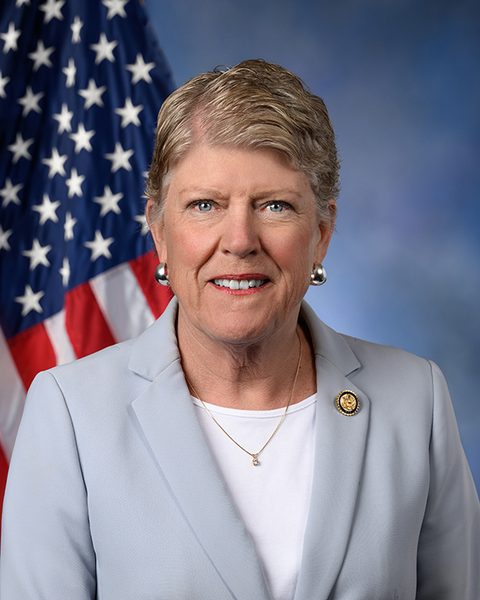
Deep Book: Julia Brownley (CA-26)
CA-26 · House
CandidateJulia Brownley
Executive summary
Julia Brownley, Democrat, is completing her seventh and final term in California's 26th Congressional District; she announced on January 8, 2026 that she would not seek reelection, her service ends January 3, 2027, and the open seat race was called for Jacqui Irwin, the Democrat she endorsed (Section 1).
Contents
Cover1. Cover and race snapshotExecutive BriefVulnerabilities2. Executive summary and top vulnerabilities3. Biographical file4. Record in office5. The money6. Economic interests and business record7. Legal and court record8. Public records file9. Issues and statements fileFlip-Flop Matrix10. Social media audit11. Associates12. Timeline13. Appendix: source indexUpdated November 14, 2026
4. Record in office
4.1 Committee tenure: the Veterans' Affairs anchor
Brownley's committee history, per the House History committee assignment record, is: Veterans' Affairs continuously from the 113th Congress (2013-2015) through the 119th (2025-2027); Transportation and Infrastructure from the 114th (2015-2017) through the 119th; and Natural Resources in the 117th (2021-2023) and again in the 119th [28]. She also served on the House Select Committee on the Climate Crisis, contributing to its 2020 report, per her official biography [3]. Her biography states that when she first came to Congress, her top committee choice was the House Committee on Veterans' Affairs, so that she could work with local veterans communities and Naval Base Ventura County [3]. Fourteen years on one committee, rising to lead its Health Subcommittee, is the structural fact of her House career.
In the 119th Congress she is Ranking Member of the Veterans' Affairs Subcommittee on Health, the Democratic lead on the subcommittee that oversees VA health care [3]. In the Democratic majority Congresses she chaired the same subcommittee. Her Transportation and Infrastructure subcommittees in the 119th are Aviation, Highways and Transit, and Water Resources and Environment; on Natural Resources she serves on Water, Wildlife and Fisheries [3][28]. Her official biography ties the Transportation work to Ventura County's ports, harbors, and airports, naming the Port of Hueneme, Channel Islands Harbor, and Ventura Harbor, and ties the Natural Resources work to wildfire prevention, disaster recovery funding, and protection of Ventura County's coastal and inland communities from climate impacts [3].
In the 116th Congress she founded and chaired the House Veterans' Affairs Committee's Women Veterans Task Force, the vehicle that produced the Deborah Sampson Act (Section 4.3); she later served as its co-chair in the 118th Congress [9]. Her own description of that role, in a February 2025 release, is: "As the founder and former chair of the Women Veterans Task Force, my goal has been to identify disparities in access to care and benefits for women veterans, and where necessary, introduce, advocate for, and pass legislation that rectifies past injustices" [9]. A closing item of the same character: in October 2026 she and Representative Houchin introduced the resolution recognizing October 2026 as National Learning Disabilities Awareness Month, returning in her final months to the issue that brought her into public life [27].
Her office's closing service claims, reported as her office's figures, are that her office opened 1,726 constituent cases in 2025 and secured more than $19.7 million for the district in the FY26 funding bill, H.R. 6398, per her office releases as carried in the Dossier [1]. Inference, labeled as inference: a member's final year casework and appropriations claims are the standard closing metrics of a House office, and they are carried here as office reported figures because no independent audit of either number exists in the record consulted.
4.2 Attendance and party unity
Two attendance measures are on the record, from different counters over different spans, and the book keeps them separate. GovTrack's long span count records that from January 2013 to January 2026, Brownley missed 110 of 7,342 roll call votes, or 1.5 percent [18]. The Dossier's tracker for the recent window records 652 of 676 recorded votes cast since January 2025 [17]. Both figures describe a member with a strong attendance record; neither suggests an attendance vulnerability. Party unity: about 93 percent with her party across her tenure, per the reference summary carried in the Dossier and the Wikipedia summary of the same data, and 99.1 percent in the January 2025 forward window (456 of 460 party division votes) per the Dossier's tracker [17][26]. She also voted in line with President Biden's stated position 100 percent of the time as of November 2022, per the FiveThirtyEight based summary carried in the secondary record [26]. The through line is a reliable party vote in a safe seat in her later terms, which is precisely why the single 2015 break in Section 4.4 has been cited for a decade.
4.3 The women veterans legislative record, verified bill by bill
Female Veterans Suicide Prevention Act (2016). Brownley's House bill was H.R. 2915 (114th Congress), introduced June 25, 2015, directing the Secretary of Veterans Affairs to identify mental health care and suicide prevention programs and metrics effective in treating women veterans as part of the VA's evaluation of such programs [8]. The House Report (H. Rept. 114-365) confirms her authorship and the bill's content [8]. The measure was enacted through its Senate companion, S. 2487, introduced by Senators Ernst, Boxer, Blumenthal, and Brown with Brownley in the House, and the President signed the Female Veterans Suicide Prevention Act on June 30, 2016 [8]. Her office's stated basis for the bill was VA research finding that suicides among women veterans increased by 40 percent from 2000 to 2010 and that women veterans were nearly six times as likely as non-veteran women to die by suicide [8]. The Dossier's description of this item verifies in full.
Deborah Sampson Act (signed January 5, 2021). Brownley authored the Deborah Sampson Act in the House (H.R. 3224 in the 116th Congress); it was enacted as part of the Johnny Isakson and David P. Roe, M.D. Veterans Health Care and Benefits Improvement Act of 2020, H.R. 7105, Public Law 116-315, signed January 5, 2021 [9]. Her office describes it, in the formulation repeated across her releases, as "the most comprehensive legislation for women veterans in over a decade," addressing inequities and barriers women veterans face in accessing VA care and benefits [3][9]. On the first anniversary, her office catalogued its first year effects, including codifying the Office of Women's Health within the Veterans Health Administration with a Chief Officer for Women's Health reporting to the Under Secretary for Health, improving medical facility capacity for women veterans, expanding the women veterans health care mini-residency program, and training community care providers on women veterans' needs [9]. The Dossier's January 2021 dating verifies; the precise signing date is January 5, 2021 [9].
Elizabeth Dole 21st Century Veterans Healthcare and Benefits Improvement Act (passed December 2024, signed January 2, 2025). Her official biography states the Act was "signed into law in December 2024" [3]. The primary record shows the Act, Public Law 118-210, was signed on January 2, 2025: the Federal Register implementation notice states, "On January 2, 2025, the President signed into law the Senator Elizabeth Dole 21st Century Veterans Healthcare and Benefits Improvement Act... Public Law 118-210" [10]. December 2024 is when Congress passed it; the Elizabeth Dole Foundation's passage release is dated December 17, 2024 [11]. The book therefore dates enactment January 2, 2025 and notes the biography's December shorthand as a minor inaccuracy in the member's own official biography, not a material misstatement: the bill was a December passage and a January signing, two weeks apart across a presidential transition. Within the Act, two Brownley bills were incorporated, as her biography states: the Elizabeth Dole Home Care Act and the Improving Whole Health for Veterans with Chronic Conditions Act [3]. Ranking Member Takano's passage statement confirms the first on the record: the package "includes many commonsense Democratic bills, like Representative Brownley's Elizabeth Dole Home Care Act" [11]. The Foundation's statement for the record in the 119th Congress confirms the Home Care Act's placement as Section 123 of the Dole Act, codifying Home and Community Based Services programs and requiring the Veteran Directed Care program at each VA medical center, and attributes the original bill to Representatives Brownley and Bergman [11]. Section 120's increase of the expenditure cap for non-institutional care was implemented in September 2025, per the VA's Federal Register notice [10].
Beyond the three signature enactments, GovTrack counts Brownley as the primary sponsor of eight enacted bills across her tenure, the most recent including a postal facility designation in Oxnard [18]. That count is a tracker's count of enacted sponsored measures and is carried as such; the three veterans laws above are the record her office itself leads with, and they are the ones verified here against primary and near primary sources [3][8][9][10].
4.4 Headline votes an opponent would cite
H.R. 4038, the American SAFE Act, November 19, 2015: AYE. Roll Call 643, 114th Congress. Brownley voted for the bill [5][26]. The secondary summary of the bill is that it would effectively halt the resettlement of refugees from Syria and Iraq to the United States by adding a certification requirement no administration could readily meet [26]. Brownley's contemporaneous statement disputes the practical premise while confirming the vote's narrow mechanics: the bill "does not add any new agencies to the review process. It simply requires the existing agencies who review applications to certify that our laws have been followed and that the refugees do not pose a national security risk to our country" [5]. Both the characterization and her rebuttal are carried, with her full statement verbatim in Section 9. This is the top vulnerability in Section 2 because it is a recorded vote against the position of her party's president and most of her caucus, on an issue, refugee admissions, on which her stated values ran the other way, a tension her own statement acknowledges in its first paragraph [5].
H.R. 1, the One Big Beautiful Bill Act, 2025: NAY at passage, May 22, 2025; NAY at concurrence, July 3, 2025. The Dossier records both nays per VoteSmart [15]. The July 3, 2025 concurrence vote is independently verified in this pass: Roll Call 190, on motion to concur in the Senate amendment, passed 218 to 214, with Brownley recorded Nay [16]. The bill became law July 4, 2025 [15]. Her May 22, 2025 passage nay is carried on the VoteSmart record as cited in the Dossier; the Clerk's roll for that date is the primary source and is consistent with her party's unanimous opposition posture, and no source consulted records her voting any other way on either date [15][16].
H.R. 4, the Rescissions Act of 2025, June 12, 2025: NAY. Roll Call 168, on passage, passed 214 to 212 [17]. The Act rescinded $9.4 billion in previously appropriated funding, including $8.3 billion in foreign aid and $1.1 billion for the Corporation for Public Broadcasting, per the vote summary record [17]. Brownley's nay is carried in the Dossier on its tracker source and is consistent with the Democratic pattern on the roll, in which Democratic members voting recorded Nay; the Dossier's statement that the bill became law July 24, 2025 is carried from the same record [1][17]. No source consulted contradicts the nay.
No other vote in her record was identified in this pass as carrying comparable citation weight. Inference, labeled as inference: in a fourteen year record of roughly 7,300 roll calls with a 1.5 percent missed rate and a 93 percent career party unity score, the absence of a second signature break is itself the finding; her record is a party record with one famous exception [18][26].
4.5 Elections: how the seat was won and held
Brownley's electoral history explains the arc from competitive seat to safe seat. Assembly: 2006, won with 62 percent; 2008, 66 percent; 2010, 59 percent [26]. House general elections, per the electoral history compiled from official results [26]:
- 2012: Brownley 139,072 (52.7 percent), Tony Strickland (R) 124,863 (47.3 percent). She flipped the seat after thirteen term Republican Elton Gallegly retired following redistricting [26].
- 2014: Brownley 87,176 (51.3 percent), Jeff Gorell (R) 82,653 (48.7 percent). Her closest reelection; a margin of about 4,500 votes in a low turnout midterm, after Republicans combined for over 50 percent in the June blanket primary and the race was rated a toss up [26].
- 2016: Brownley 169,248 (60.4 percent), Rafael Dagnesses (R) 111,059 (39.6 percent) [26].
- 2018: Brownley 110,804 (61.9 percent), Antonio Sabato Jr. (R) 73,416 (38.1 percent) [26].
- 2020: Brownley 208,856 (60.6 percent), Ronda Baldwin-Kennedy (R) 135,877 (39.4 percent) [26].
- 2022: Brownley 134,575 (54.5 percent), Matt Jacobs (R) 112,214 (45.5 percent). The narrower margin reflects the 2022 redraw, which removed Ojai and most of Ventura and added Calabasas and Agoura Hills [26].
- 2024: Brownley 187,393 (56.1 percent), Michael Koslow (R) 146,913 (43.9 percent). The vote counts sum to 334,306 and produce the 56.1 percent figure; one secondary account rounds her share to 56.6 percent, and the book follows the vote counts [26].
The pattern is a member who won a genuinely competitive seat twice, in 2012 and 2014, and then held it by double digits in every presidential cycle and by nine points in her closest later midterm, in 2022. By the time she announced her retirement, the Proposition 50 redraw had made the seat more Democratic still (Section 1 registration) [1]. Nothing in the electoral record suggests she left under electoral pressure, and she gave no reason in her announcement (Section 9) [4]. Inference, labeled as inference: at 73, after seven terms, with her signature legislative program enacted, the retirement reads on this record as a retirement, and any other explanation would need a source this book does not have.