Capitol Daybook Research · Deep Book
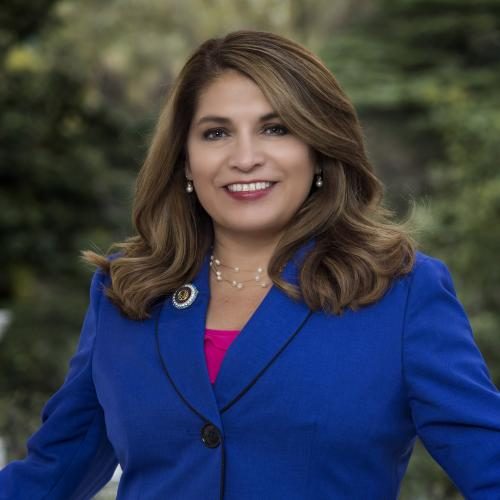
Deep Book: Sharon Quirk-Silva (AD-67)
AD-67 · Assembly
CandidateSharon Quirk-Silva
Executive summary
Sharon Quirk-Silva is the Democratic assemblymember for District 67 in northern Orange County and southeast Los Angeles County, registered 41.8 percent Democratic and 27.3 percent Republican (Section 1). Her service in 2012 to 2014 and from 2016 to the present reaches the 12 year term limit in December 2026, and a final year profile reports directly that she has decided to retire (Sections 1 and 2).
Contents
Cover1. Cover and race snapshotExecutive BriefVulnerabilities2. Executive summary and top vulnerabilities3. Biographical file4. Record in office5. The money6. Economic interests and business record7. Legal and court record8. Public records file and queued pulls9. Issues and statements fileFlip-Flop Matrix10. Social media audit11. Associates12. Timeline13. AppendixUpdated November 14, 2026
6. Economic interests and business record
6.1 The 2025 annual
Her 2025 annual Form 700, filed February 25, 2026 and covering calendar 2025, was obtained from the FPPC disclosure portal. [4] It attaches Schedule A-2 and Schedule C. Schedule A-2 reports 217 N. Richmond Ave LLC of Fullerton, a real estate company, as a business entity in which she holds an ownership interest of 10 percent or greater. [4] (The entity name carries a street address in the filing itself; per house rules this book reports the entity at city level — a Fullerton real estate company — and does not republish the address.) Her 2024 annual's Schedule A-2 for the same company names Jesus J. Silva, Patrick J. Quirk, and Olivia A. Coscis in the filing, placing the holding inside her extended family. [9] Schedule C of the 2025 annual reports Silva/QS Consulting of Fullerton, a consulting business, as an income and business position source. [4] A March 12, 2026 amendment added a Schedule D gift: $64.13 in birthday flowers from Assemblymember Corey Jackson. [10] Her 2024 annual's Schedule D lists gifts from, among others, the California Tribal Business Alliance and the California Latino Legislative Caucus Foundation. [9]
6.2 Reading the footprint
Neither holding is improper on its face, and both were disclosed on the schedules the law prescribes. The research questions are the standard two. First, the consulting entity: Silva/QS Consulting's client base is not itemized in the indexed schedules, and identifying its clients is a Deep Book item because a termed-out member's consulting income — before and especially after office — is the standard revolving-door question. The innocent explanation is equally standard: a spouse-and-member consulting vehicle for the member's own speaking/advisory work, fully disclosed on Schedule C. The resolving records are the entity's Secretary of State filings, any fictitious business name filing, and her leaving-office Form 700; all are queued in Section 8. Second, the family real estate LLC: a multi-member family real estate holding in her hometown, disclosed on A-2 across at least two annuals, with no vote or authored bill in Section 4 that touches a Fullerton parcel identified in the sources opened. A conflicts audit at the level of specific Fullerton land-use votes from her council era is a CPRA item in Section 8.
6.3 Property sweep and entities
An Orange County (and, for completeness, Los Angeles County) grantor/grantee sweep — deeds, deeds of trust with lender and original amount, refinances, liens, notices of default, tax delinquency — for the subject, her spouse, and the LLC, plus a Secretary of State bizfile pull for the LLC and Silva/QS Consulting (formation, statements of information, status, agent) and a UCC search, are queued in Section 8. Reporting will be at city and county level only.
6.4 Licenses
Teaching credential: see Sections 3 and 8 (CTC pull queued). No other professional license is in the record reviewed. No lobbying registration for the subject was located in the sources opened; a post-office lobbying or consulting registration, if any is filed after December 2026, would be captured by the leaving-office pull queued in Section 8.
6.5 Form 700 series and the leaving-office question
Read in this pass: the 2025 annual (Schedules A-2, C), its March 12, 2026 Schedule D amendment, and the 2024 annual (Schedules A-2, D). [4][9][10] The two-year window establishes the stability of the footprint — the same Fullerton real estate company on A-2 in both years, with the 2024 filing naming the family members — but a closing book for a retiring member turns on a document that does not exist yet: the leaving-office Form 700, due after her December 2026 departure, which will show whether the consulting entity's income grows, whether new clients or positions appear, and whether the real estate holding changes in the first filing made without an election ahead of it. The FPPC pull in Section 8, item 3, is therefore specified to include the leaving-office statement when filed, and this book should be updated in place when it lands, per library practice. Until then, the revolving-door question is framed exactly as Section 6.2 frames it: a disclosed consulting vehicle, an unitemized client base, a member with a stated intention to retire, and no lobbying registration in the sources opened. Any stronger statement — in either direction — would require records that are either not yet filed or not yet pulled, and the book makes neither.
A second series note: her Fullerton-era Form 700s (2004–2012) were filed with the city clerk and are not in the FPPC portal; the Assembly-era series alone cannot date the first disclosure of the real estate interest. The Fullerton CPRA entry (Section 8, item 1) closes that gap, and the chronology it produces either moves the disclosure's start date back a decade (the ordinary outcome for a long-held family asset) or identifies the acquisition window for the recorder sweep to examine. Both outcomes are research value; neither is prejudged here.