Capitol Daybook Research · Deep Book
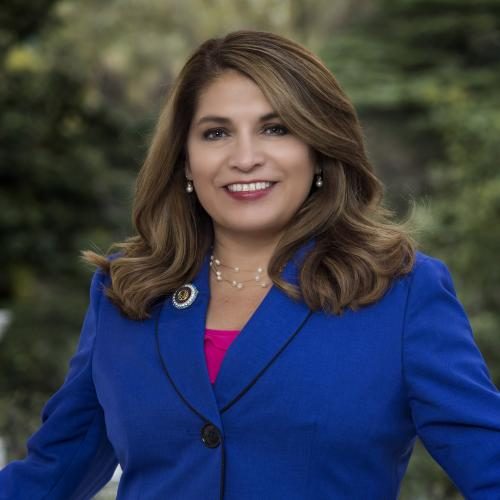
Deep Book: Sharon Quirk-Silva (AD-67)
AD-67 · Assembly
CandidateSharon Quirk-Silva
Executive summary
Sharon Quirk-Silva is the Democratic assemblymember for District 67 in northern Orange County and southeast Los Angeles County, registered 41.8 percent Democratic and 27.3 percent Republican (Section 1). Her service in 2012 to 2014 and from 2016 to the present reaches the 12 year term limit in December 2026, and a final year profile reports directly that she has decided to retire (Sections 1 and 2).
Contents
Cover1. Cover and race snapshotExecutive BriefVulnerabilities2. Executive summary and top vulnerabilities3. Biographical file4. Record in office5. The money6. Economic interests and business record7. Legal and court record8. Public records file and queued pulls9. Issues and statements fileFlip-Flop Matrix10. Social media audit11. Associates12. Timeline13. AppendixUpdated November 14, 2026
12. Timeline
- September 17, 1962. Born in Los Angeles; raised in Fullerton. [5]
- 2004–2012. Fullerton City Council, including two terms as mayor. [6]
- 2012. AB 1453's cemetery line begins the following session; elected to the Assembly, defeating incumbent Chris Norby. [3][Official legislation page]
- November 2014. Loses the seat to Young Kim. [3]
- November 2016. Defeats Kim in the rematch; holds the seat thereafter. [3]
- 2018. Her husband, Jesus Silva, is elected Mayor of Fullerton. [5]
- September 2019. AB 368, establishing the Southern California Veterans Cemetery, signed into law. [Official press releases]
- February 18, 2022. Largest behested line: $16,580, California Latino Legislative Caucus Foundation to CA Department of Transportation. [Behested dataset]
- December 2023. CalVet completes the Gypsum Canyon veterans cemetery feasibility study she championed. [7]
- February 25, 2026. Files her 2025 annual Form 700 reporting the Fullerton real estate company and Silva/QS Consulting. [4]
- March 12, 2026. Form 700 amendment adds a $64.13 Schedule D gift (birthday flowers, Asm. Corey Jackson). [10]
- October 2026. Her office posts its farewell: "Thank you, Assembly District 67, for 12 years of trust." [8]
- November 3, 2026. Pulido leads Morales in the count to succeed her. [1]
- December 2026. Term ends at the 12-year limit; she retires. [2]
11.2 District-office and staff record
The staff record in hand is thin by design of the sources, and the book reports it as found: senior field representative Joe Pak, whose retirement her office marked in October 2026, is the only staff member named in the sources opened. [8] For a member with 20 years in office, the absence of staff controversies, staff-linked campaign vendors beyond the ordinary, or a chief-of-staff profile in coverage is itself a (scoped) null worth recording: her operation generated no staff-driven story in the bounded pass. The Assembly roster pull that would complete the staff inventory (chief of staff, district director, scheduler across the tenure) is a routine records item folded into the Section 8 FPPC/Assembly retrievals at draft stage, and any future edition of this book should carry the roster so that the closing record names the team that ran the district office. Staff are recorded here as public-facing officials in their official roles only; no personal information about any staff member is included or sought.
12.1 How to use this timeline
The timeline's spine is duration: eight years on a city council, thirty years in a classroom, twelve years in the Assembly, and one project — the veterans cemetery — that runs unbroken from her first Assembly session (AB 1453) to her last full session (AB 571) without reaching completion. Read alongside Section 4.1, it shows why both the defense and the criticism of her tenure are longevity arguments: the same persistence that produced more than 100 enacted bills also means the unfinished items cannot be attributed to a short tenure or a late start. The two electoral defeats and victories against Young Kim (2014, 2016) sit early in the Assembly span and predate the housing-and-cemetery record almost entirely; a buyer constructing a narrative should not let the rivalry years stand in for the legislative decade that followed them. Finally, the 2026 entries are deliberately sparse — a Form 700 filing, a $64.13 amendment, a farewell post, a retirement — because that is what a clean final year looks like in records form, and the book preserves the sparseness rather than padding it.
12.2 Closing note on the succession
The November 3, 2026 count — Pulido leading Morales, the race uncalled at the packet's snapshot [1] — closes the book's frame: the district she held for twelve years, in two different district numbers, passes to a successor chosen in a race whose independent spending exceeded her own career's single-cycle totals by an order of magnitude. The book makes no prediction about the call and treats the eventual certified result as a one-line update to Section 1 when it lands.