Capitol Daybook Research · Deep Book
Deep Book: Tom Lackey (AD-34)
AD-34 · Assembly
CandidateTom Lackey
Executive summary
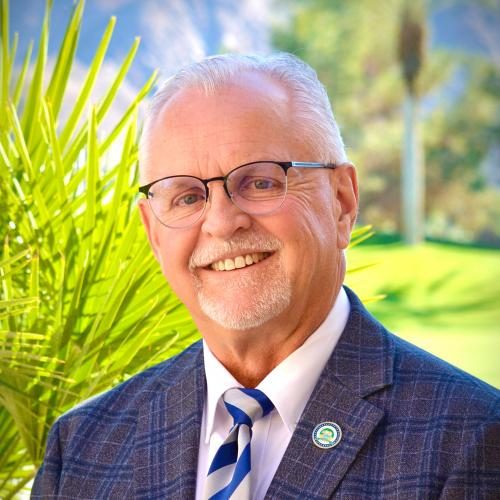
Tom Lackey, a Republican and retired California Highway Patrol sergeant, has represented the High Desert in the Assembly since December 2014, first in the 36th District and since 2022 in the 34th District, registered 38.9 percent Republican and 30.6 percent Democratic (Section 1). He is term-limited in 2026 and was not on the ballot; Charles Hughes leads Randall Putz in the successor race in results data marked pending (Section 1).
Contents
Cover1. Cover and race snapshotExecutive BriefVulnerabilities2. Executive summary and top vulnerabilities3. Biographical file4. Record in office5. The money6. Economic interests and business record7. Legal and court record8. Public records file9. Issues and statements fileFlip-Flop Matrix10. Social media audit11. Associates12. Timeline13. Appendix: source indexUpdated November 13, 2026
1. Cover and race snapshot
Tom Lackey, a Republican and a retired California Highway Patrol sergeant, has represented the High Desert in the California State Assembly since December 2014, first in the 36th District (2014 to 2022) and since 2022 in the 34th District [3]. The 34th District covers parts of Kern, Los Angeles, and San Bernardino counties; its principal cities include Lancaster, Palmdale, Barstow, California City, Big Bear Lake, Twentynine Palms, Lake Arrowhead, and Needles [1][2]. The Assembly's own member page confirms District 34, Republican, and the three counties of Kern, Los Angeles, and San Bernardino [8].
District registration in the Capitol Daybook district profile build is 305,023 registered voters, 38.9 percent Republican, 30.6 percent Democratic, and 30.5 percent other or no party preference [1][2]. In the 2024 presidential vote measured on the district's current lines, the Republican candidate carried AD-34 with 58.56 percent (116,171 votes) to the Democratic candidate's 38.76 percent (76,881 votes), with 5,322 other votes [District results build]. The district is, by both registration and presidential vote, a Republican district, and Lackey's twelve years in it were never, on the public results record summarized in the Dossier, a marginal-seat tenure [3].
Lackey is term-limited in 2026 and was not eligible to run for re-election [3]. That single fact organizes the entire race snapshot: there is no 2026 Lackey campaign, no Lackey committee record in the packet, and no opponent finance comparison for Lackey himself [1]. In the successor race for the open seat, Republican Charles Hughes leads Democrat Randall Putz in the district results data, where the race remains marked pending [2]. The district build records the 2026 winner as Charles Hughes, Republican, with winner status pending [District build]. Hughes raised $726,533.23 and Putz raised $229,954.53 in the successor race [1]. Those figures are the successor candidates' money, not Lackey's, and Section 5 keeps them in a separately labeled subsection so that no reader can mistake them for the subject's record.
Lackey's committee portfolio on the Assembly's own member page, as retrieved for the Dossier, includes the Public Employment and Retirement Committee, the Public Safety Committee, the Transportation Committee, and the vice chairmanship of the Rules Committee, along with Budget Subcommittee No. 4 and Budget Subcommittee No. 6 assignments [8]. A later Assembly member-page capture returned in research for this book shows a broader roster: Vice Chair of Arts, Entertainment, Sports, and Tourism; member of Budget; Vice Chair of Public Employment and Retirement; member of Public Safety; Vice Chair of Rules; member of Transportation; Budget Subcommittee No. 4 on Climate Crisis, Resources, Energy, and Transportation and Subcommittee No. 6 on Public Safety; the Select Committee on the 2028 Olympic and Paralympic Games; the Select Committee on Serving Students with Disabilities; the Select Committee on the Transportation Costs and Impact of the Low Carbon Fuel Standard; the Joint Committee on Rules; and the Joint Committee on the Arts [Assembly member page, accessed November 5, 2026]. Committee rosters change across sessions, and the two captures are best read as different points in the 2025-26 session rather than as a contradiction; the resolving record is the Assembly Daily Journal committee roster for a stated date, and any buyer using a committee assignment for a vote or influence claim should pin it to a date.
Within his caucus, Lackey served as Republican caucus chair until September 24, 2025 [7]. The end of that leadership role in the fall of 2025, a year before the end of his term-limited service, is a documented fact of the closing chapter of his career; no source reviewed for this book attributes a contested removal or a scandal to it, and this book does not infer one. The innocent and ordinary explanation is caucus rotation in a member's final full year, and the resolving record for any contrary claim would be contemporaneous caucus reporting, none of which surfaced in the sources checked.
Snapshot table. Subject: Thomas W. Lackey. Party: Republican. Chamber: California State Assembly. District: AD-34 (2022 to present); AD-36 (2014 to 2022). Residence city and county: Palmdale, Los Angeles County [3]. First assumed Assembly office: December 2014 [3]. Status in 2026: term-limited, not on the ballot [3]. Successor race: Hughes (Republican) leading Putz (Democratic), marked pending in district results data [2]. Next election for the seat: 2028, as an open-seat hold or defense by the successor. Competitiveness: Republican-leaning by registration (R +8.3 points over D) and strongly Republican by 2024 presidential vote (R 58.56 percent) [District build; District results build].
A note on dates that a careful reader will catch: the Dossier and the compilations it relied on give December 1, 2014 as the date Lackey assumed office [3], while a biographical summary returned in research states that he was sworn into office on December 5, 2014. Assembly terms begin on the first Monday in December, and oath ceremonies and the formal start of a term are routinely recorded on different days in different compilations. This book uses "assumed office December 2014" without choosing between the two day-level dates, and flags the day-level discrepancy as unresolved at this depth. The resolving record is the Assembly Daily Journal for the opening day of the 2015-16 session. Nothing in any vulnerability finding in this book turns on the four days.