Capitol Daybook Research · Deep Book
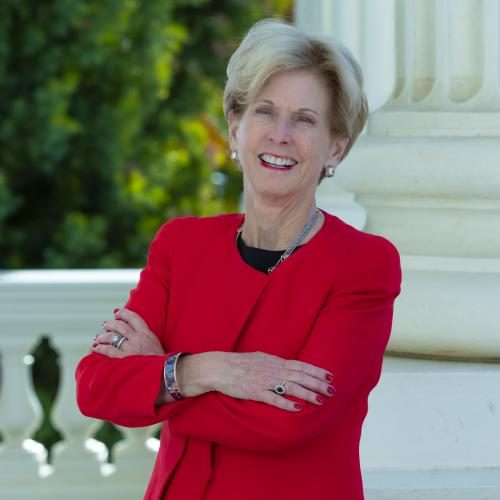
Deep Book: Diane Dixon (AD-72)
AD-72 · Assembly
CandidateDiane Dixon
Executive summary
Diane Dixon is the Republican assemblymember for District 72, registered 39.3 percent Republican and 32.1 percent Democratic, who did not seek a third term and ran for Orange County Supervisor, District 5 (Section 1).
Contents
Cover1. Cover and race snapshotExecutive BriefVulnerabilities2. Executive summary and top vulnerabilities3. Biographical file4. Record in office5. The money6. Economic interests and business record7. Legal and court record8. Public records file9. Issues and statements fileFlip-Flop Matrix10. Social media audit11. Associates12. Timeline13. Appendix: source indexUpdated November 13, 2026
2. Executive summary and top vulnerabilities
Dixon's file is a career-capstone file, not a scandal file. No court case, enforcement stipulation, or warning letter naming her was located at any scope searched for this book (Section 7). The vulnerabilities below are therefore structural, presentational, and succession-related, ranked by how directly an opponent, an appointment vetting team, or a supervisor-race recount observer could use them. Each carries its strongest exhibit and the record that would resolve it.
Vulnerability 1 — Two close defeats at the next level up define the career ceiling. Dixon lost her first Assembly race in 2020 to Cottie Petrie-Norris by roughly 2,500 votes, won the redrawn 72nd District in 2022, and in 2026 finished the supervisor primary 315 votes behind Katrina Foley and trails in the runoff count as of November 4. [2][3][4] The pattern an opponent states neutrally is: a strong local official, repeatedly re-elected inside friendly boundaries, who has not won a contested race against a Democratic incumbent officeholder. The exhibit is arithmetic, not allegation, and no record resolves it except a final certified count reversing the runoff deficit. Sections 3 and 12 carry the full electoral history.
Vulnerability 2 — A fortune and a continuing income line tied to a single Fortune 300 employer. Three decades as a senior executive at Avery Dennison built Dixon's wealth, and her final Assembly Form 700, the 2025 annual filed January 27, 2026, still reports Avery Dennison Corporation on Schedule C as an income source. [6][7] There is no specific transaction, vote, or contract in the record connecting that income line to any official act, and this book asserts none. The vulnerability is the standing nexus an opponent summarizes in one sentence, and it follows her to the Board of Supervisors, where county contracting and land-use matters routinely touch large employers. The resolving records are the complete Form 700 series itemized in Section 6 and the supervisor-era filings she would make if elected.
Vulnerability 3 — A prosecutor husband inside the county she sought to govern. Pat Dixon, a career prosecutor serving as Special Counsel to the Orange County District Attorney, is both her best biographical asset — 48 years of marriage, a law-enforcement household in a public-safety campaign — and the conflict question a supervisor's office faces on day one, because the Board of Supervisors funds the District Attorney's budget and oversees county functions adjacent to prosecution. [2] No record in the sources reviewed shows any matter in which that relationship affected an official act of either spouse, and this book asserts none. The flag is prospective and structural. The resolving records, if she takes the seat, would be the county's conflict-of-interest code, any recusal record, and her supervisor Form 700 filings. Sections 3 and 11.
Vulnerability 4 — The recovery-home issue cuts both ways in her own district. Dixon's signature Assembly portfolio includes the state's most persistent local-control campaign against clustered alcohol and drug recovery facilities: she requested the state audit of the Department of Health Care Services, carried AB 3's 300-foot anti-clustering rule, and told the Laguna Beach City Council: "Nobody regulates sober living homes. They're not licensed." [14][15] The same record is the exhibit for the other side: treatment-access advocates frame spacing rules as housing restrictions on a protected population, and her district's cities, Newport Beach above all, carry a long litigation history on recovery housing that predates her (Section 4.4). The vulnerability is not inconsistency — her position has been constant since her council years — it is that the issue that built her local brand is also the issue on which a county supervisor must administer, not merely advocate. Section 4.4 and Section 9.
Vulnerability 5 — Her seat's succession became a money race she does not control. Independent committees spent $879,880 opposing Kluwe and $374,488 supporting Van Der Mark, while the California Democratic Party put $991,342.54 directly into Kluwe's committee. [Packet] Dixon directed none of it on this record. The exposure is reputational and downstream: whoever holds AD-72 after December 2026 arrives owing Sacramento interests, and Dixon, as the seat's most recent holder and the county's prospective supervisor, will be asked — in appointment vetting or in a future race — whether the succession she left behind is the politics she endorses. Section 5.4.
Vulnerability 6 — A self-reported productivity superlative that moved between tellings. The Newport Beach Chamber's biography for her January 2025 appearance states that in her first term "she had 13 bills signed into law." [8] Her own October 27, 2026 update to the Newport Beach City Council, as reported by Stu News Newport, states she is "proud of her work during her four years in office, including 26 bills she authored that were signed into law," while a secondary biographical summary states 20 bills signed through the 2023–24 and 2025–26 sessions. [12][13] These figures are not necessarily in conflict — 13 for the first term, a higher cumulative figure thereafter — but the cumulative figure varies by source (20 versus 26), and a vetting team will ask which is right. The resolving record is the LegInfo chaptering record for her author line, queued at DIX-9. This book reports all three figures with their sources and adopts none as canonical. Section 4.1.
What is not in this file. No litigation naming Dixon, no FPPC enforcement matter, no bankruptcy, lien, or judgment, and no professional-license discipline was located at the scopes searched (Section 7). Her behested record is small, recent, and charitable in character (Section 5.5). Her divorce and family-court gate was assessed and not triggered (Section 7.4). Those nulls and near-nulls are part of the product and are stated with their methods, not omitted.