Capitol Daybook Research · Demonstration
The interactive layer, demonstrated
Four working pieces of the research platform, opened to every reader for evaluation: one complete organization page, a recorded session with the Research Desk, the universal search, and one financial chain traced from donor to candidate. Nothing here is a mock-up. Every figure comes from the live library, and every link opens the real page.
1. Organization intelligenceDemonstrated: one complete page
Every organization that lobbies, gives, or spends in California politics has a page in this library: its clients, the firms it engages, the contributions its own filings document, the bills it names in its activity reports, and the lobbyists on its filings. Those pages sit in the research access layer. For this demonstration one page is open in full: Greenberg Traurig, LLP, a Sacramento lobbying firm and employer, chosen because its filings document several sides of the Capitol economy at once. Its compiled file holds 149 documented edges: 82 bills named in its activity reports, 16 clients on its registrations, $2,994,896 in payments received from clients across 26 client records, and 25 campaign contributions totaling $47,400 documented on its own lobbying reports, for $3,042,296 in documented activity in all.
2. The Research Desk, recordedDemonstrated: a recorded session
The Research Desk answers questions from the library's own data and cites the page each answer rests on. It is part of research access, so instead of opening it anonymously, this page records it. On November 12, 2026, these questions were put to the live Desk, and its answers are reproduced below exactly as returned, with their citations and evidence labels, including the last one, where the Desk reports that it has no form for the question and shows the record it would draw on. The follow-up chips inside the recorded answers lead to the Desk itself, which asks for access.
A finance question: “How much has Scott Sakakihara raised?”
FundraisingVerified fact
Scott Sakakihara (Scott Sakakihara for Senate 2026, Cal-Access and FEC data through 2026-10-17): raised $1,876,599, spent $1,557,497, cash on hand $378,215. Independent expenditures: $4,121,531 in support, $148,806 in opposition. Burn rate: 80.5% (spending divided by starting cash plus money raised this cycle).
A legislative record question: “What bills has Adam Gray authored?”
Bills authoredVerified fact
Adam Gray:
119th Congress: 8 bills authored.
A representation question: “Who represents AD-05?”
Assembly District 5Verified fact
Joe Patterson (Republican) represents Assembly District 5.
A question the record cannot answer: “What is Nancy Pelosi's net worth?”
The record on Nancy PelosiNot supported yet
The Desk has no form for that question yet. Here is the record it would draw on:
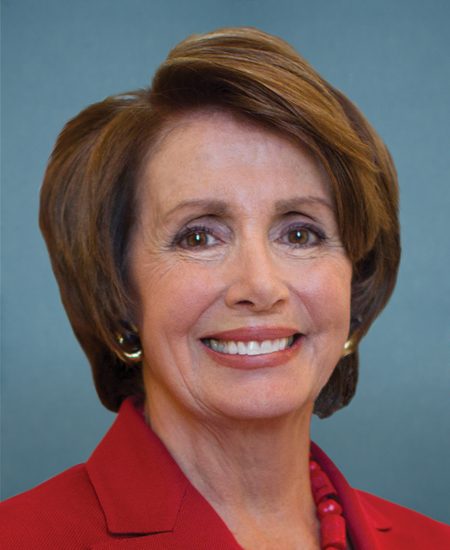
U.S. House · Democratic · Congressional District 11
3. Universal searchDemonstrated: live search
One search runs across the library's people, reports, organizations, donors, districts, committees, bills and source documents. These five entries are live: each opens the real search with the query filled in, returning what a guest is shown.
Adam Gray Person: his person record, reports, committees, bills and votes.
Greenberg Traurig Organization: the firm in the organization and vendor results; its complete page is the open page in section 1.
Elon Musk Donor: the Donors results; his complete donor file is open in the trace in section 4.
AD-05 District: the district profile and its race, led by the district itself.
SB 257 Document: a bill: the bill's record and its votes.
4. The money graph, worked traceDemonstrated; figures verified against the compiled filings
The money graph connects donors, committees, independent spending and candidates from the filings themselves. This trace follows one donor's documented strands through the covered California races. Every hop names its amount and links to the page that documents it.
Hop 1, the donor. Elon Musk's compiled donor file for the 2026 cycle totals $30,003,500 across the covered races, and it itemizes to exactly two recipients: $30,000,000 to CLF and $3,500 to Darrell Issa's campaign. Open the donor file · his organization page
Hop 2, the committee. CLF, the Congressional Leadership Fund, is an independent expenditure committee. Its compiled file lists its largest funders as AMERICAN ACTION NETWORK $64,266,262; Elon Musk $30,000,000, and records $6,535,704 spent in the covered races. Open the CLF organization page, whose edges print the compiled source of every figure · its federal filing record at the FEC, committee ID C00504530, the ID printed in this library's own record of the committee's state measure filing.
Hop 3, the expenditure. CLF documented $2,778,590 in independent spending opposing Adam Gray in Congressional District 13, the strand that reaches a candidate whose book is public. The same file records $3,578,980 opposing Randy Villegas, $133,442 supporting David Valadao, $44,692 supporting Kevin J Lincoln II. Each figure is an edge on the CLF organization page above.
Hop 4, the candidate. Adam Gray. The spending opposed the incumbent in the San Joaquin Valley seat he won by 187 votes in 2024. His complete Deep Book is the library's public sample, and its finance snapshot records his committee's $5,241,028 raised on filings through October 14, 2026. Read the sample book
The same donor file documents its second strand directly: $3,500 from Musk to Darrell Issa, whose Deep Book and Dossier are public in full as a retiring member's books. Read the Issa Deep Book
What this page does not open
The remaining organization and donor pages, the Desk itself, the Document Center and the rest of the member library stay in the research access layer. The public books stay public: every one of them is listed on the samples page. Access is arranged through the contact page.